International Baccalaureate · PYP 1
Measuring Length, Mass and Capacity
I
Longer, Shorter or Taller?
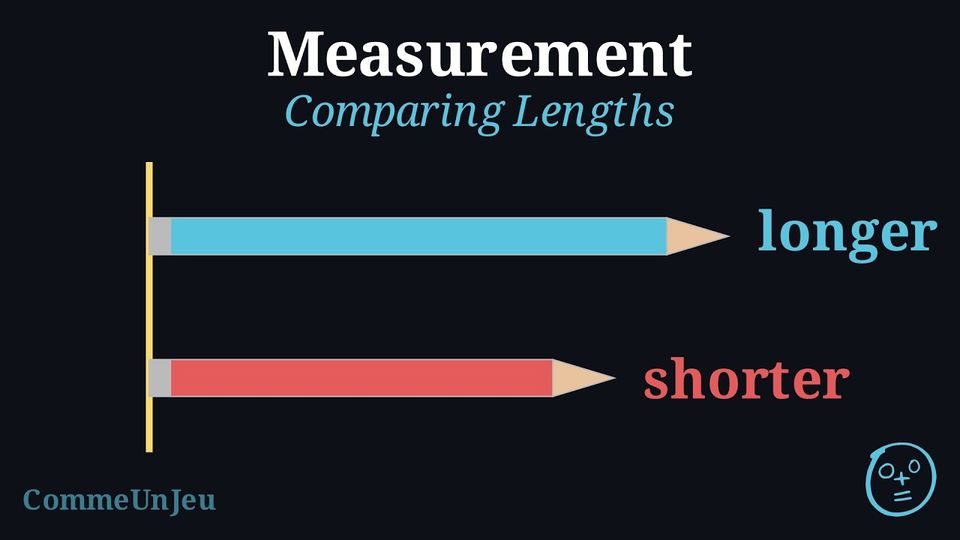
Definition — Longer and Shorter
When two objects start at the same place, if one goes further, it is longer; the other one is shorter. If they end at the same place too, they have the same length. 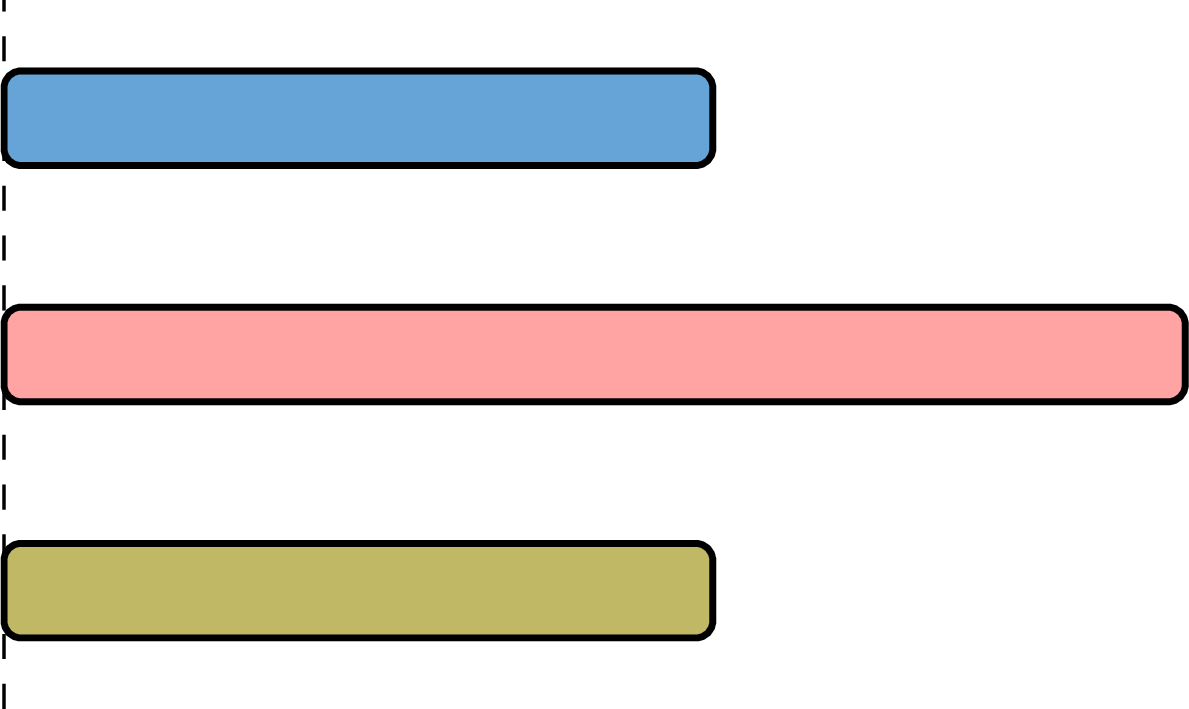
Method — Line Up to Compare Lengths
To compare two objects, we can check which is longer or shorter.Lay them side by side and carefully line up one end on the same line. The object that goes further is longer. The other is shorter.
If we stand them up, the one that is higher is taller. The other is shorter.
Example

The girl is taller than the boy.
The boy is shorter than the girl.
Skills to practice
- Comparing Children's Heights
- Comparing Block Heights
II
What Is Mass?
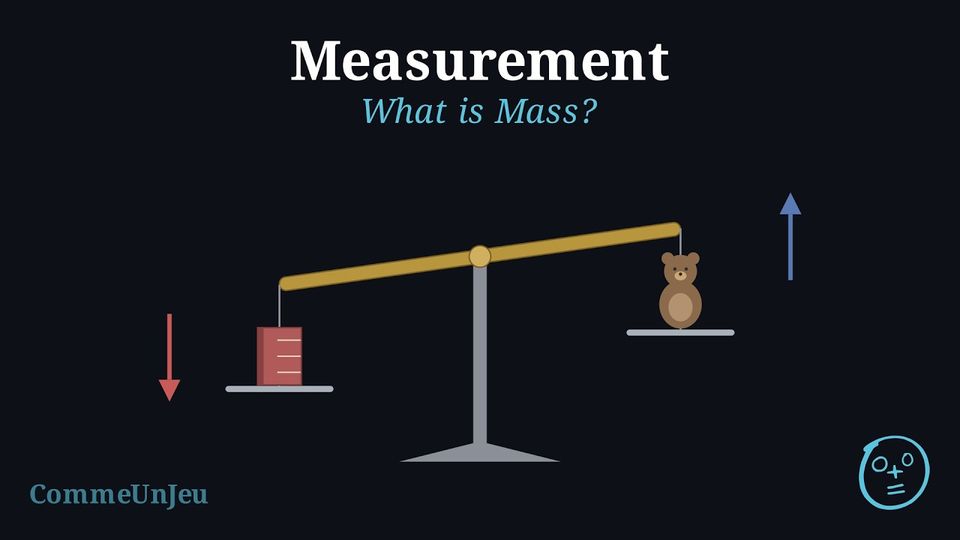
Definition — Mass
Mass tells us how heavy something is. When we compare two objects, the heavier one has more mass and the lighter one has less mass. For example, a big book is heavier than a feather. Method — The Balance
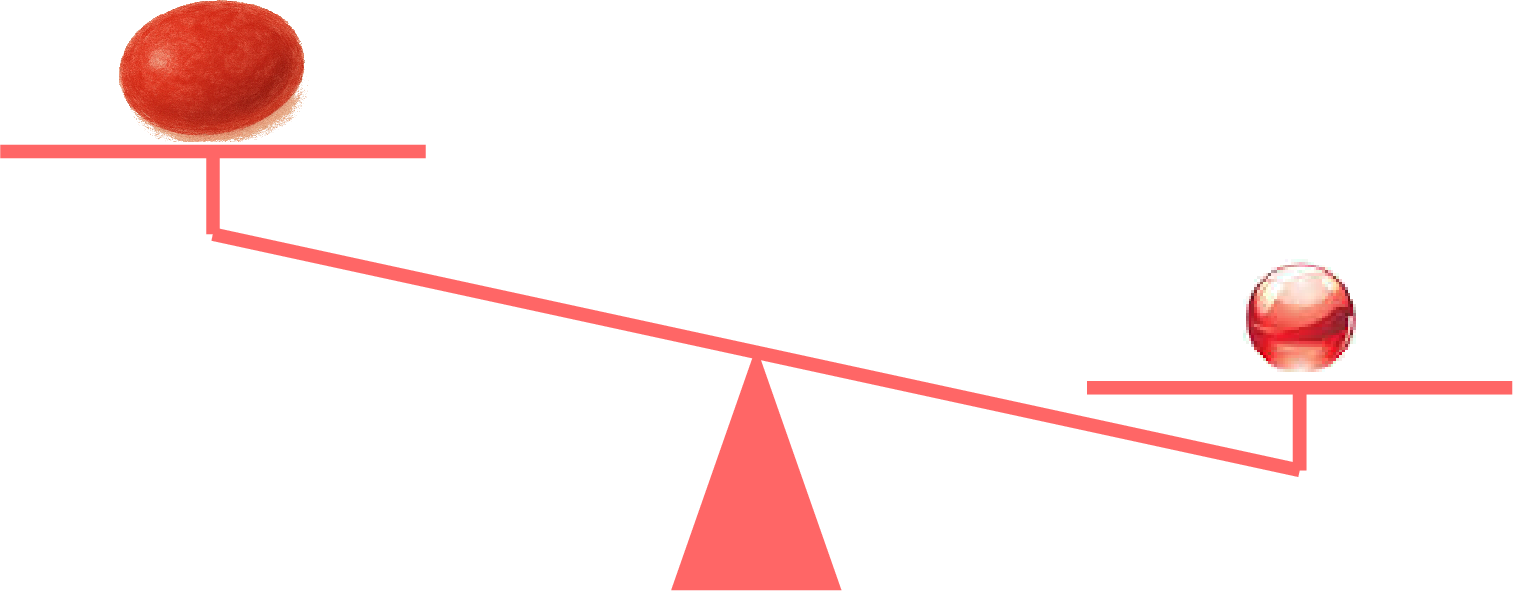
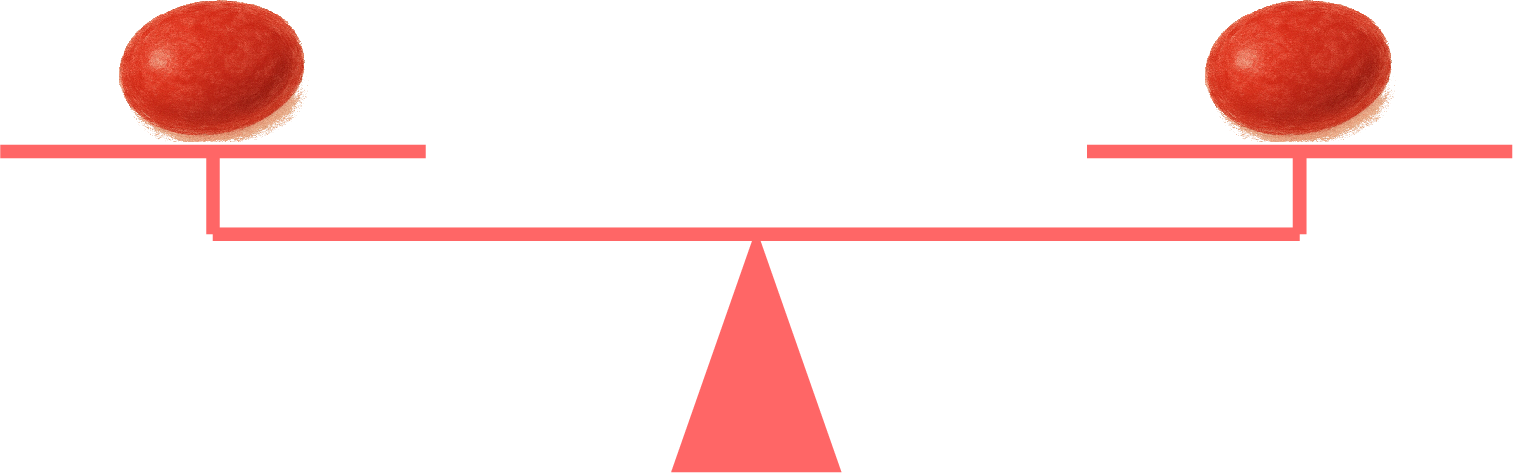
A pan balance has two pans: when it is empty, they rest at the same height. - We put one object on each pan.
- The pan that goes down holds the heavier object.
- If the two pans stay level, the objects have the same mass.
Skills to practice
- Comparing the Masses of Objects
III
Things We Can Compare
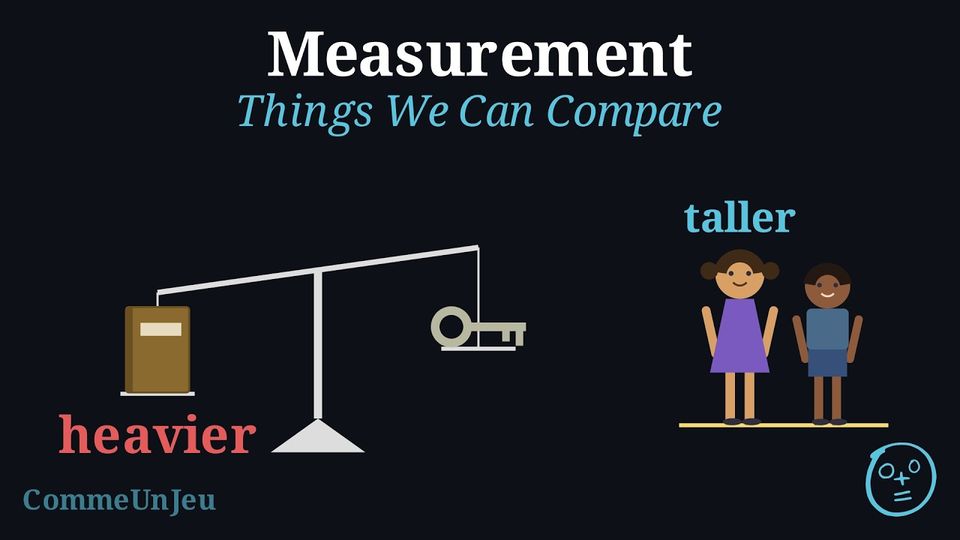
We can compare two objects in different ways.
We can look at their length — which one is longer.
We can look at their mass — which one is heavier.
Length and mass are things we can measure.
We can look at their length — which one is longer.
We can look at their mass — which one is heavier.
Length and mass are things we can measure.
Example
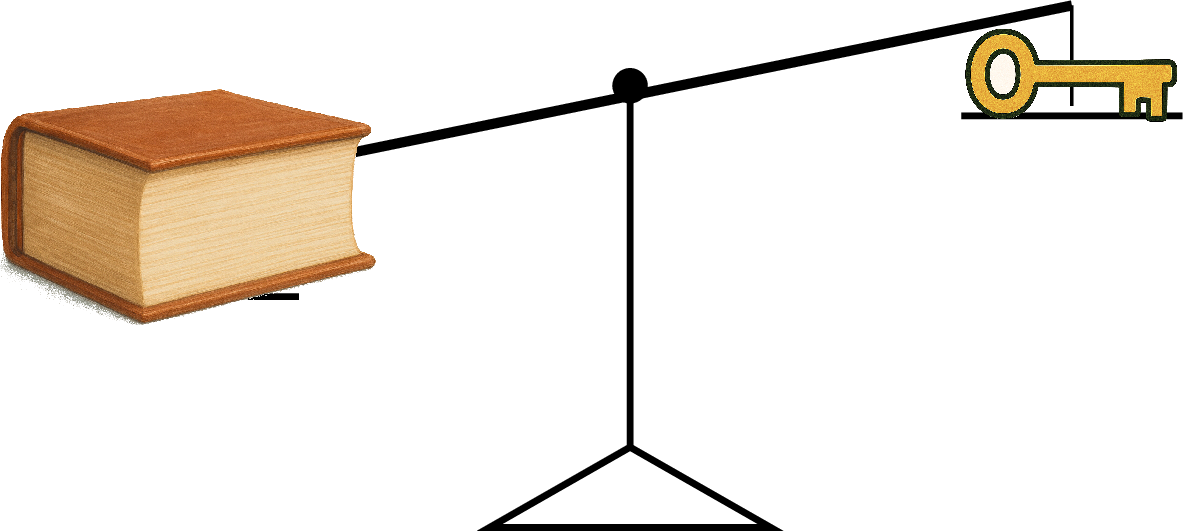
The book is heavier than the key. (mass)
Skills to practice
- Comparing Masses
IV
Capacity
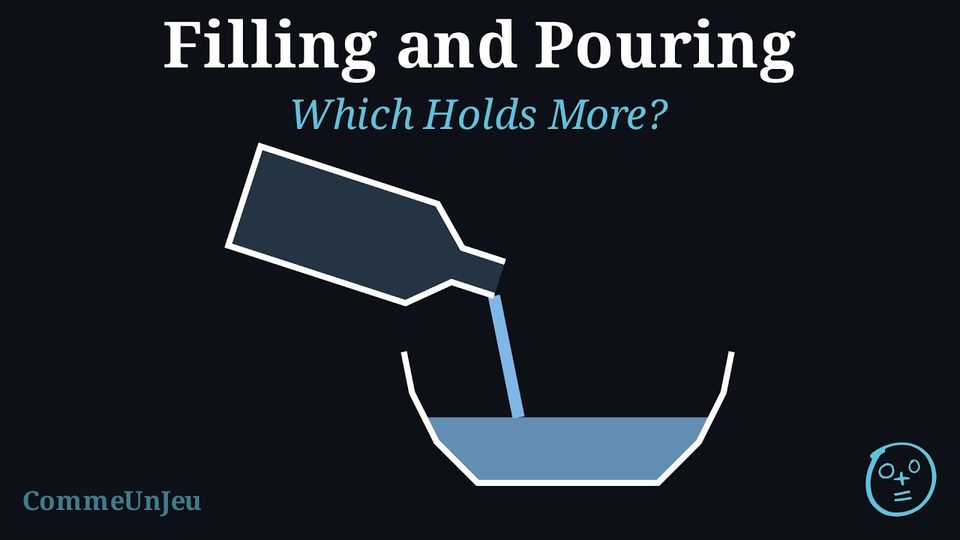
Léa has two containers of different shapes: a wide salad bowl and a tall narrow bottle. She fills each of them to the brim and wants to know which one holds more water. 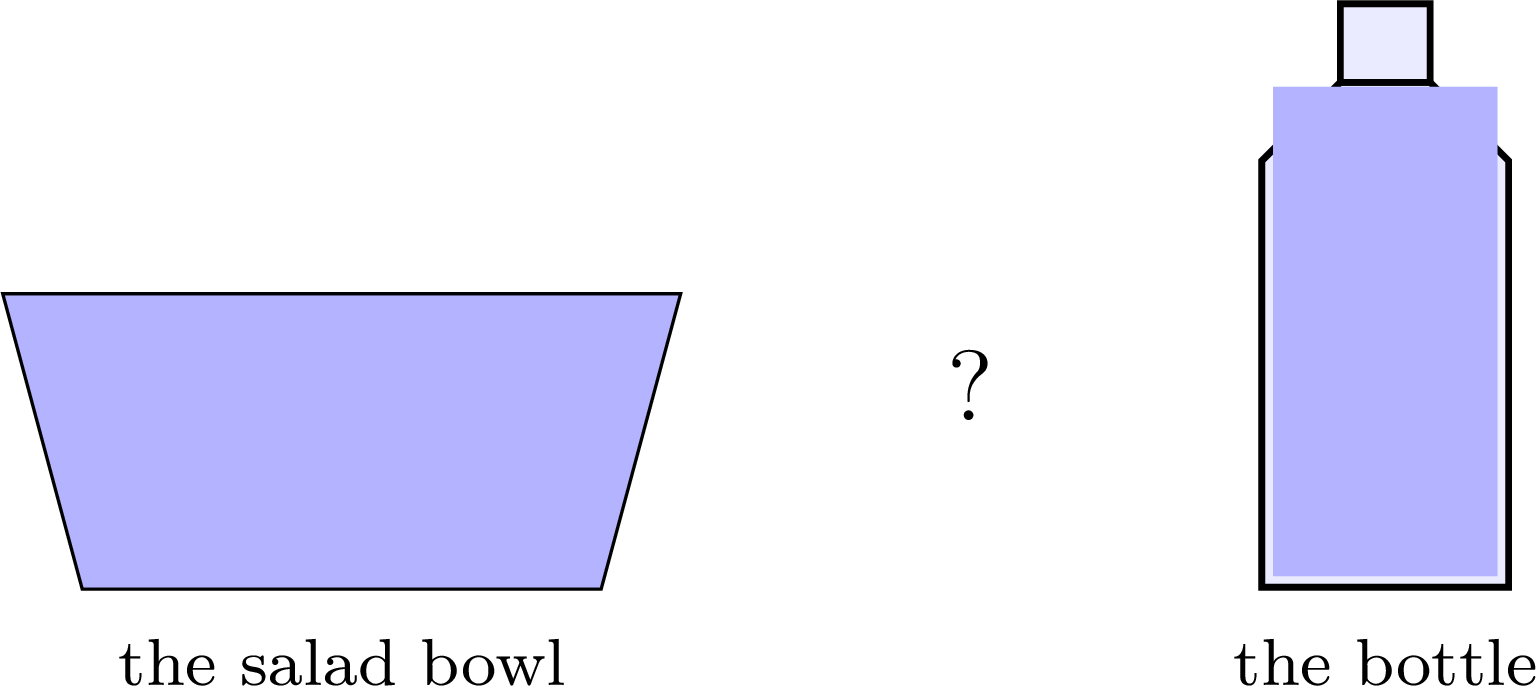
Say how to find out which container holds more, without guessing.
The eye is not enough: the salad bowl looks bigger because it is wide. To decide, Léa pours with the same glass and counts. 
The bottle holds more, although it looks smaller.
Counting glasses only works between people who use the same glass. To be understood by everyone, capacity is measured with shared units.
Counting glasses only works between people who use the same glass. To be understood by everyone, capacity is measured with shared units.
Definition — Holds More and Holds Less
When two containers are full, the one with more water in it holds more. The other one holds less. If they have just as much water, they hold the same. Definition — Capacity
The capacity of a container is the quantity of liquid it can hold. It says what can be poured into it, not how big the container looks. Skills to practice
- Counting Glasses
V
Measuring with a Unit
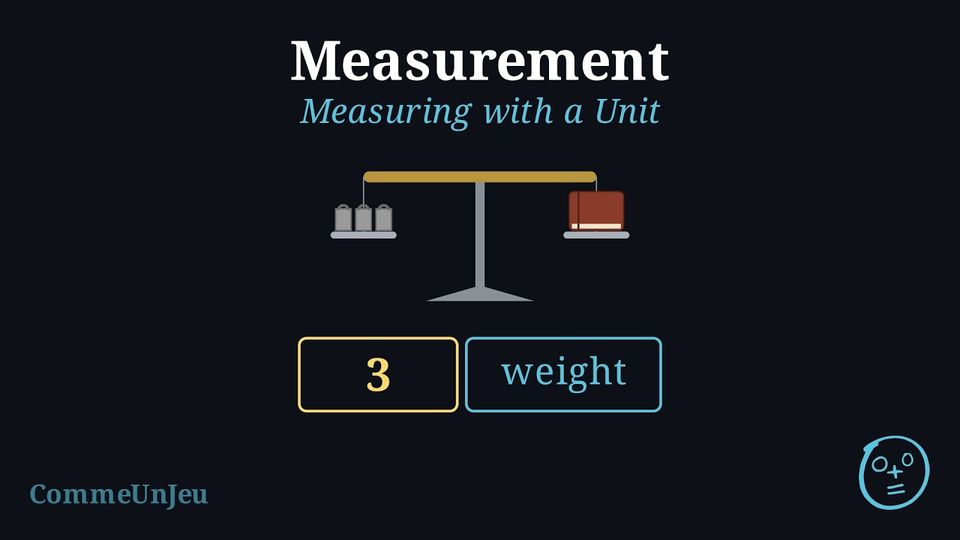
Comparing tells us which object is longer or heavier, but not how much.
To put a number on a measure, we choose a unit and count.
To put a number on a measure, we choose a unit and count.
Definition — Measuring
To measure an object, we choose a unit and count how many of them fit.The result, called the measure, has two parts: a number and a unit.
Method — Measure with a unit
Use the same unit for the whole measurement. Line the units up right next to the object, with no gaps and no overlaps. Then count how many you used. Example

The cucumber is 4 erasers long.
The number is \(4\); the unit is the eraser.
Method — Measuring Mass with a Unit
We measure a mass with a balance: - Put the object on one pan.
- On the other pan, put identical units (all the same), one by one, until the two pans are level.
- Count how many units you used: the mass of the object is that number of units, for example 3 weights.
Example
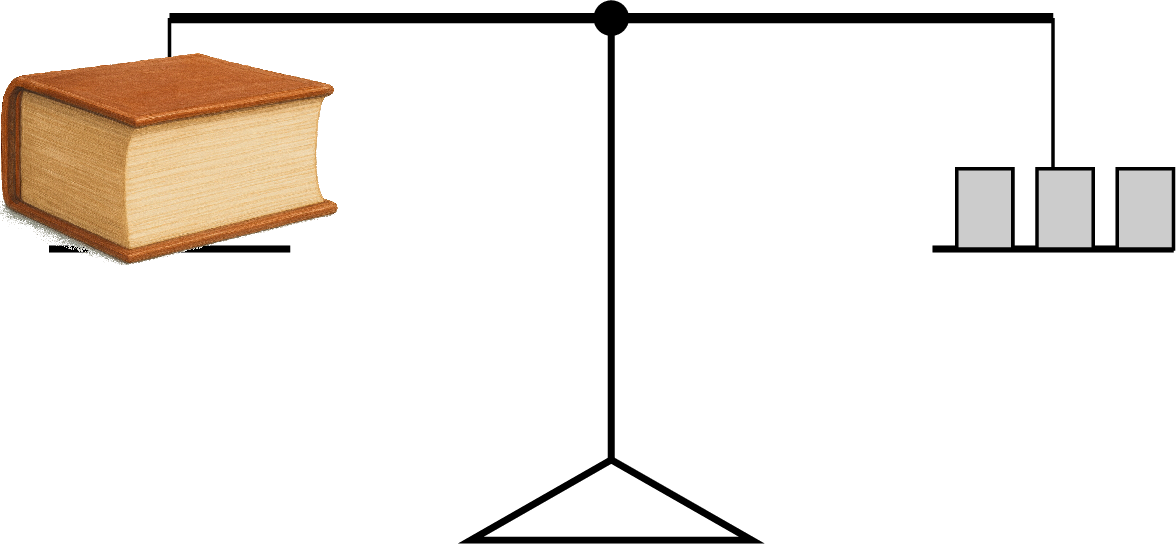
The book balances 3 equal weights.
Its mass is \(3\) weights: the number is \(3\), the unit is the weight.
Skills to practice
- Measuring Length with a Unit
- Measuring Lengths with Blocks
- Measuring Mass with a Unit
VI
A Measure Is a Number and a Unit
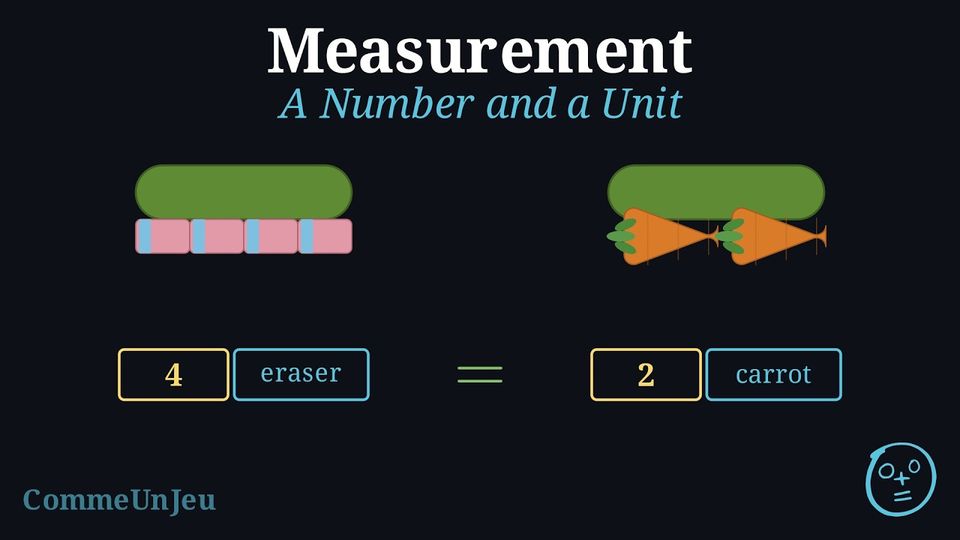
The same object can be measured with different units. The number then changes, but the length stays the same.
So a measure must always give both the number and the unit. The number alone does not say how long an object is.
So a measure must always give both the number and the unit. The number alone does not say how long an object is.
Example
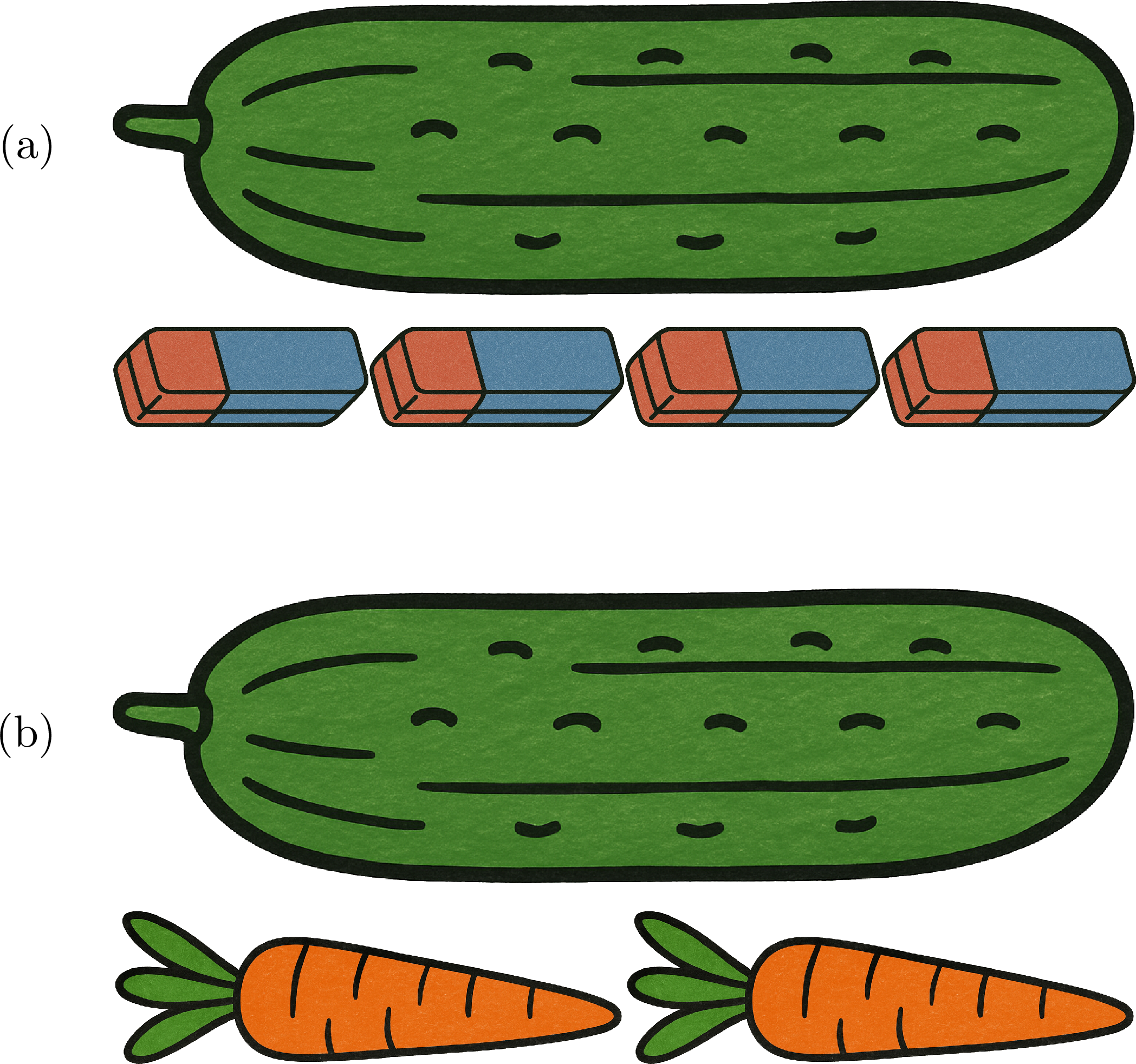
The same cucumber is 4 erasers long (a) or 2 carrots long (b).
Different unit, different number — same length.
Skills to practice
- Measuring One Object with Two Units
VII
Going further
Skills to practice
- Writing Comparisons with Signs
- Writing Measures with Numbers
- Solving Length Problems
- Solving Mass and Capacity Problems
- Quiz
Jump to section