International Baccalaureate · PYP 0
Comparing Lengths
I
Longer or Shorter?
Here are two ribbons. 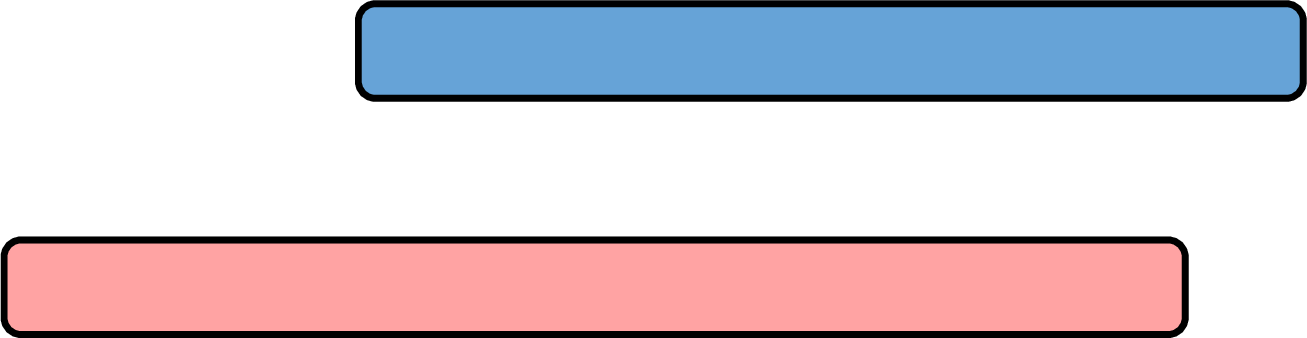
Which ribbon is longer? Careful: they do not start at the same place.
The blue ribbon ends further to the right, but that proves nothing: it does not start where the red one starts. We line up the two beginnings: 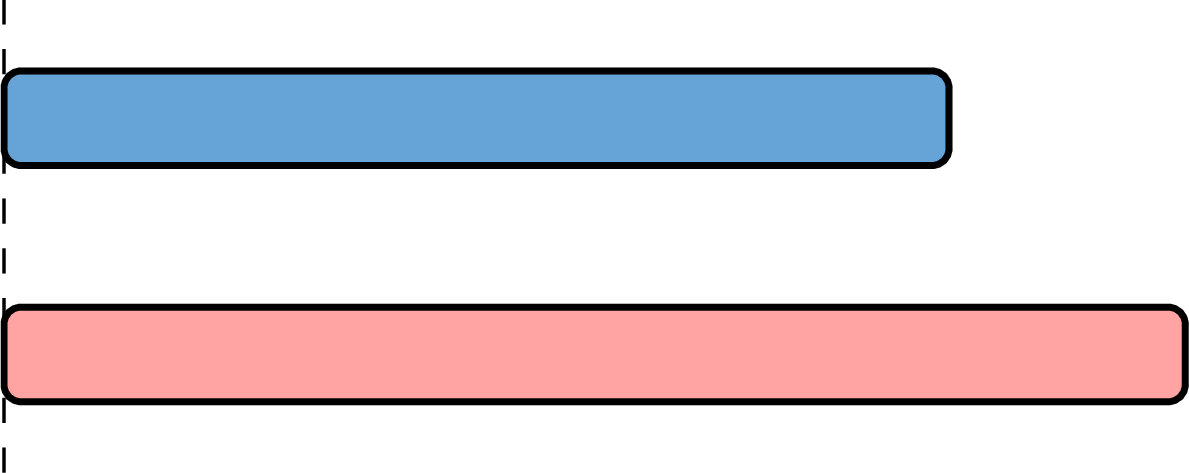
Now we can see: the red ribbon goes further. The red ribbon is longer.
Definition — Longer and Shorter
When two objects start at the same place, if one goes further, it is longer; the other one is shorter. If they end at the same place too, they have the same length. 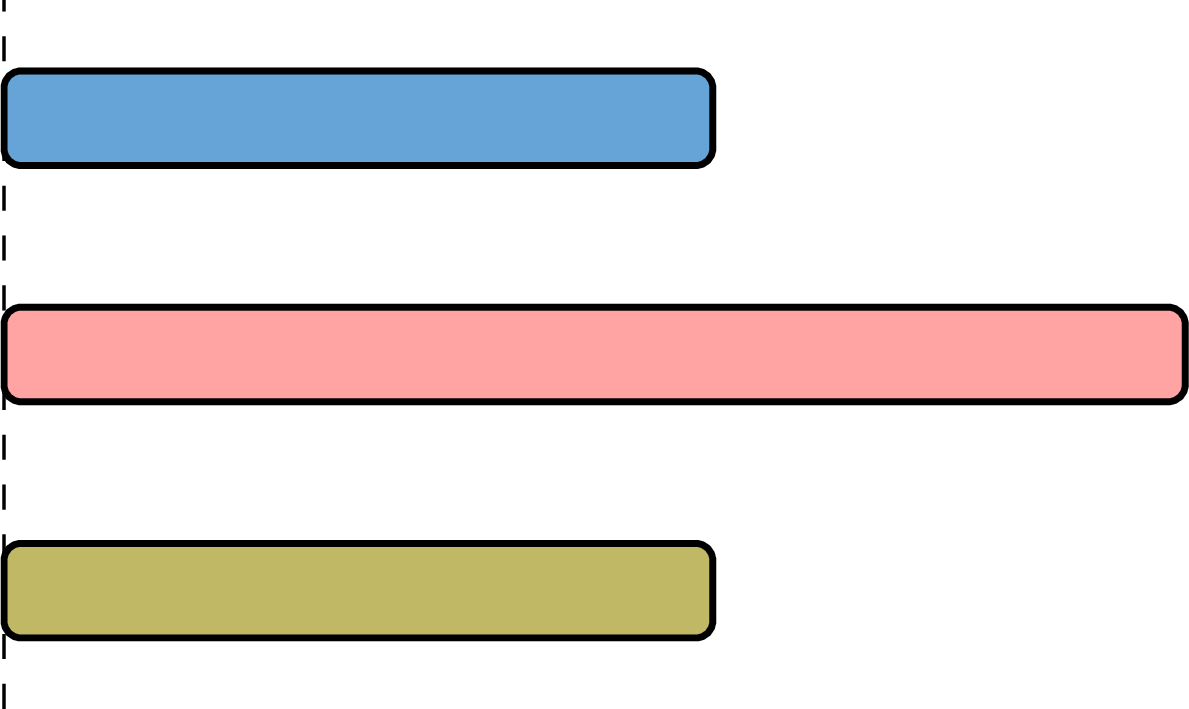
Method — Lining Up the Beginnings
To compare two lengths: - put the objects side by side, straight and pointing the same way;
- line up their beginnings on the same line;
- look at which one goes further: it is the longer one.
Example
Which ribbon is shorter? 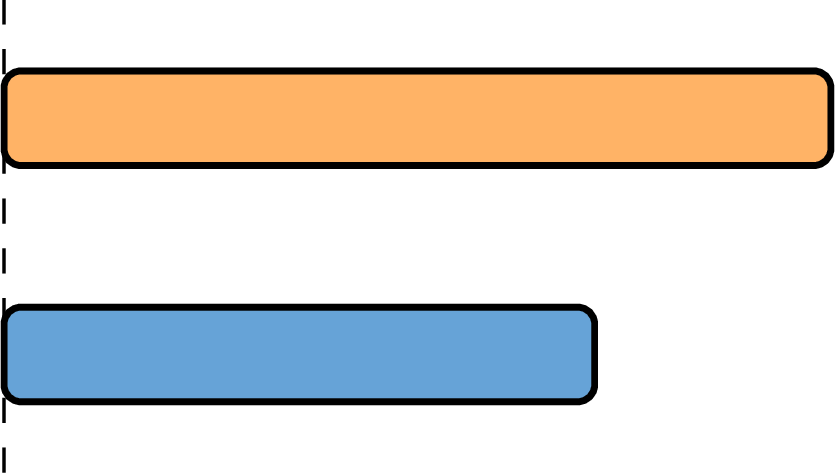
The beginnings are lined up. The blue ribbon stops first: the blue ribbon is shorter.
Skills to practice
- Finding the Longer Ribbon
- Finding the Shorter Ribbon
II
Ordering Lengths
Example
Order the three ribbons from shortest to longest. 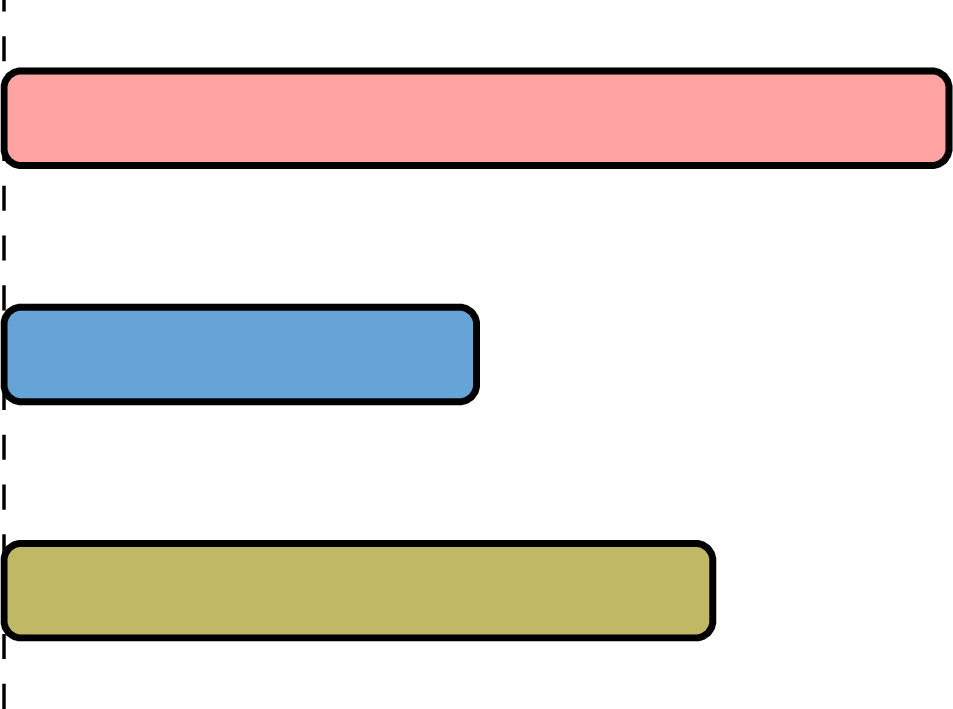
The beginnings are lined up, so we can compare them all. The blue ribbon is the shortest, then comes the green one, and the red one is the longest: like stairs. The blue and the green ribbons are shorter than the red one. 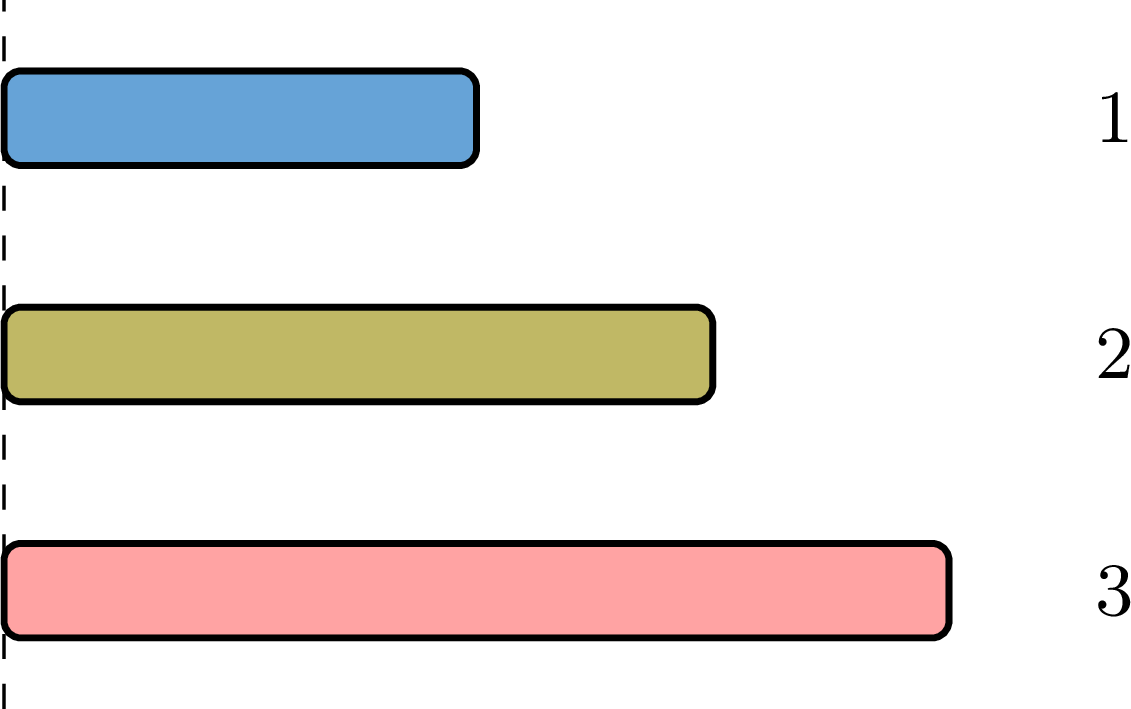
Skills to practice
- Counting the Shorter Ribbons
- Ordering Three Ribbons
III
Comparing with a Paper Strip
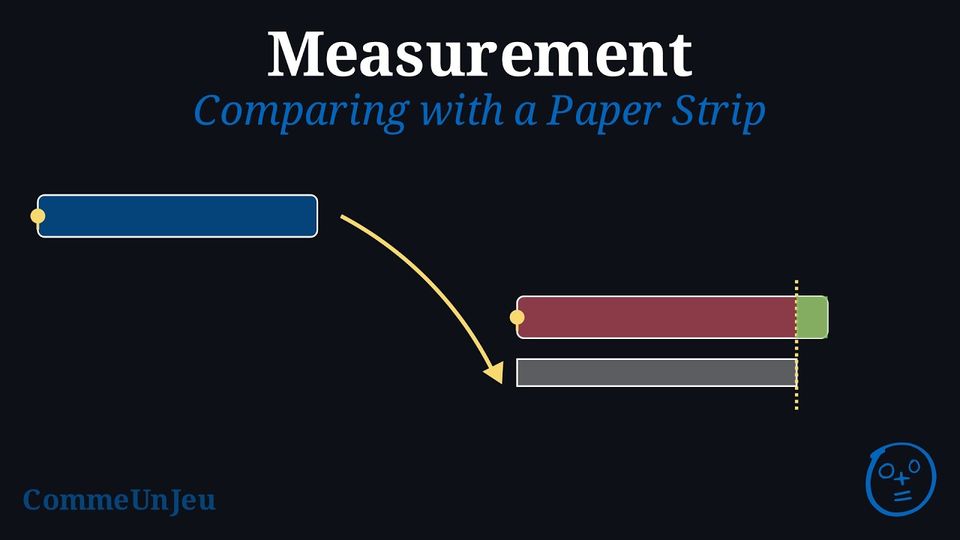
Two ribbons are pinned far apart on the wall. We cannot move them, so we cannot put them side by side. 
Which ribbon is longer? How can we know?
We cut a paper strip exactly as long as the blue ribbon, and we carry the strip to the red ribbon. 
The red ribbon goes further than the strip. So the red ribbon is longer than the blue one — the strip compared them for us.
Method — The Paper Strip
When two objects cannot be moved next to each other: - hold the paper strip straight, line up one end with the first object and cut the strip at the other end: the strip is exactly as long as the object;
- carry the strip to the second object, keep it straight, and line up their beginnings;
- compare the strip and the second object: if the second object goes further than the strip, it is longer than the first object; if it stops before, it is shorter; if they end at the same place, they have the same length.
Skills to practice
- Using the Strip
IV
Review & Quizz
Skills to practice
- Quiz
Jump to section