International Baccalaureate · PYP 0
Comparing Capacities; Hotter or Colder
I
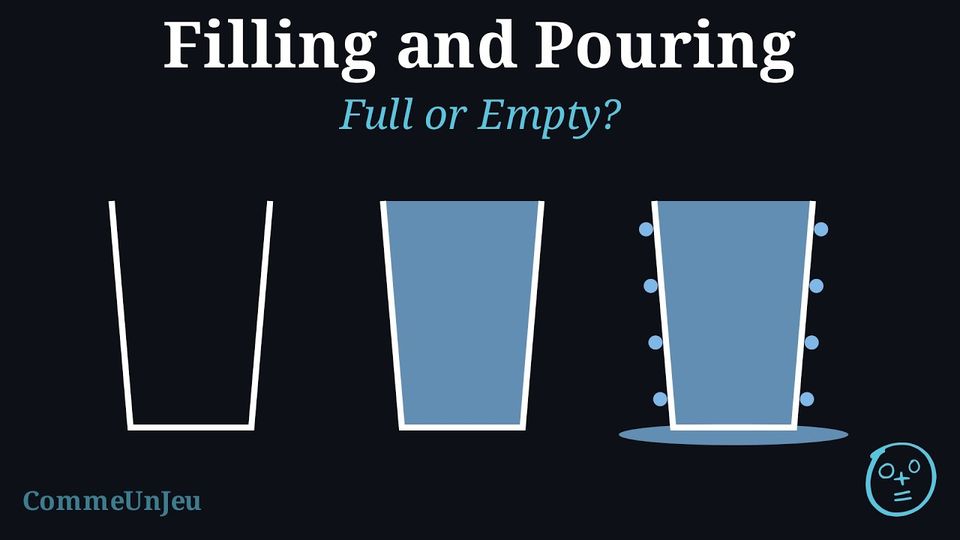
Full or Empty?
Mia pours water into a glass, little by little. 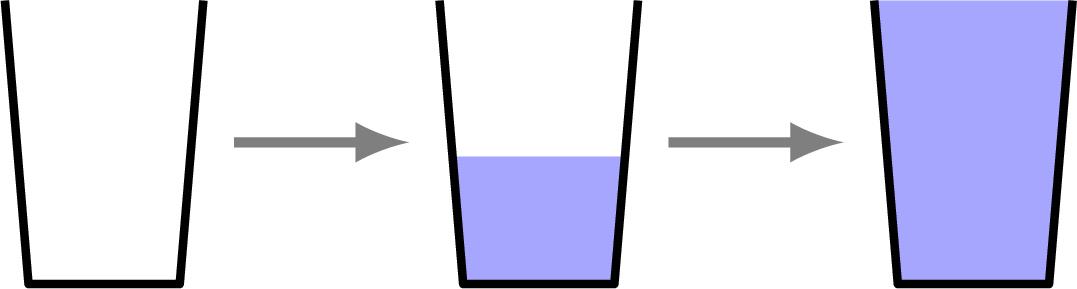
When must Mia stop pouring?
When the water reaches the brim, the top edge of the glass, the glass is full: Mia stops. If she keeps pouring, the water spills over the brim and runs down the glass. 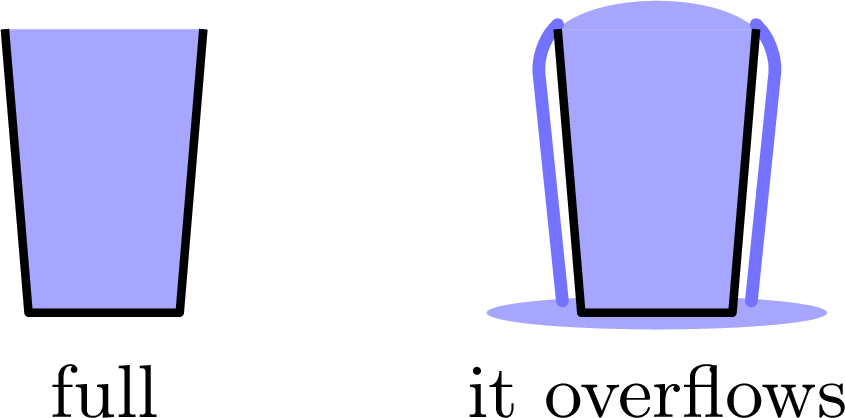
The glass overflows.
Definition — Full and Empty
A container is empty when there is no water in it. It is full when the water reaches the brim: no more water can go in. If we pour more water into a full container, the water spills out: the container overflows. 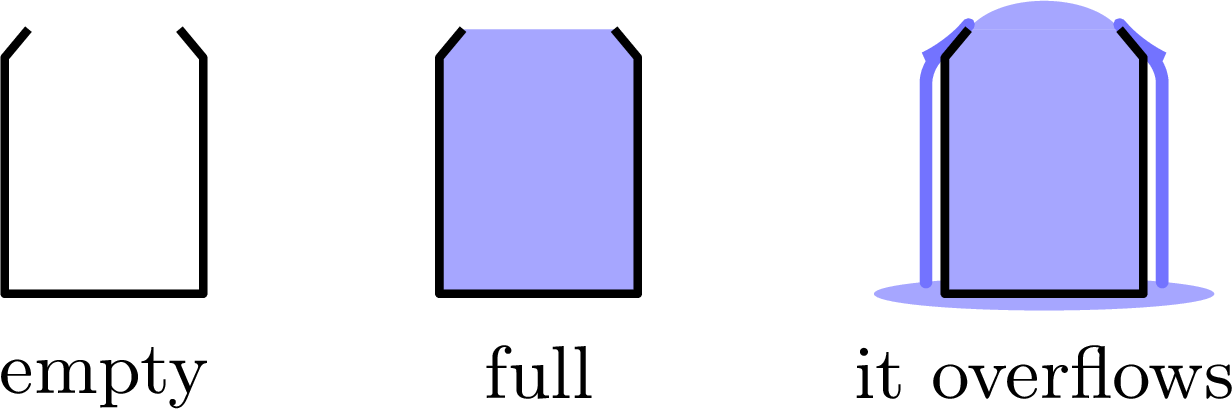
Example
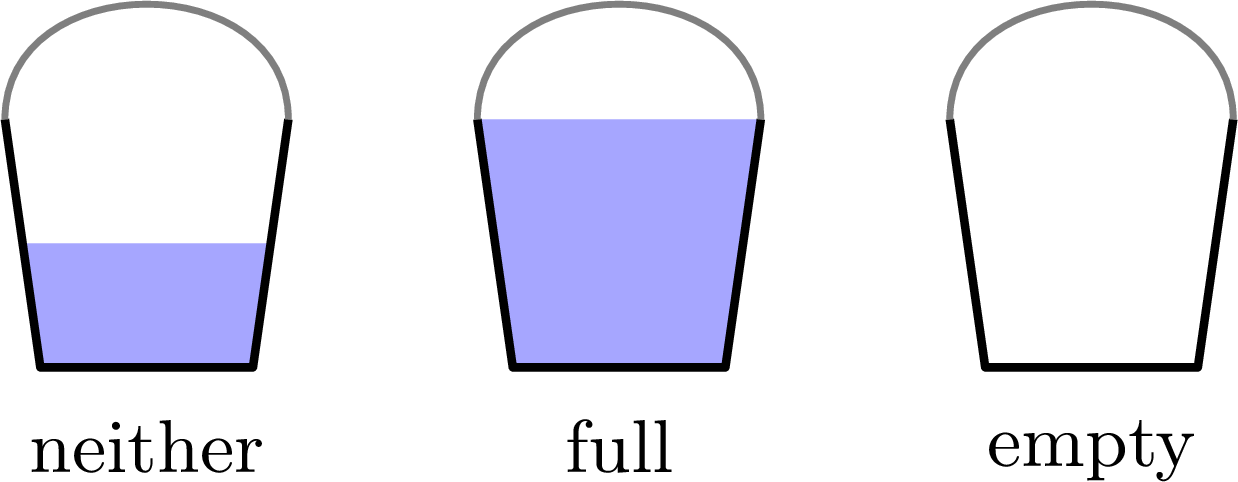
Which bucket is full? Which bucket is empty? 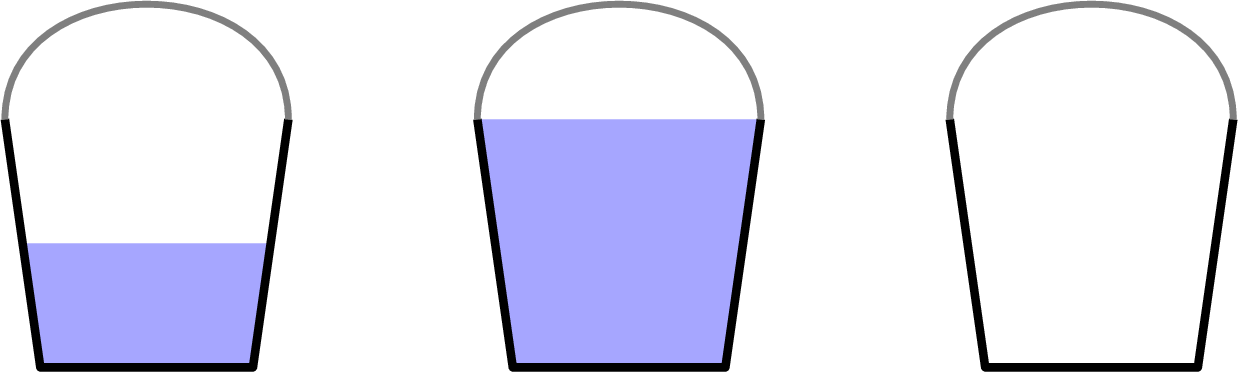
Skills to practice
- Finding Full and Empty
II
Which Holds More?
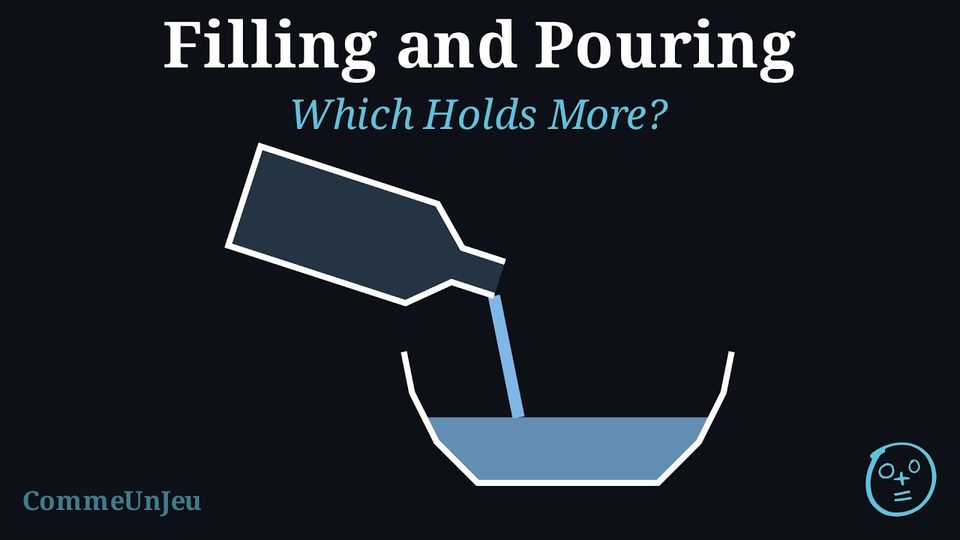
Here are a bottle and a bowl. 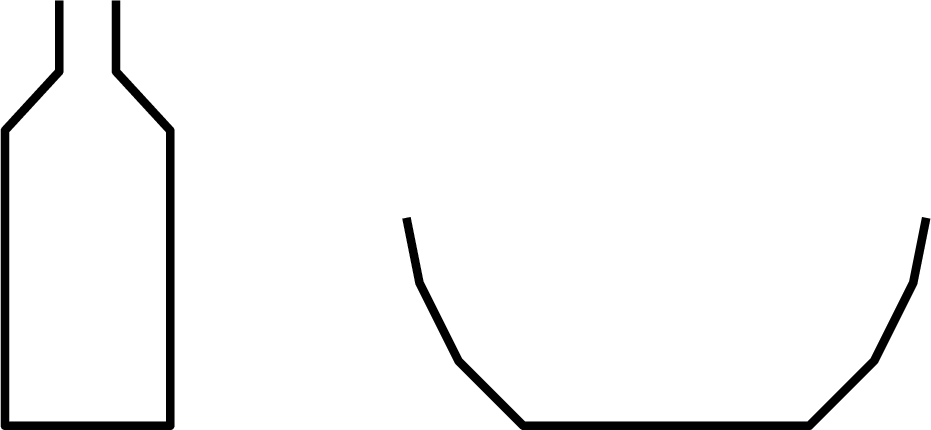
Which one can hold more water? Our eyes cannot tell.
We fill the bottle to the brim. Then we pour all of its water into the empty bowl: 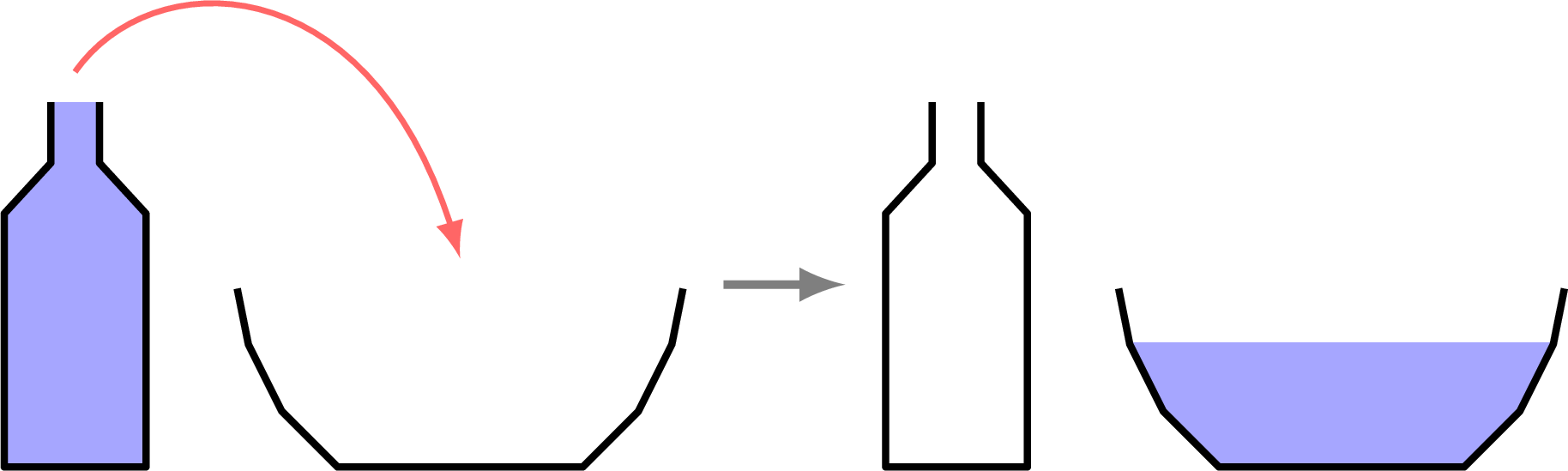
The bowl is not full: there is still room for more water. The bowl holds more than the bottle.
Definition — Holds More and Holds Less
When two containers are full, the one with more water in it holds more. The other one holds less. If they have just as much water, they hold the same. Method — Pouring One into the Other
To compare two containers, we pour one into the other. - We fill the first container to the brim.
- We pour all of its water into the second container, which is empty.
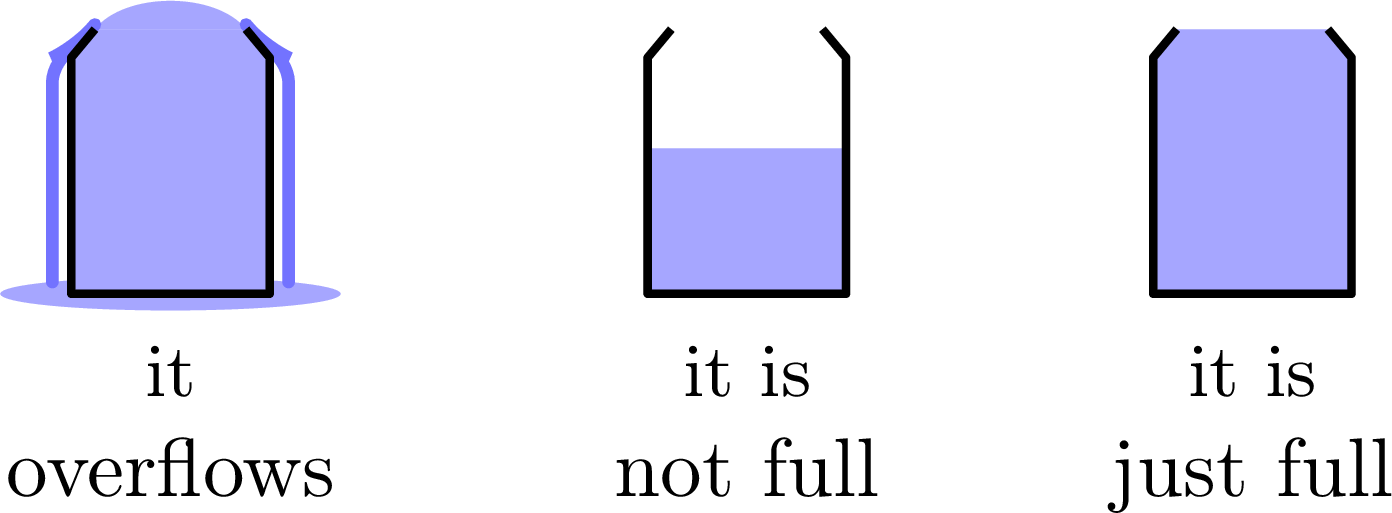
- it overflows: the first container holds more;
- it is not full: the second container holds more;
- it is just full: the two containers hold the same.
Example
We fill the jug to the brim. We pour all of its water into the empty saucepan. 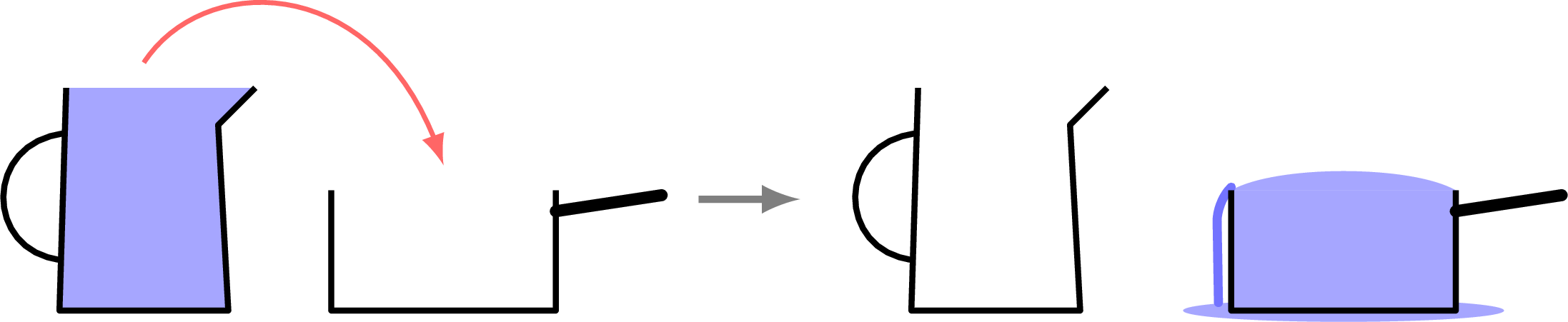
The saucepan overflows: not all the water of the jug fits in it. The jug holds more than the saucepan.
Skills to practice
- Reading the Pouring
III
Ordering Three Containers
Example
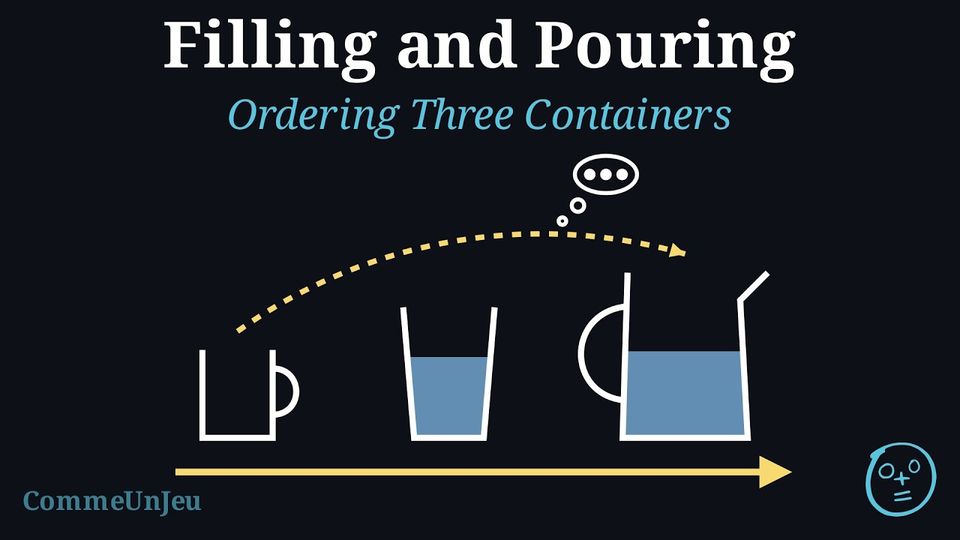
We pour twice. Each time, we fill the first container to the brim and pour all of its water into the second, empty one: the cup into the glass, then the glass into the jug. 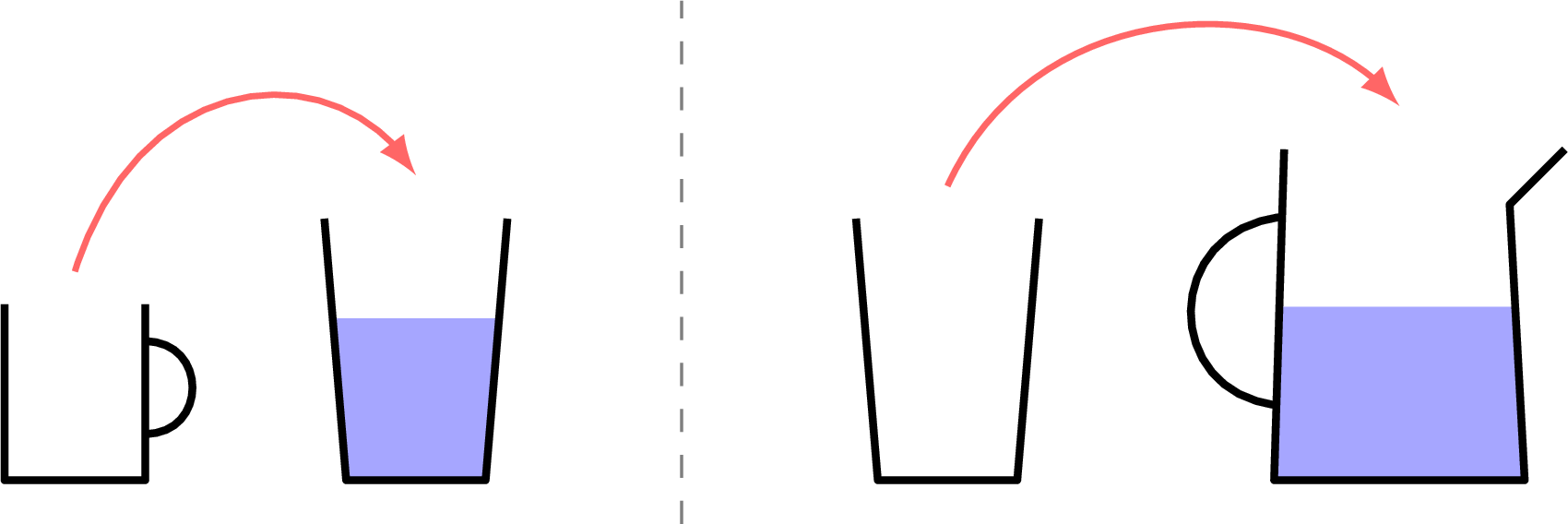
The first pouring says: the glass holds more than the cup. The second pouring says: the jug holds more than the glass. So the order is cup, glass, jug, from the one that holds the least to the one that holds the most. We never poured the cup into the jug, but thinking tells us that the jug holds more than the cup.
Skills to practice
- Finding the Most and the Least
- Ordering Three Containers
IV
Taller Does Not Always Mean More
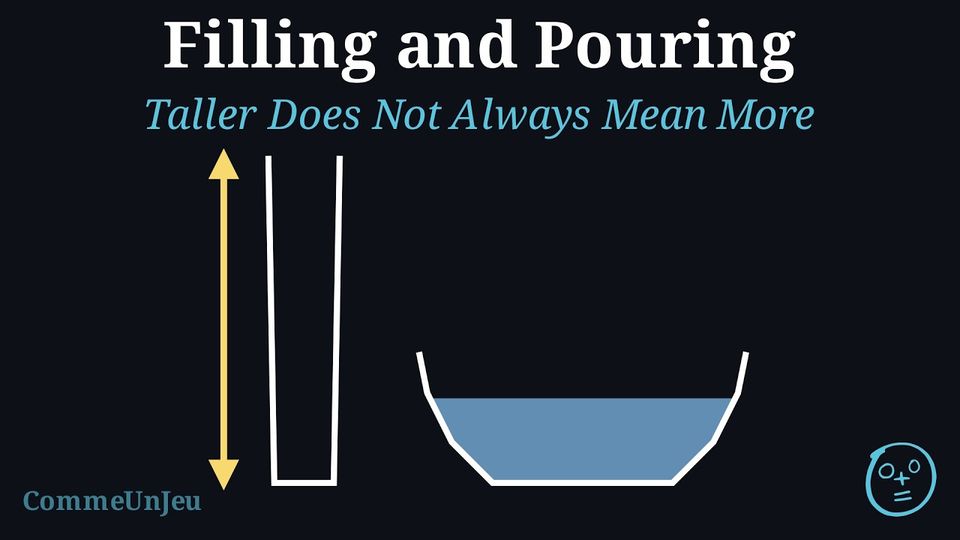
The Taller One Does Not Always Hold More
The vase is much taller than the bowl. We fill the vase to the brim and pour all of its water into the empty bowl: 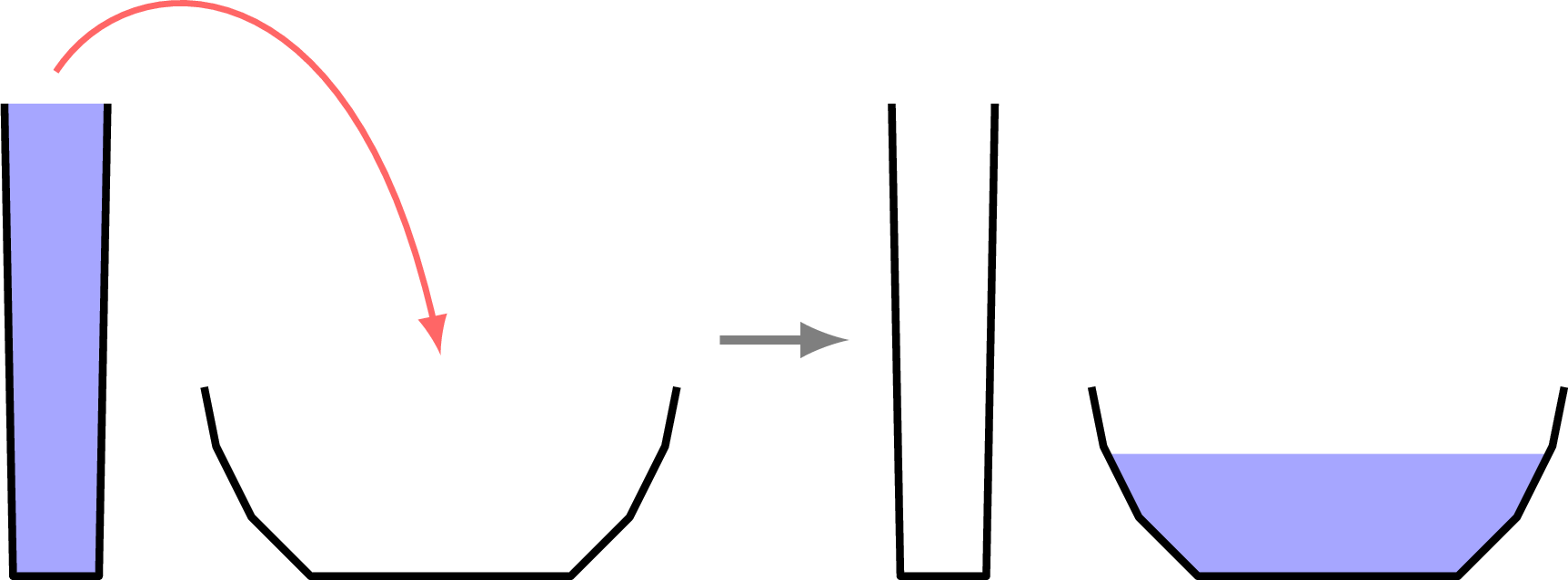
The bowl is not full: the bowl holds more, even though the vase is taller. The bowl is wide. Being tall and holding more are two different things: to know which one holds more, we pour.
Skills to practice
- Looking Past the Height
V
Hotter or Colder?
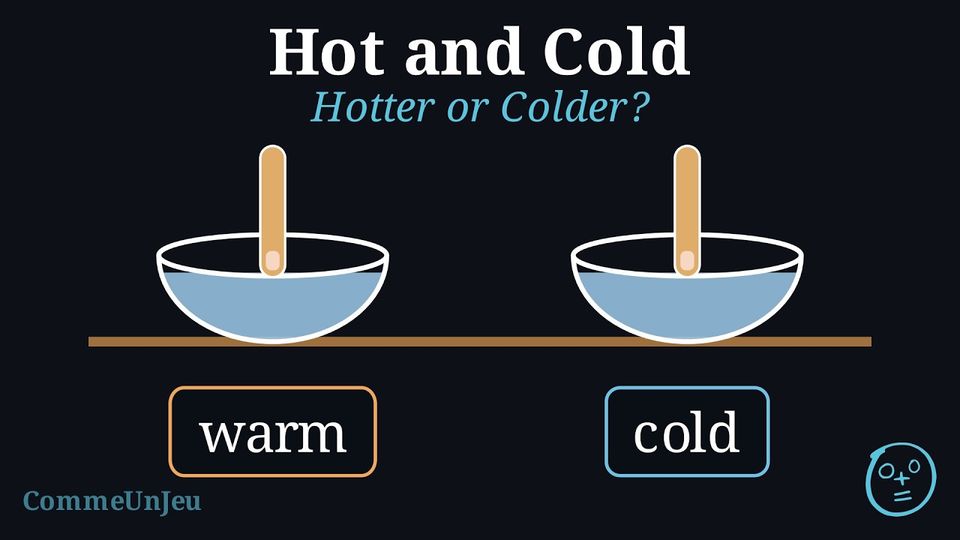
Sam has two bowls of water. They look exactly the same. 
Which bowl holds the warmer water? We cannot see it with our eyes.
Sam asks an adult, who checks that the water is not too hot. Then Sam dips a finger into each bowl. The water on the left feels warm, the water on the right feels cold: the left bowl holds the warmer water. 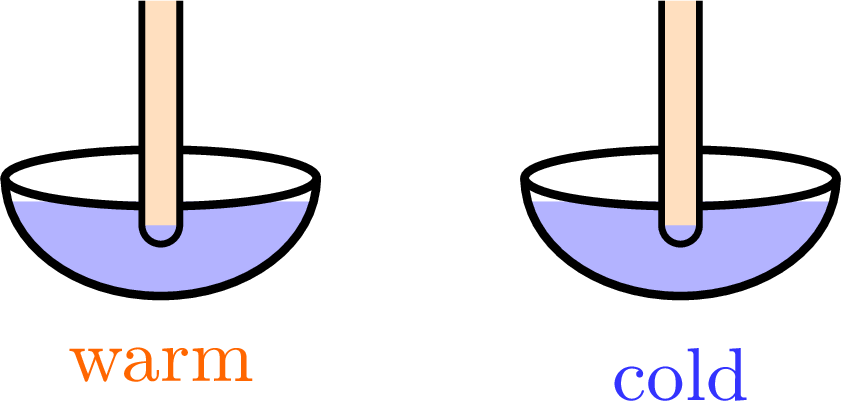
We find it out by touching, not by looking.
Definition — Hotter and Colder
Some things are hot, like soup just cooked. Some are cold, like snow. In between, some are warm, like bath water. 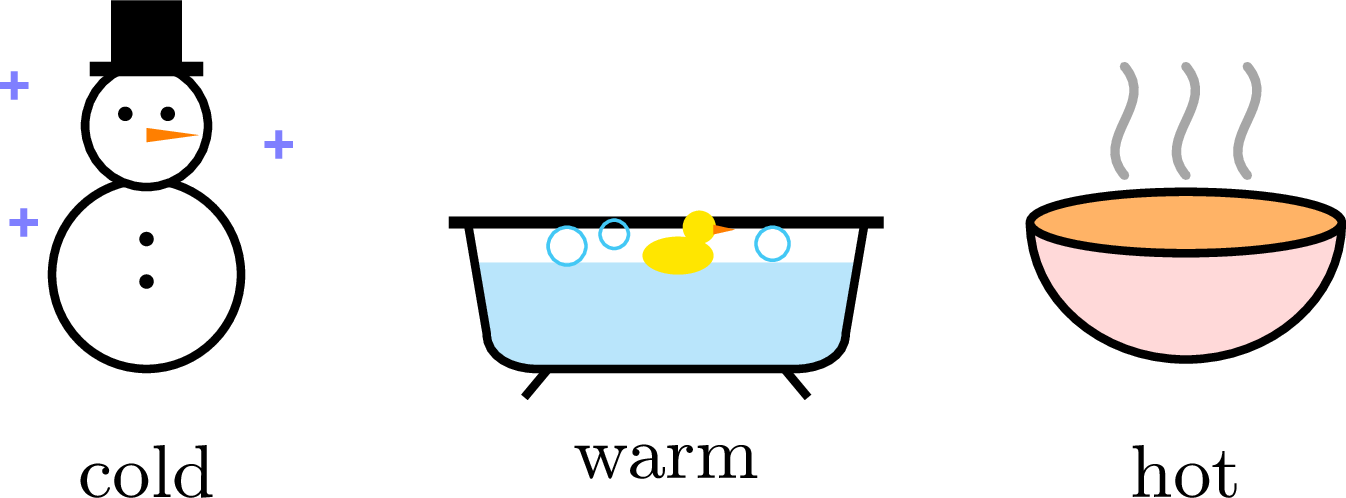
Method — Feeling Which One Is Hotter
Hot and cold are felt, not seen. To compare two things: - we first ask an adult: something very hot can burn, and we never touch it;
- we touch the first thing, then the second one, with the same hand;
- the one that feels hotter is the hotter one.
A Picture Only Reminds Us
We cannot touch a picture. The steam above the soup and the frost on the ice lolly are only clues: they remind us of what we already know — soup just cooked is usually hot, an ice lolly is usually cold. Two things that look the same, like Sam's two bowls of water, can only be compared by touching them, once an adult says it is safe. 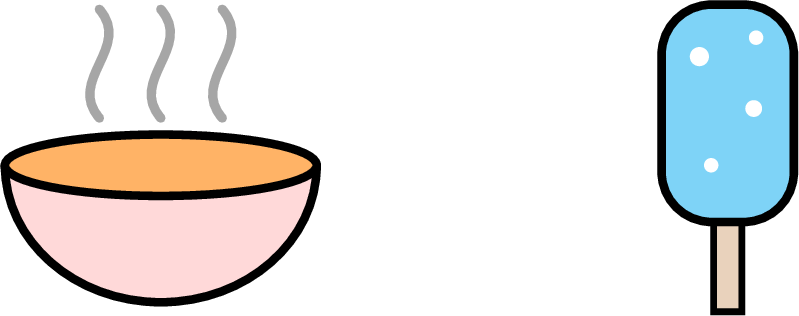
Example
Order these three things from the coldest to the hottest. 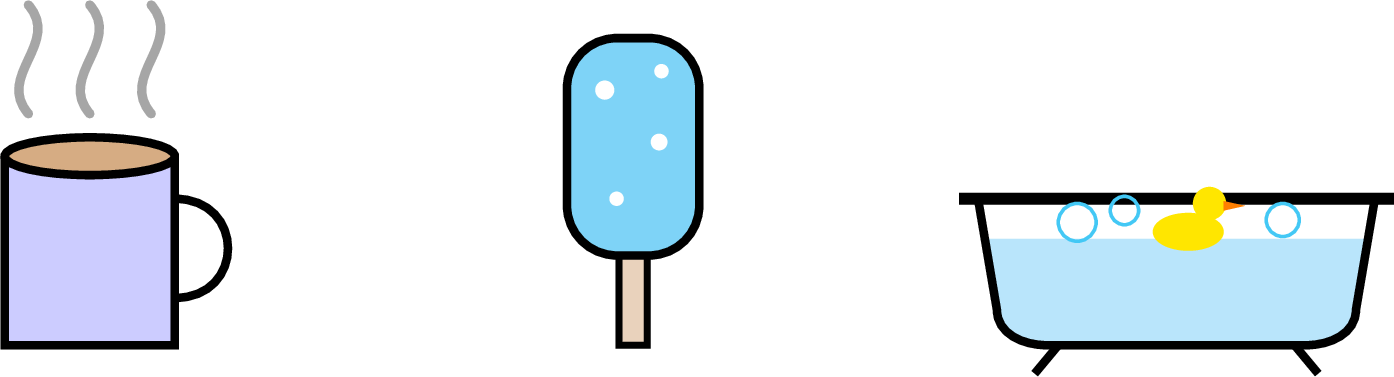
The ice lolly is cold, the bath is warm, the cocoa is hot. From the coldest to the hottest: the ice lolly, the bath, the cocoa. 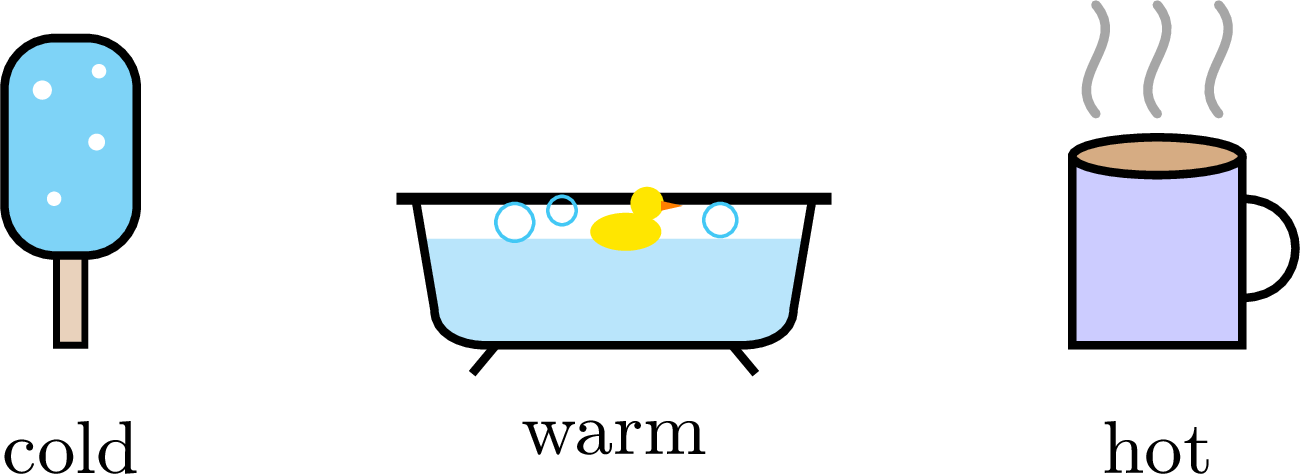
Skills to practice
- Finding the Hotter One
- Finding the Colder One
- Ordering from the Coldest to the Hottest
VI
Review & Quizz
Skills to practice
- Quiz
Jump to section