International Baccalaureate · PYP 0
Comparing Masses
I
Heavier or Lighter?
Here are a teddy bear and a book. 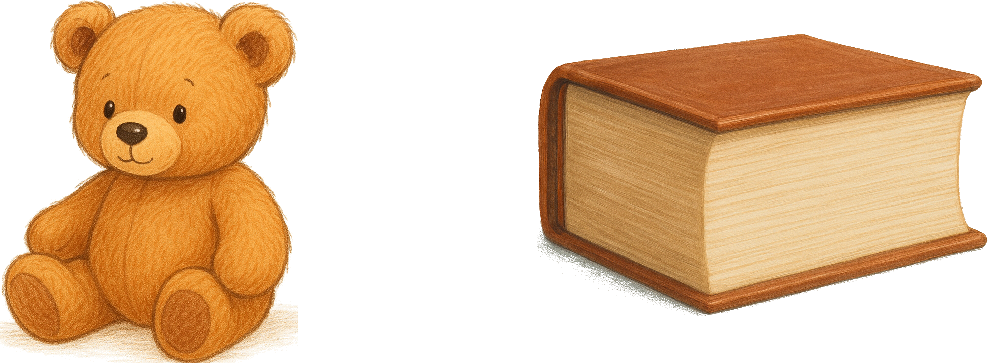
Which one is heavier? We cannot see it with our eyes.
We can hold one in each hand and feel, or use a balance: 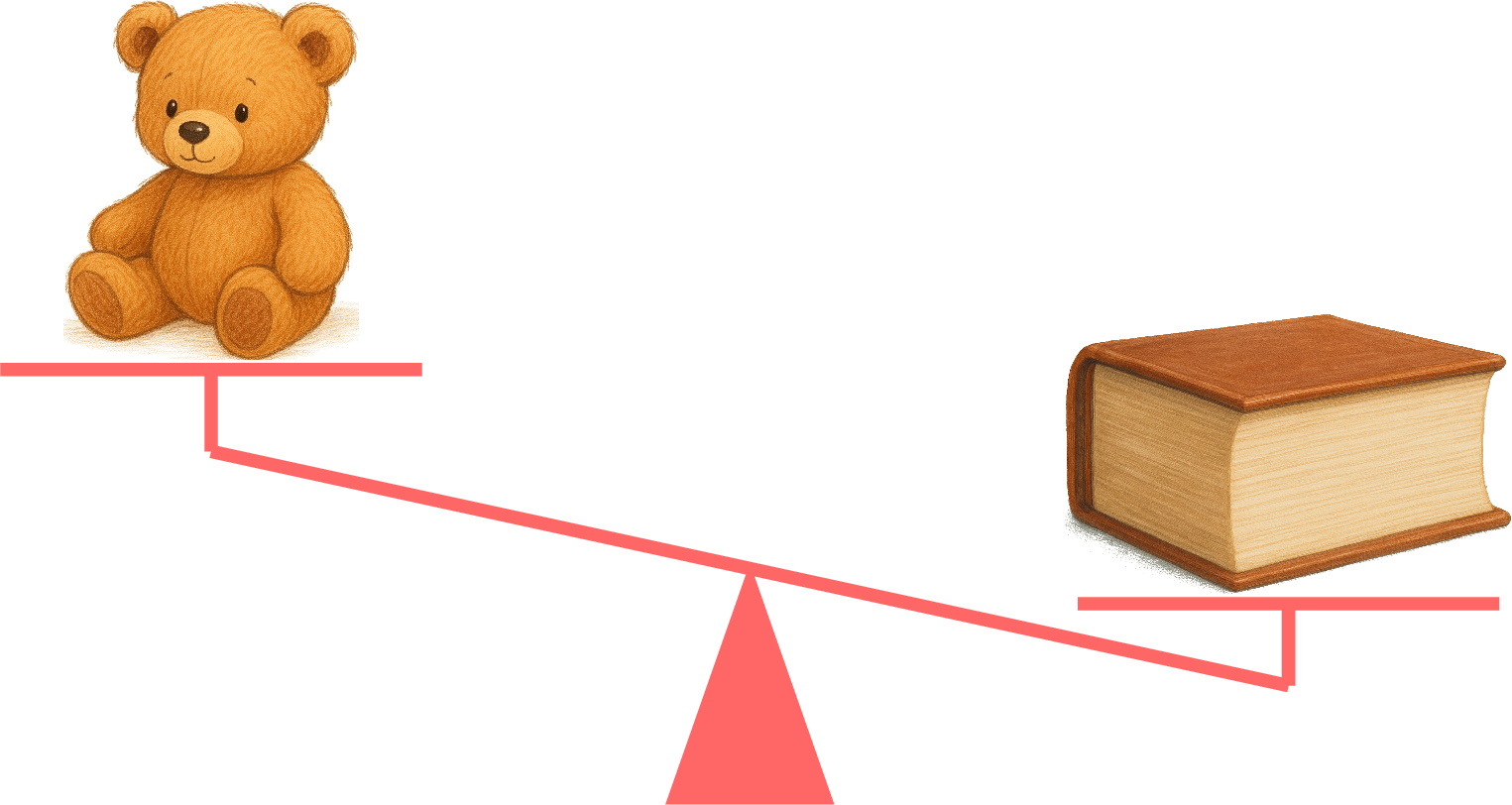
The book side goes down: the book is heavier than the teddy bear.
Definition — Heavier and Lighter
The object that pulls our hand down more is heavier. The other one is lighter. If neither pulls more, they have the same mass. Method — The Balance
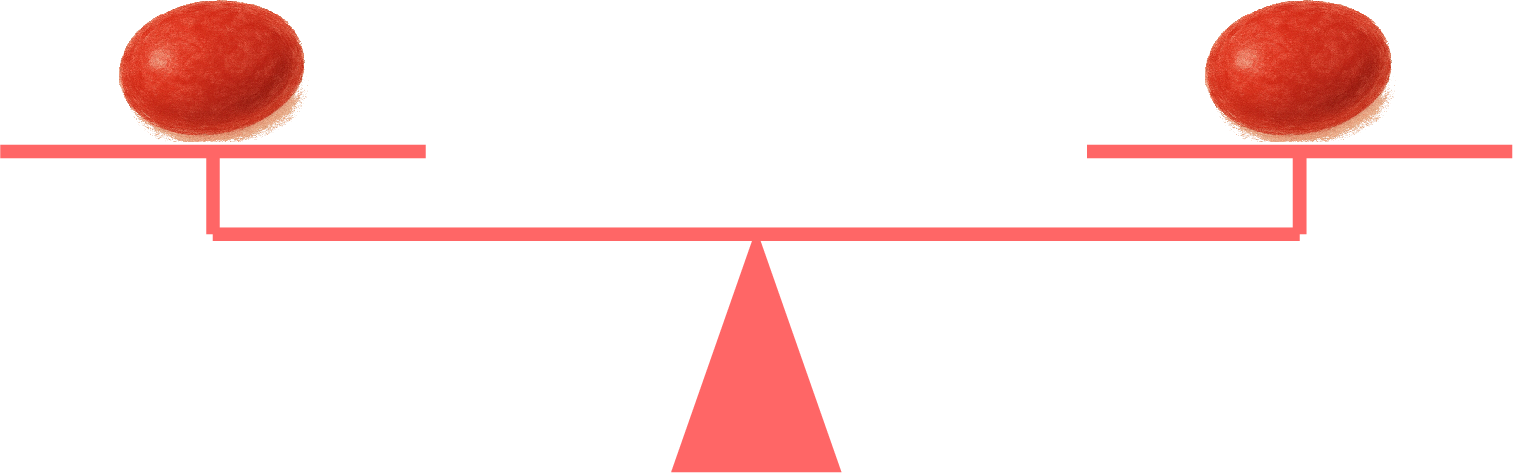
A pan balance has two pans: when it is empty, they rest at the same height. - We put one object on each pan.
- The pan that goes down holds the heavier object.
- If the two pans stay level, the objects have the same mass.
Example
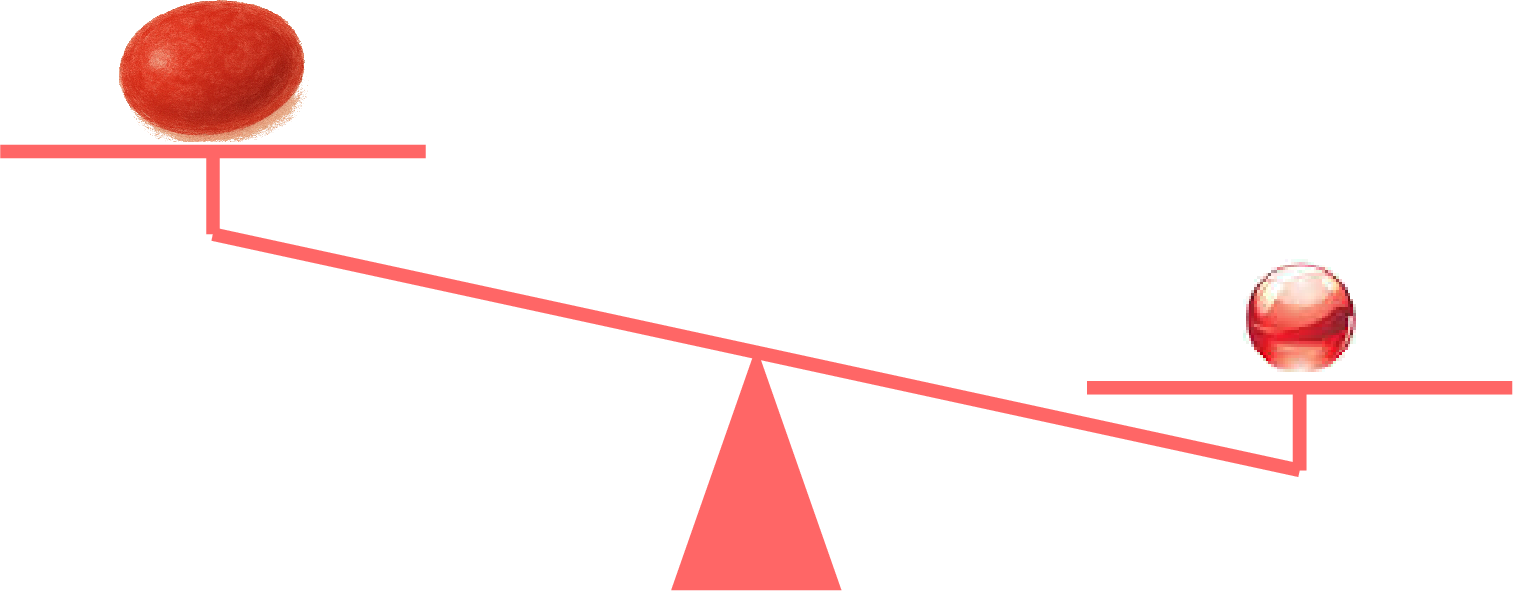
Which one is lighter? 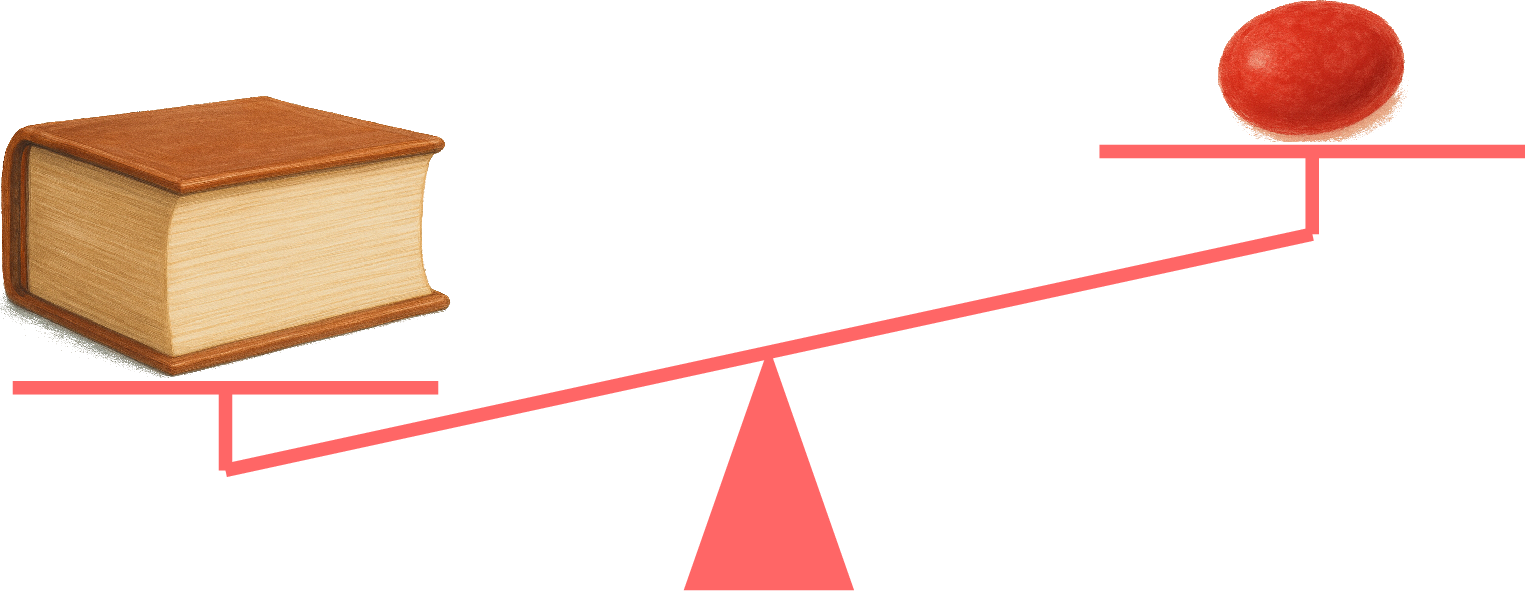
The book side goes down, so the book is heavier — and the sweet is lighter.
Skills to practice
- Finding the Heavier One
- Finding the Lighter One
II
Ordering Masses
Example
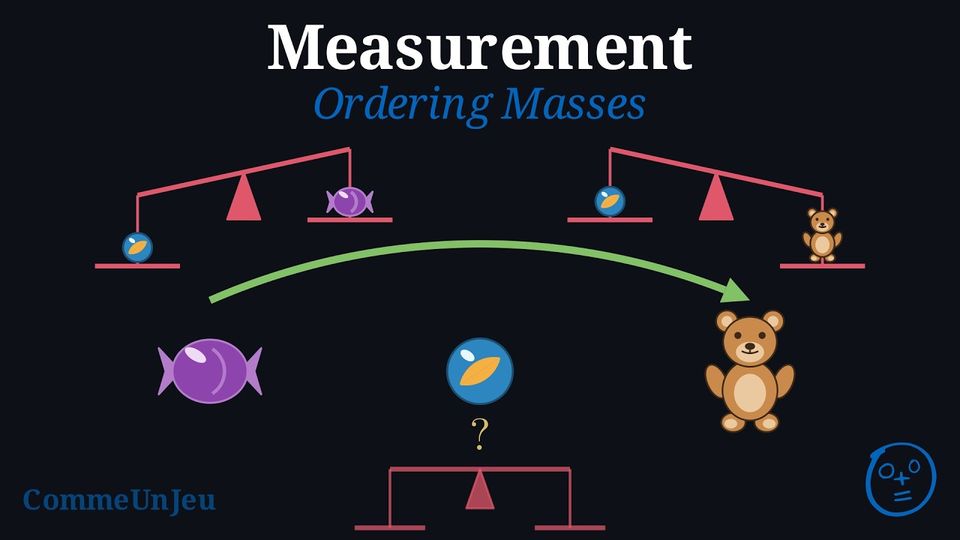
We weigh twice. Order the three objects from lightest to heaviest. 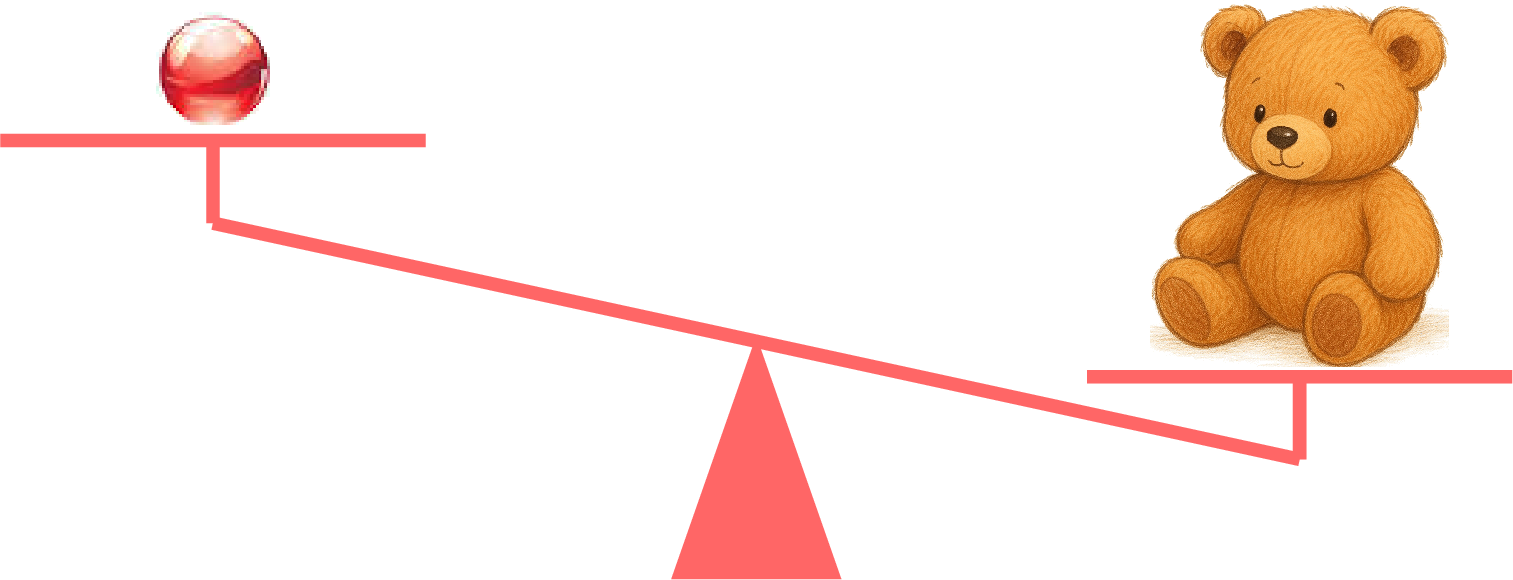
The first balance says: the marble is heavier than the sweet. The second says: the bear is heavier than the marble. So the order is sweet, marble, bear — from lightest to heaviest.
Method — Without Weighing Them Together
We never put the sweet and the bear on the balance together. But we can still be sure: the bear is heavier than the marble, and the marble is heavier than the sweet, so the bear is heavier than the sweet. Thinking gives the answer without weighing. Skills to practice
- Finding the Heaviest of Three
- Ordering Three Masses
III
Big Does Not Always Mean Heavy
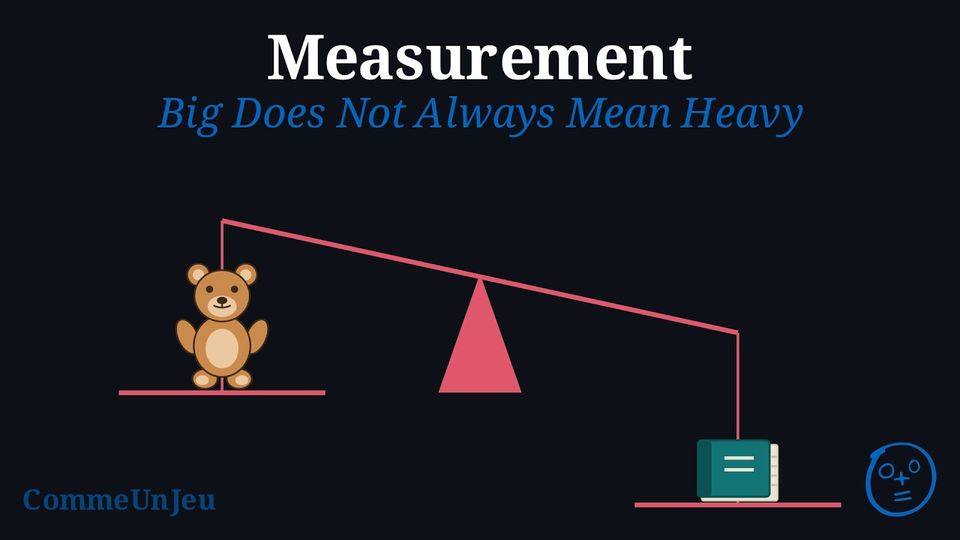
The Bigger One is Not Always Heavier
The teddy bear is much bigger than the book. But on the balance the book side goes down: The book is heavier, even though the bear is bigger. Being big and being heavy are two different things.
Skills to practice
- Reading the Balance Carefully
IV
Review & Quizz
Skills to practice
- Quiz
Jump to section