International Baccalaureate · PYP 4
Area
I
Units of Area
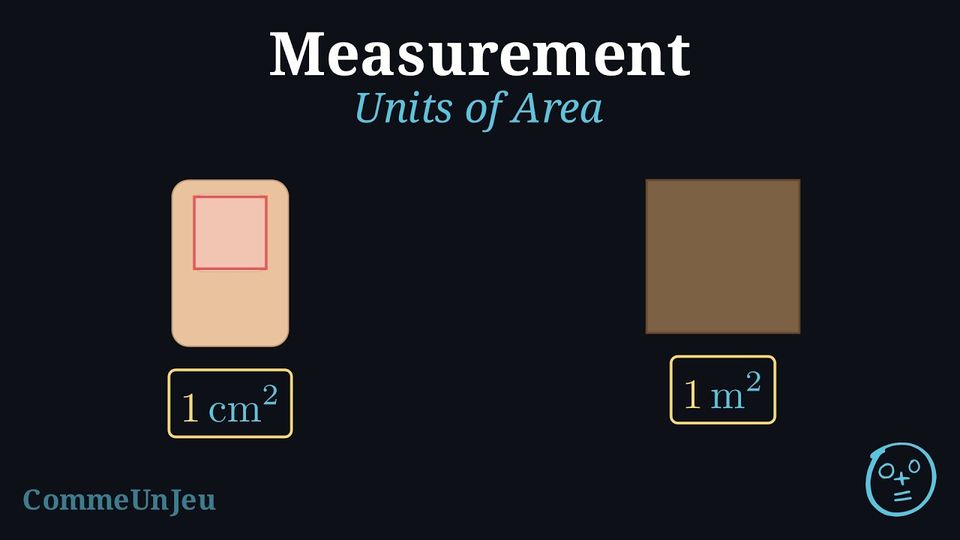
When we measure area, it is important to use standard units so that everyone gets the same measurement. Non-standard units, such as books or tiles of different sizes, can give different answers because they are not all the same size. For area, we use standard units like the square centimetre and the square metre.
Definition — Units of Area
- Square centimetre \(\left(\mathrm{cm}^2\right)\): The area of a square that is 1 cm on each side. This is about the size of your thumbnail. We write this as \(1\;\text{cm}^2\).

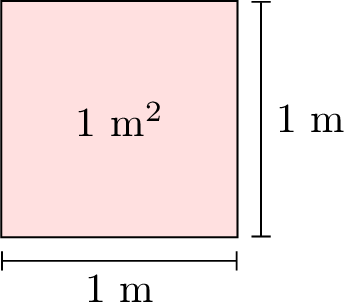
- Square metre \(\left(\mathrm{m}^2\right)\): The area of a square that is 1 m on each side. This is about the size of the top of a small square table. We write this as \(1\;\text{m}^2\).
Skills to practice
- Choosing Units for Area
- Finding the Area in Square Units
II
Area of Rectangles and Squares
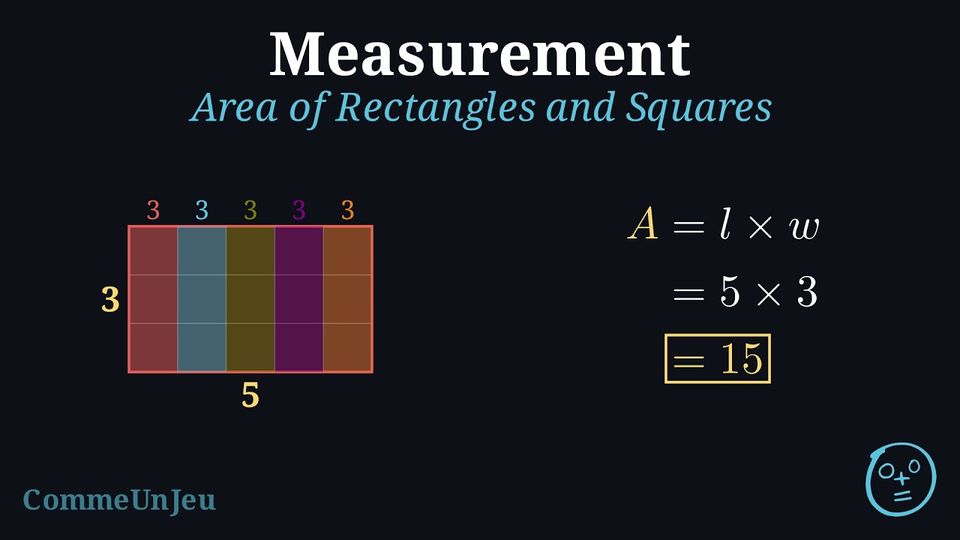
Counting every single square to find the area can take a long time. Is there a shortcut?
Consider a rectangle that is 5 units long and 3 units wide. 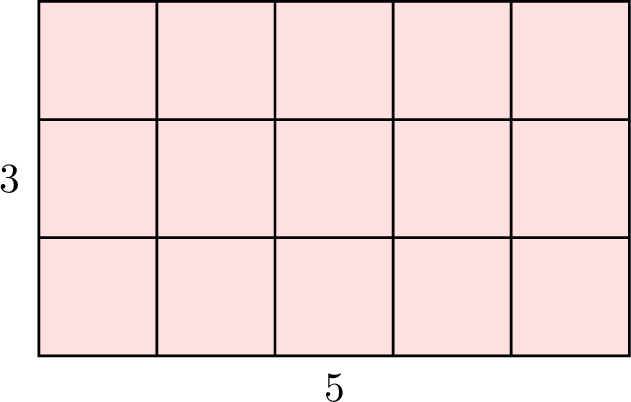
We can find its area by adding up the squares in each column. 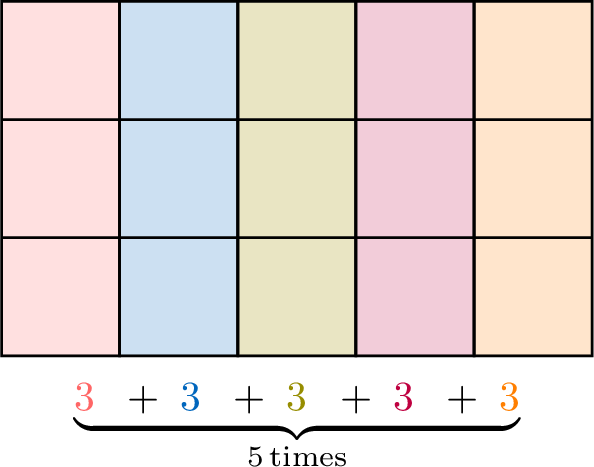
The area is \(\underbrace{\textcolor{colordef}{3}\;\;+\;\textcolor{colorprop}{3}\;\;+\;\textcolor{olive}{3}\;\;+\;\textcolor{purple}{3}\;\;+\;\textcolor{orange}{3}}_{5\,\text{times}} = 5 \times 3 = 15\) square units.
This shows that we can find the area of a rectangle by simply multiplying its length by its width.
Consider a rectangle that is 5 units long and 3 units wide.
This shows that we can find the area of a rectangle by simply multiplying its length by its width.
Proposition — Area Formulas
To find the area of a rectangle, multiply its length by its width. To find the area of a square, multiply the side length by itself. | Shape | Diagram | Area Formula |
| Rectangle | 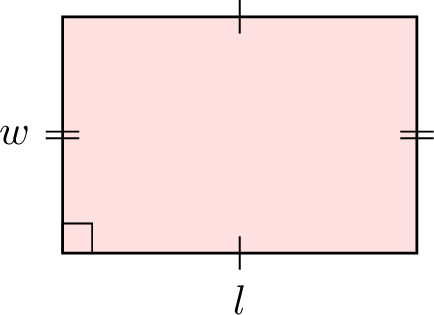 | \(A = l \times w\) |
| Square | 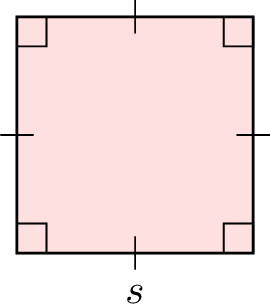 | \(A = s \times s\) |
Example
Find the area of the rectangle: 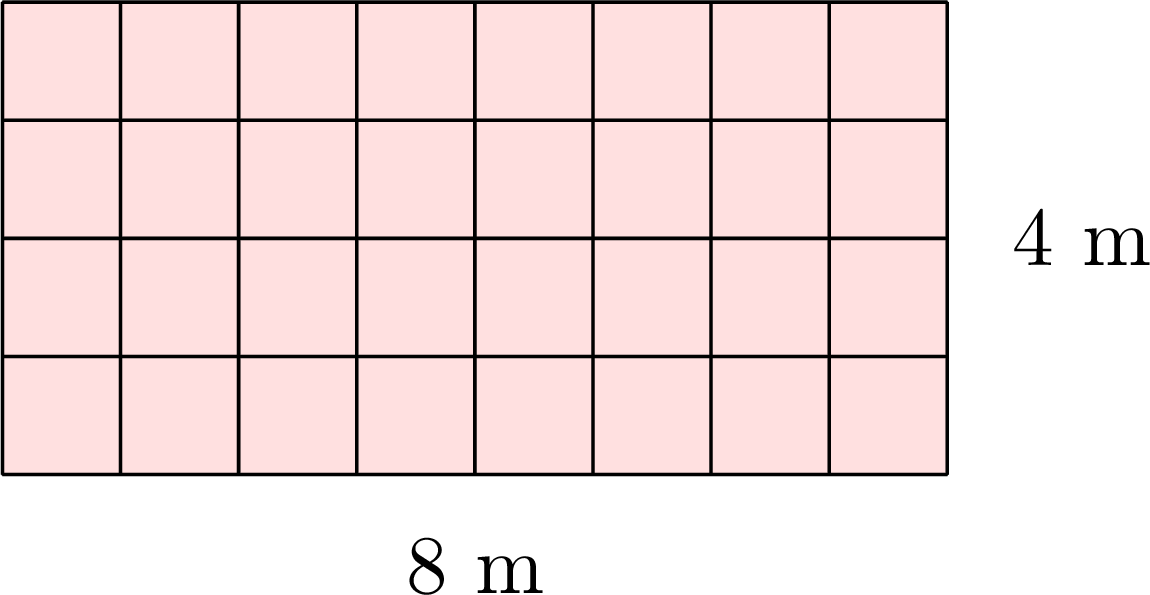
This is a rectangle with length \(l = 8\) m and width \(w = 4\) m. Using the formula for the area of a rectangle: $$\begin{aligned}[t] A &= l \times w \\
&= 8 \times 4 \\
&= 32 \, \mathrm{m}^2 \end{aligned}$$ The area is \(32\) square metres (we read \(32\,\mathrm{m}^2\) as “32 square metres”).
Example
Find the area of the square: 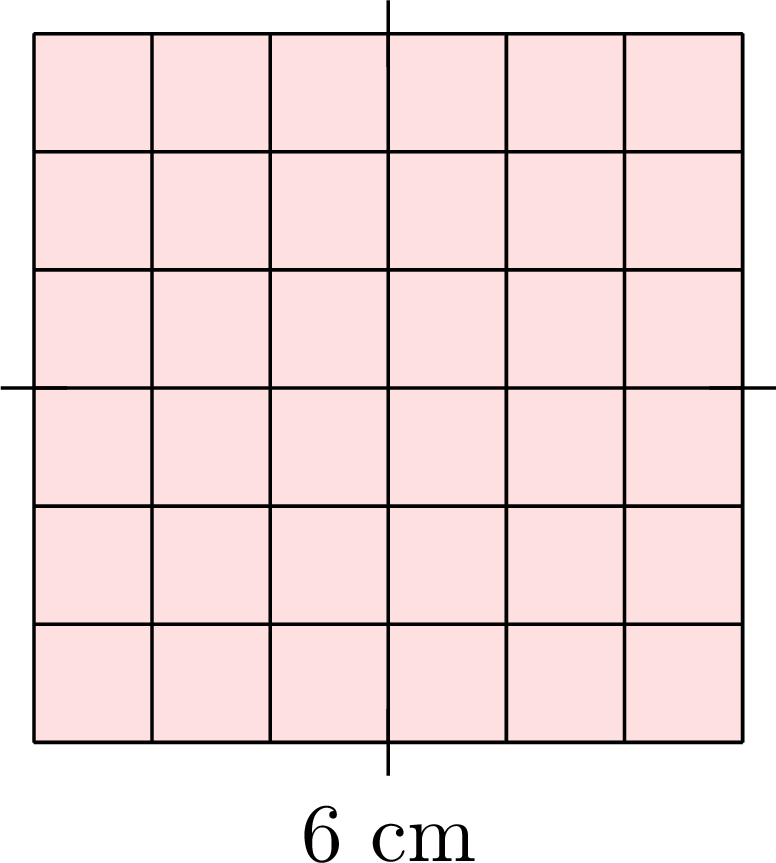
This is a square whose sides all measure \(6\) cm. Its area is the side length multiplied by itself: $$\begin{aligned}[t] A &= 6 \times 6 \\
&= 36 \, \mathrm{cm}^2 \end{aligned}$$ The area is \(36\) square centimetres.
Skills to practice
- Finding Areas of Squares and Rectangles
- Solving Problems
III
Area and Perimeter
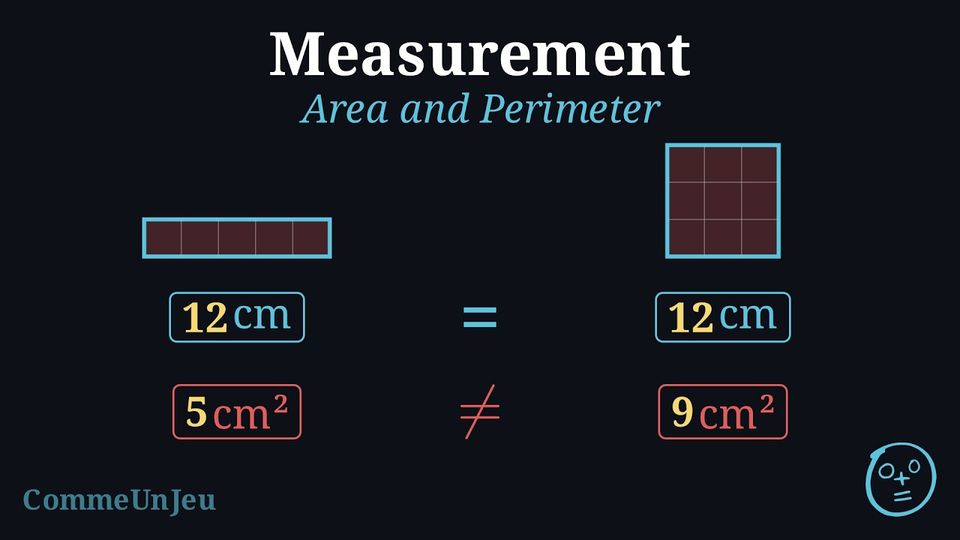
A flat shape has two different measurements.
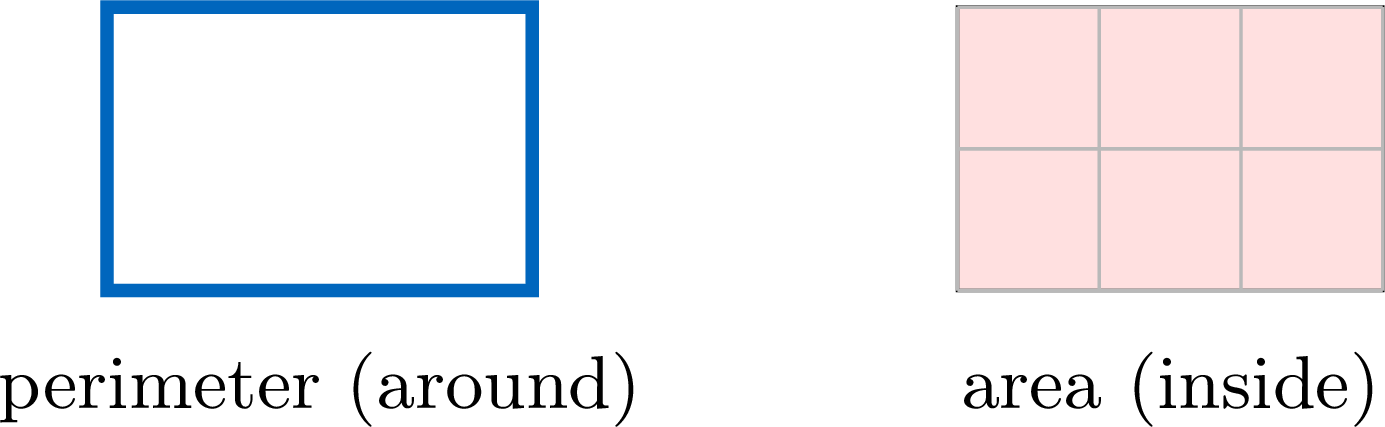
Its perimeter is the distance all the way around its edge — a length, measured for example in cm.
Its area is the amount of space it covers inside — measured in square units, for example cm\(^2\).
Perimeter and area answer two different questions, and they use two different units.
Its perimeter is the distance all the way around its edge — a length, measured for example in cm.
Its area is the amount of space it covers inside — measured in square units, for example cm\(^2\).
Perimeter and area answer two different questions, and they use two different units.
Example
Find both the perimeter and the area of this rectangle. 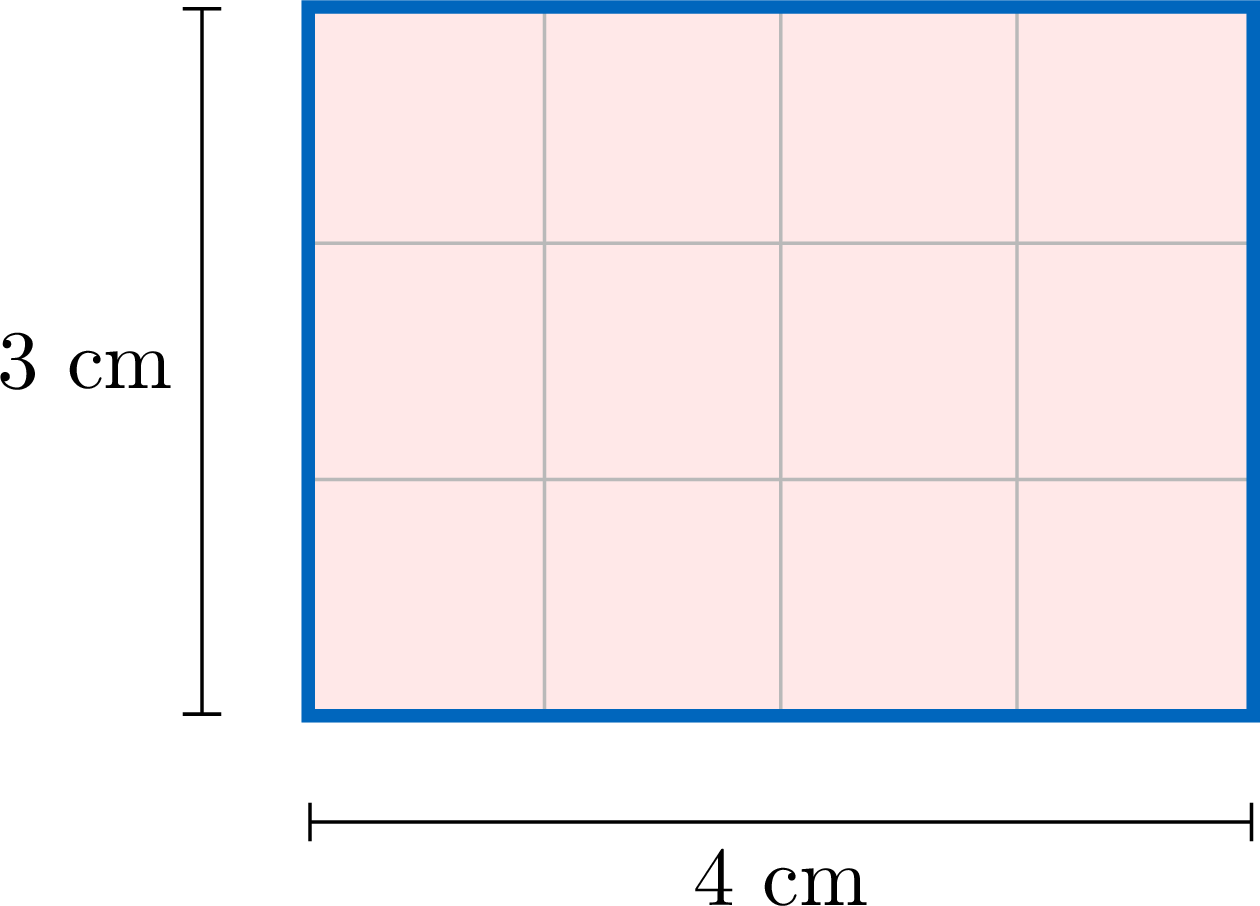
The rectangle is \(4\) cm long and \(3\) cm wide.
Perimeter — go around the edge, side after side: $$\begin{aligned}[t] P &= 4 + 3 + 4 + 3 && \text{(the four sides)} \\ &= 14 \ \text{cm.} \end{aligned}$$ Area — cover the inside: \(3\) rows of \(4\) squares of \(1\ \text{cm}^2\): $$\begin{aligned}[t] A &= 4 \times 3 && \text{(3 rows of 4 squares)} \\ &= 12 \ \text{cm}^2. \end{aligned}$$ The perimeter is \(14\) cm (a length); the area is \(12\ \text{cm}^2\) (a covering). The same rectangle has two different measurements, with two different units.
Perimeter — go around the edge, side after side: $$\begin{aligned}[t] P &= 4 + 3 + 4 + 3 && \text{(the four sides)} \\ &= 14 \ \text{cm.} \end{aligned}$$ Area — cover the inside: \(3\) rows of \(4\) squares of \(1\ \text{cm}^2\): $$\begin{aligned}[t] A &= 4 \times 3 && \text{(3 rows of 4 squares)} \\ &= 12 \ \text{cm}^2. \end{aligned}$$ The perimeter is \(14\) cm (a length); the area is \(12\ \text{cm}^2\) (a covering). The same rectangle has two different measurements, with two different units.
Method — Telling perimeter and area apart
For the same shape, two different questions: - Perimeter — go around the edge and add the side lengths. The answer is a length, for example in cm.
- Area — cover the inside: count the unit squares (for a rectangle, multiply the number of rows by the number of squares in a row). The answer is a number of squares, for example in cm\(^2\).
Example
These two rectangles both have a perimeter of \(12\) cm. Do they have the same area? 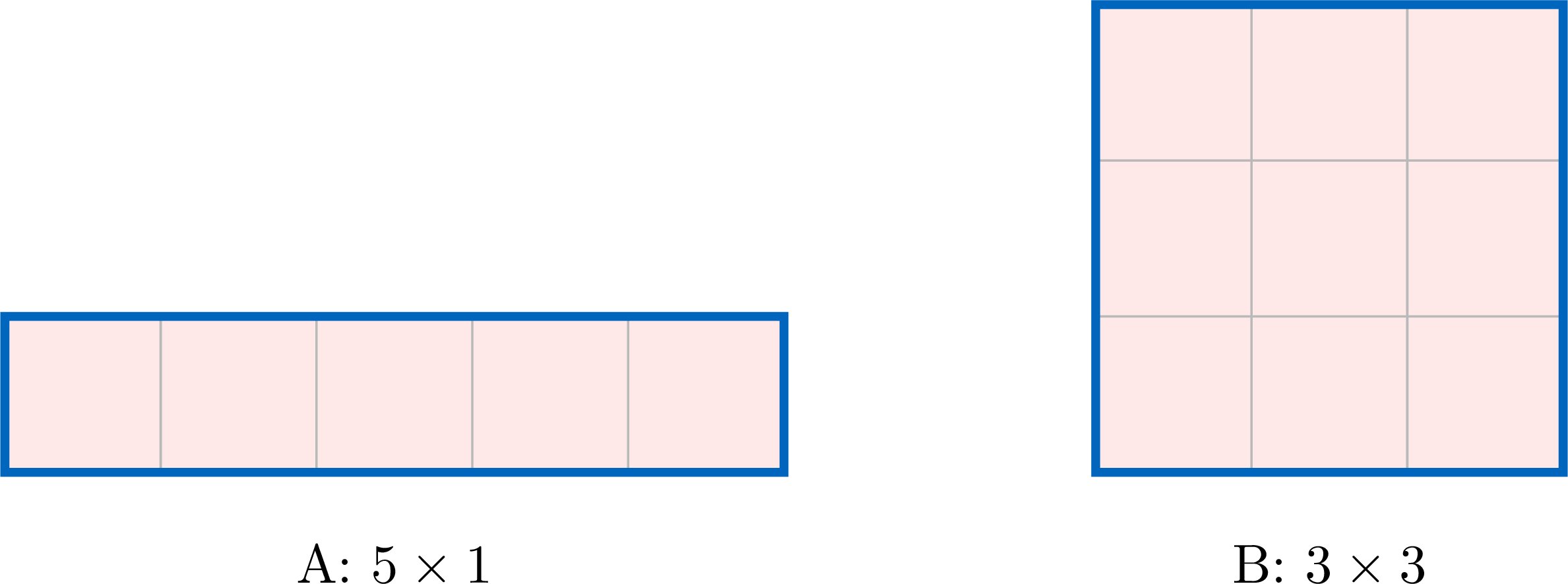
We compute the perimeter and the area of each rectangle. $$\begin{aligned}[t] \text{A } (5\times1):\quad P &= 5+1+5+1 = 12 \ \text{cm}, & \text{area} &= 5\times1 = 5 \ \text{cm}^2 && \text{(1 row of 5 squares)} \\
\text{B } (3\times3):\quad P &= 3+3+3+3 = 12 \ \text{cm}, & \text{area} &= 3\times3 = 9 \ \text{cm}^2 && \text{(3 rows of 3 squares)} \end{aligned}$$ Both have the same perimeter (\(12\) cm), but their areas are different (\(5\ \text{cm}^2\) and \(9\ \text{cm}^2\)). Knowing the perimeter does not tell you the area.
Skills to practice
- Choosing the Correct Unit
- Computing Perimeter and Area
- Comparing Perimeter and Area
IV
Going further
Skills to practice
- Finding a Missing Side
- Drawing a Rectangle
- Solving Problems with Several Questions
- Quiz
Jump to section