International Baccalaureate · PYP 0
Shapes and Solids
I
Sorting by Shape
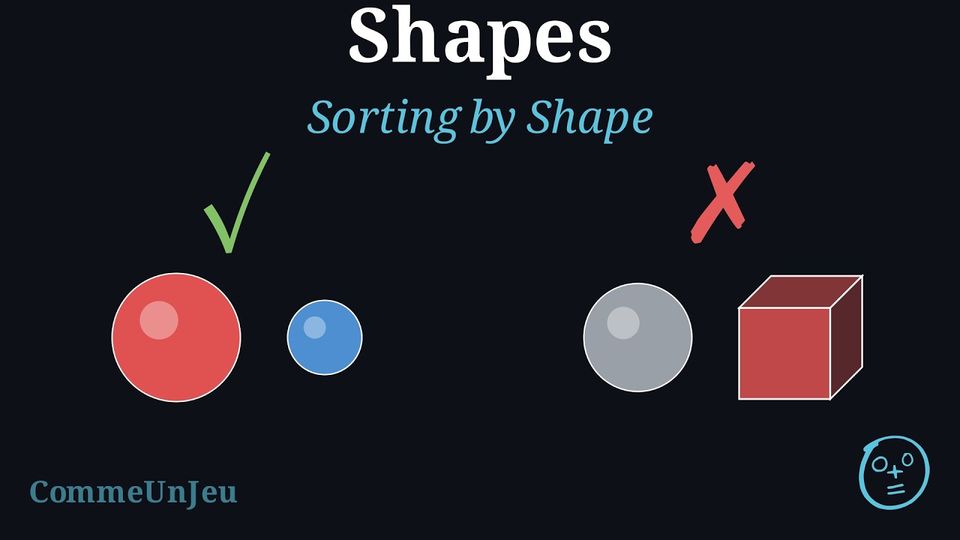
Tom plays with his blocks. He wants to put together all the blocks that look alike. 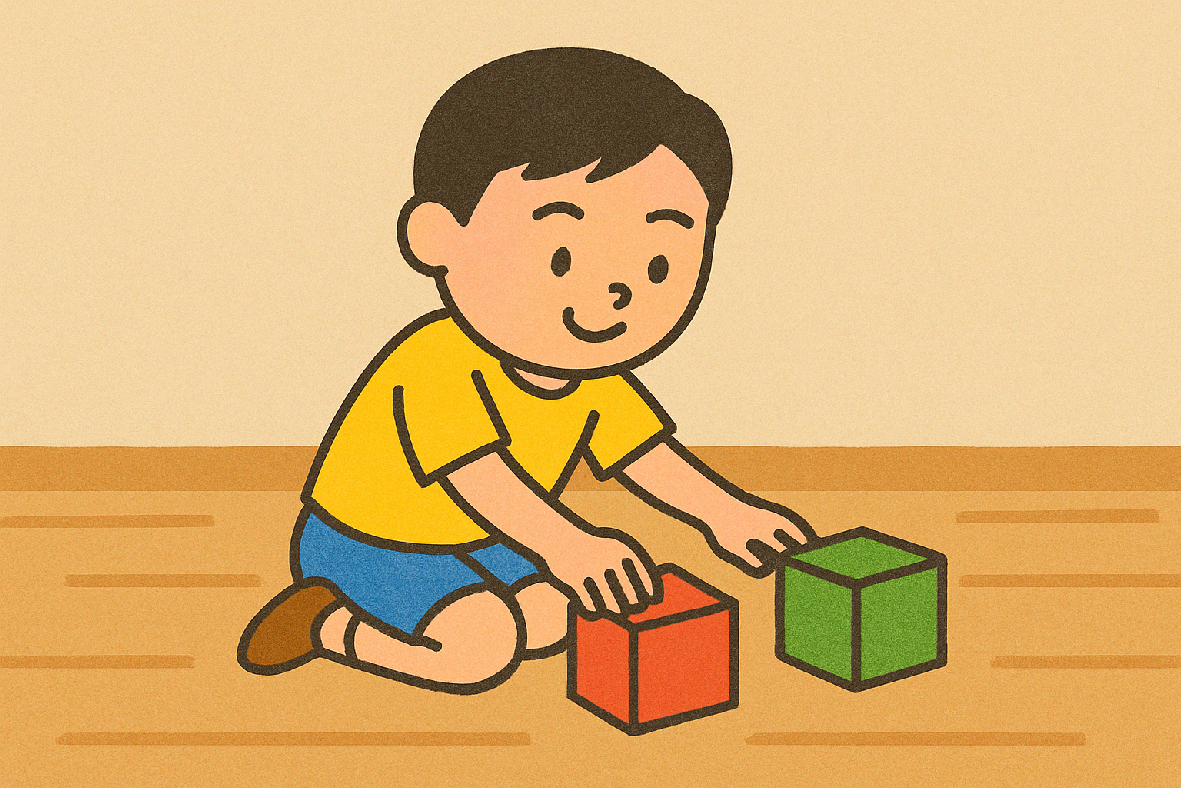
One block is red. One block is green. But the two blocks look alike: they have the same shape.
Definition — The Shape
The shape of an object is how the object looks when we forget its colour and its size. Two objects have the same shape when they look alike, even if one is big and one is small, even if they have different colours. 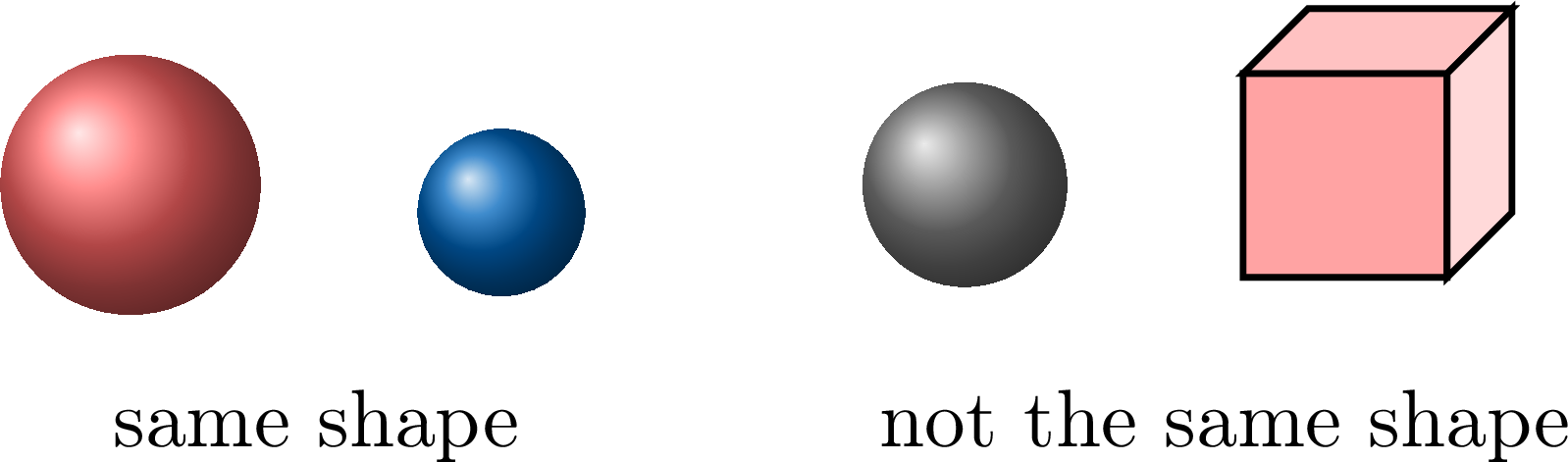
Example
Sort these objects into two groups: the balls together, and the blocks together. 
We look only at the shape. The colour does not count. The size does not count. 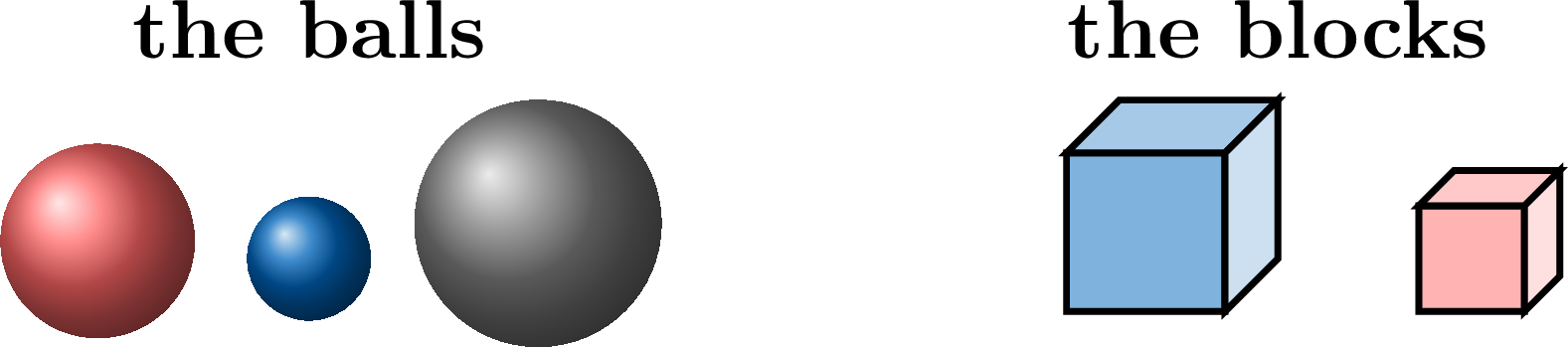
There are 3 balls and 2 blocks.
Skills to practice
- Finding the Same Shape
- Spotting the Odd One Out
II
Solids
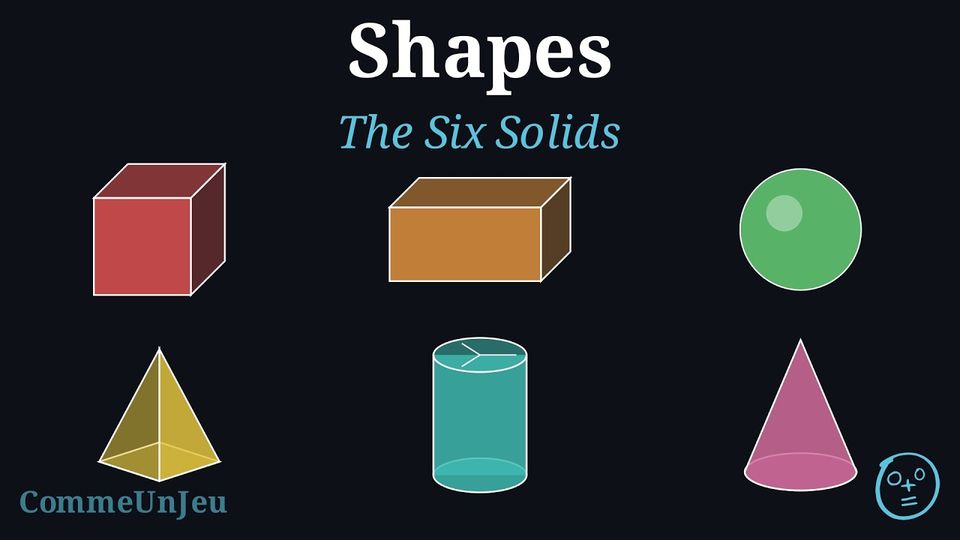
Tom empties his toy box: out come blocks, balls and boxes. A solid is an object that is not flat: we can hold it in our hands and turn it, like a block, a ball, a box. Here are six solids with their names.
Definition — The Six Solids
| Solid | Name | Like… |
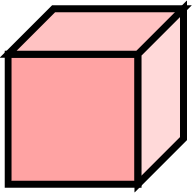 | the cube |  |
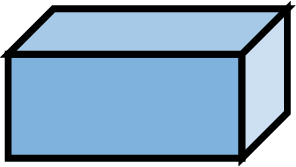 | the box | 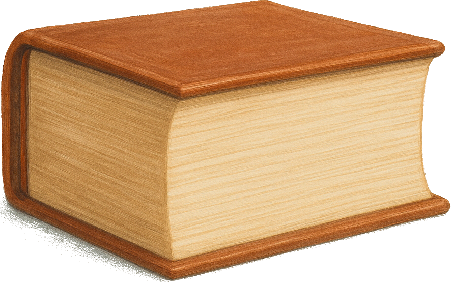 |
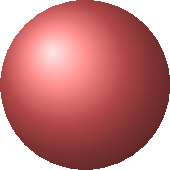 | the ball | 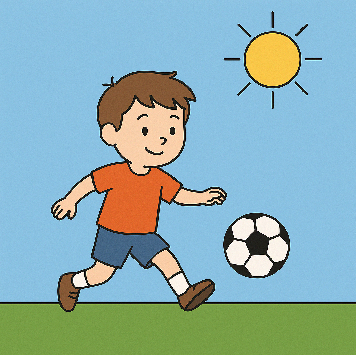 |
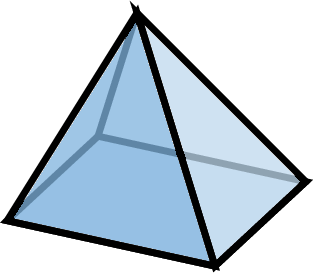 | the pyramid | 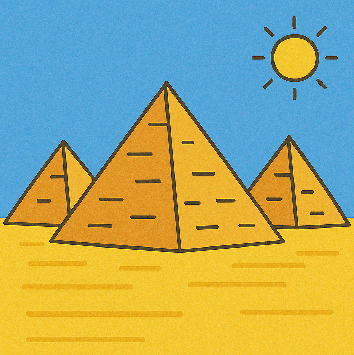 |
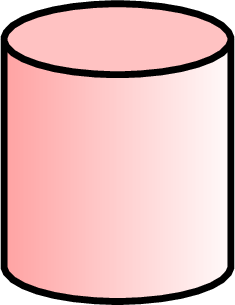 | the cylinder | 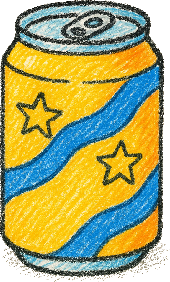 |
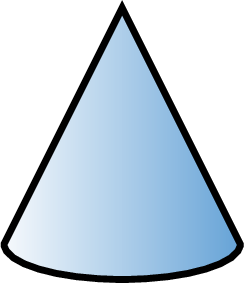 | the cone | 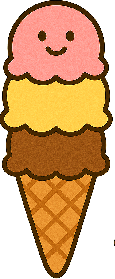 |
When we turn an object, its shape does not change. 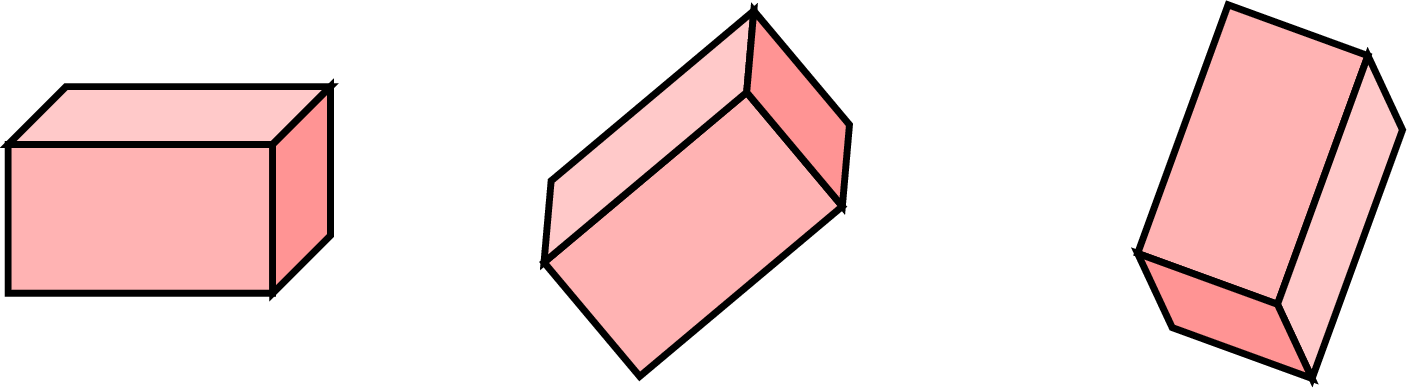
It is the same box three times: it is only turned. A solid that is turned is still the same solid.
Flat Faces and Round Parts
Some solids have flat faces: rested on a flat face, they stay still and cannot roll. The cube, the box and the pyramid have only flat faces. Some solids are round: placed on their round part, they can roll. The ball is round all over. The cylinder and the cone are round on the side, but they also have flat faces to rest on: the cylinder has two, the cone has one.
Example
What do we need to build a cube?
To build a cube, we need 6 squares, all exactly alike. 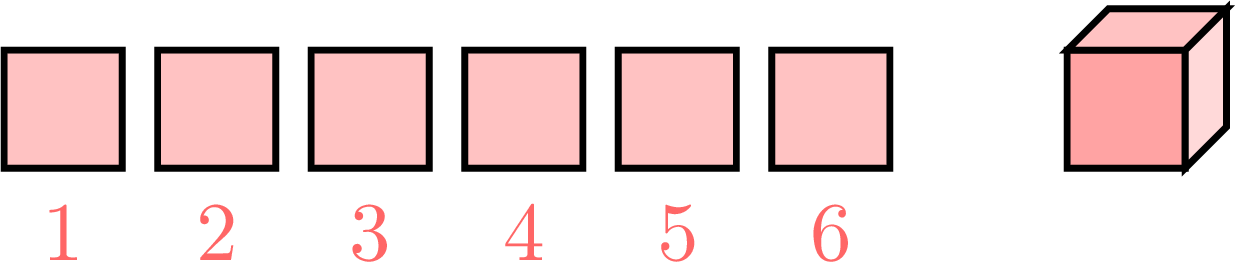
Example
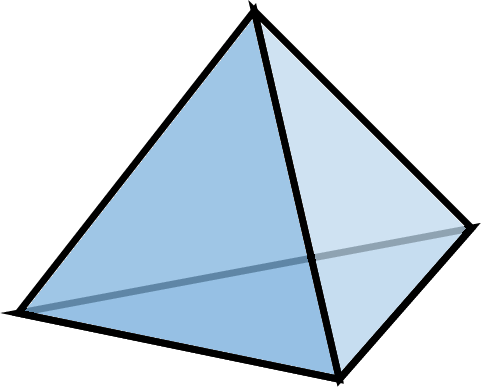
Here is another pyramid, on the right: its base is a triangle. It has a point, like the pyramid on the left, whose base is a square. 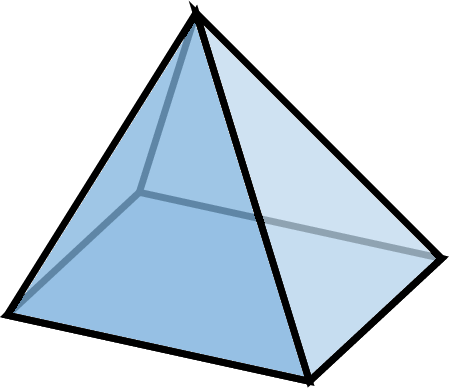
Skills to practice
- Recognising Solids
- Counting Solids
III
Plane Shapes
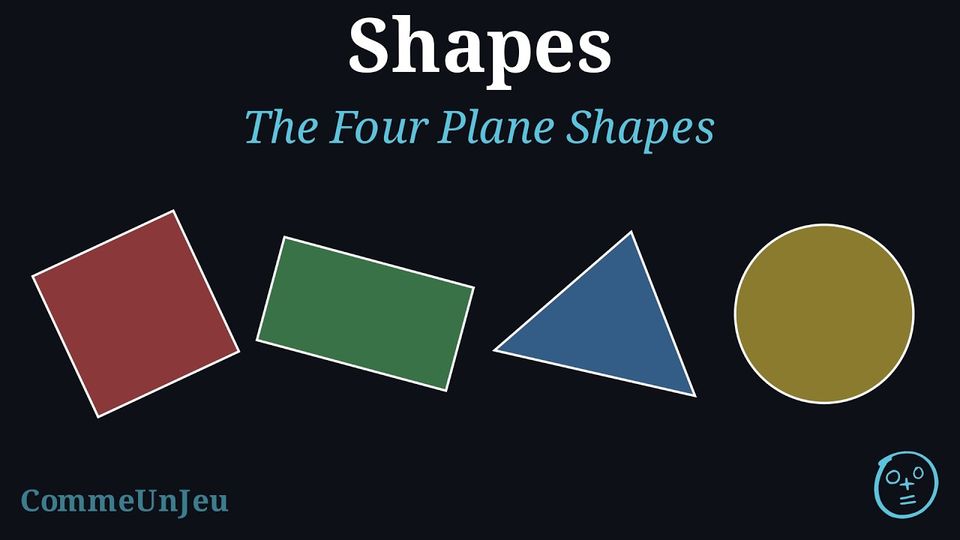
Tom draws on paper the shapes he sees around him. A plane shape is a flat shape: it is what we draw on paper, or cut out of a sheet — like the footprint a solid leaves on the page. To draw straight sides, we use a ruler.
Definition — The Four Shapes
| Shape | Name | What we see |
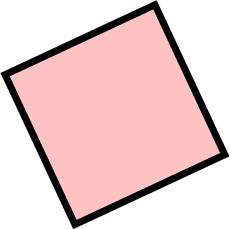 | the square | 4 straight sides, all the same length, and 4 corners all alike |
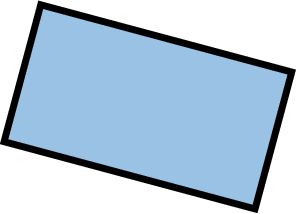 | the rectangle | 4 straight sides and 4 corners all alike |
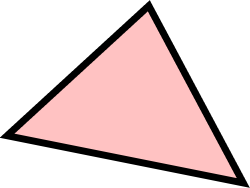 | the triangle | 3 straight sides |
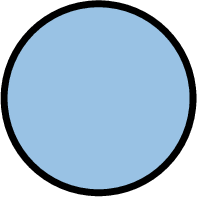 | the disc | perfectly round, like a coin — no corner; also called a circle |
A Turned Shape Keeps Its Name
A square that is turned is still a square. 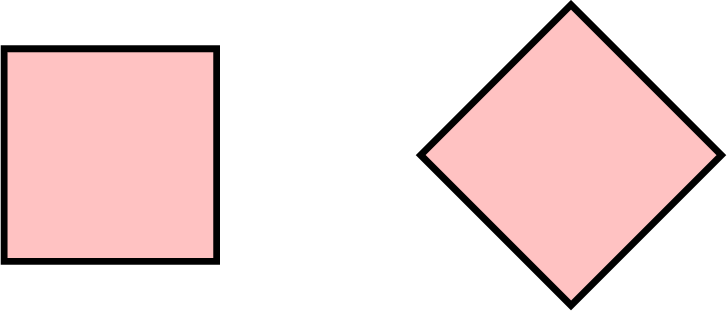
Both are squares: each one has 4 straight sides, all of the same length, and 4 corners all alike. Turning a shape does not change its name.
Example
What is the name of this shape? 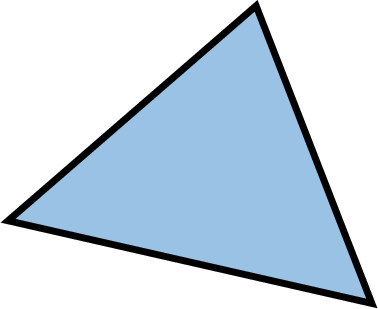
We count the straight sides. 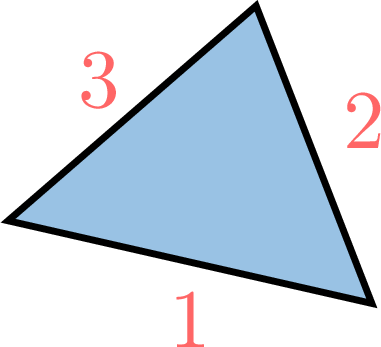
The shape has 3 straight sides. It is a triangle, even if it is turned.
Skills to practice
- Recognising Plane Shapes
- Counting Sides and Corners
- Counting Shapes in a Drawing
- Finding Shapes in Pictures
IV
Footprints
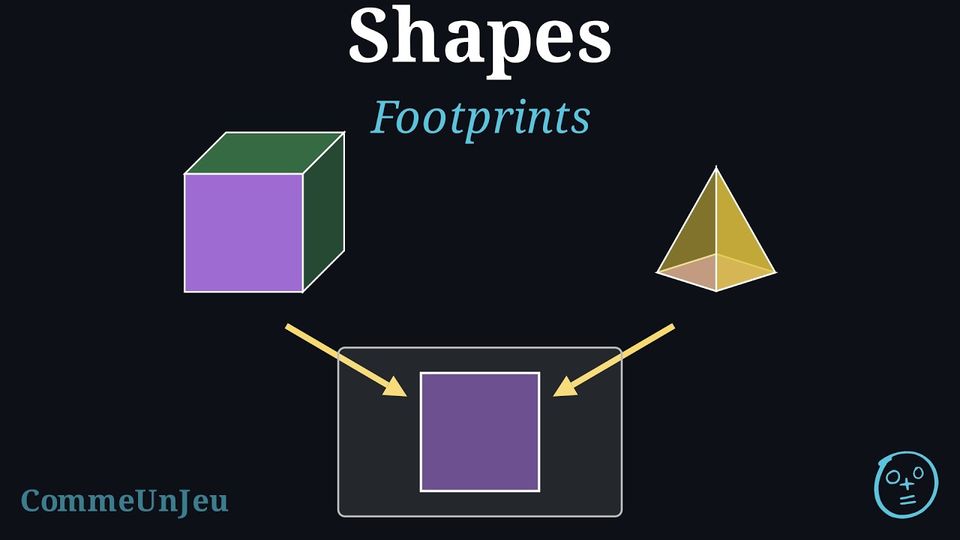
Tom dips one face of a cube into paint. Then he presses it on a sheet of paper. What does he see on the paper? 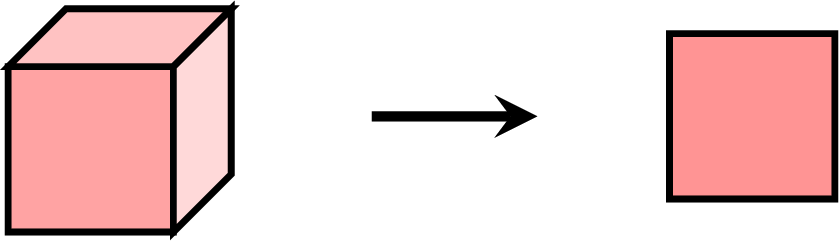
He sees a square: it is the footprint of the cube.
Definition — The Footprint
The footprint of a solid is the flat shape left by one of its flat faces, like a stamp. The footprint of a solid is always a plane shape. Each flat face leaves its own footprint.
One Footprint, Several Solids
A square footprint can come from a cube. But it can also come from a pyramid resting on its square bottom. Two different solids can leave the same footprint. 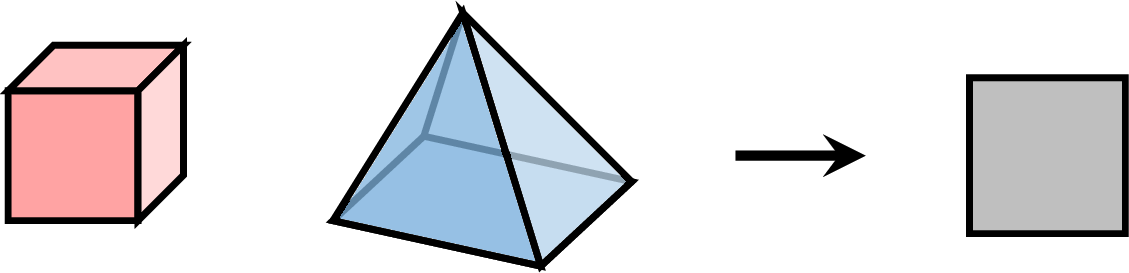
The ball has no flat face: it does not leave a print like a stamp. 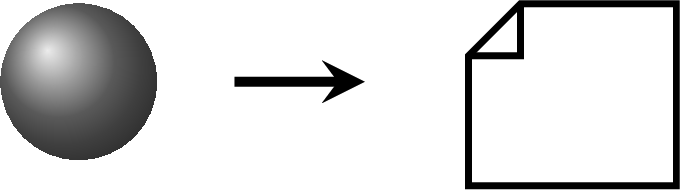
Example
Tom presses a cylinder on the paper, standing on its flat bottom. What footprint does he see?
The flat bottom of the cylinder is round like a coin: it is a disc. So the footprint of the cylinder is a disc. 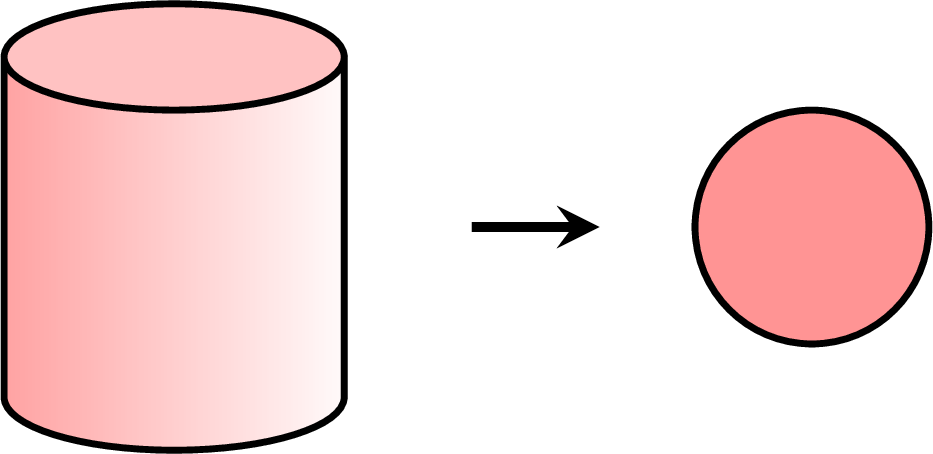
Skills to practice
- Matching a Solid to Its Footprint
V
Going further
Skills to practice
- Comparing Shapes with Numbers
- Quiz
Jump to section