International Baccalaureate · PYP 0
Comparing Quantities
I
Comparing Numbers
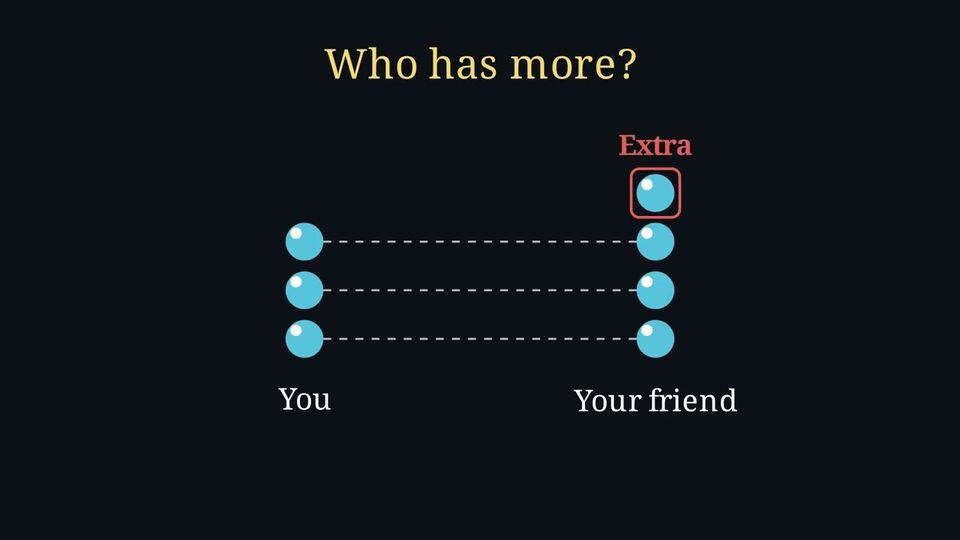
Léa has a pile of marbles, and Tom has another one. Léa has 3 marbles:  Tom has 4 marbles:
 Who has more marbles?
Tom has 4 marbles: Who has more marbles?
To find out who has more, we can line them up and match them one-to-one: 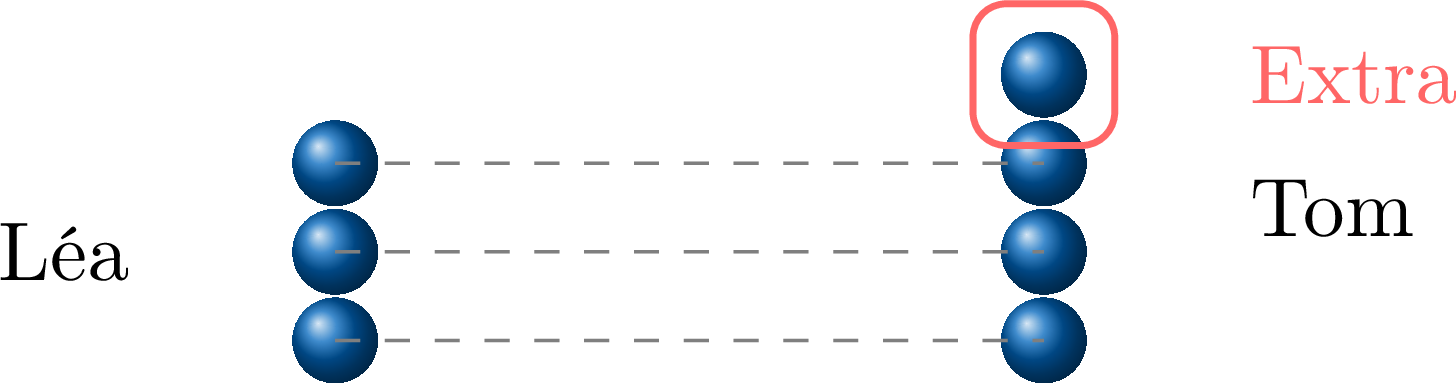
Tom has one extra marble that does not have a partner. This means 4 is greater than 3.
Tom has more marbles.
Tom has more marbles.
Definition — Comparing Numbers
Comparing is looking at two numbers to see which is greater (bigger), which is less (smaller), or if they are equal (the same amount). Method — Comparing by Matching
To compare two groups of objects, we match them one-to-one, as far as we can: one object of the first group with one object of the second group. - If one group still has an object left without a partner, that group has more, and the other group has fewer.
- If every object has a partner, the two groups have as many: there is the same amount.
Example
Tom has 3 apples. Léa has 3 lemons. Who has more fruits — or do they have as many? 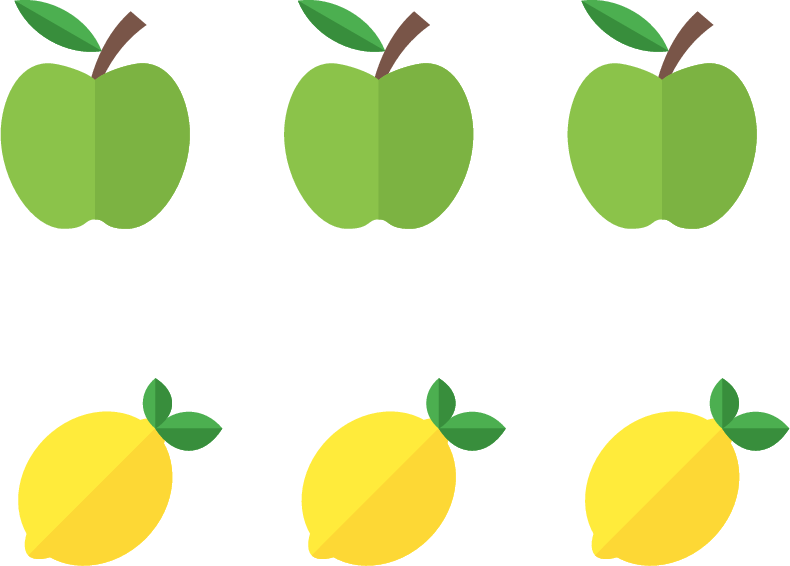
We match the fruits one-to-one: each apple gets a lemon as a partner. 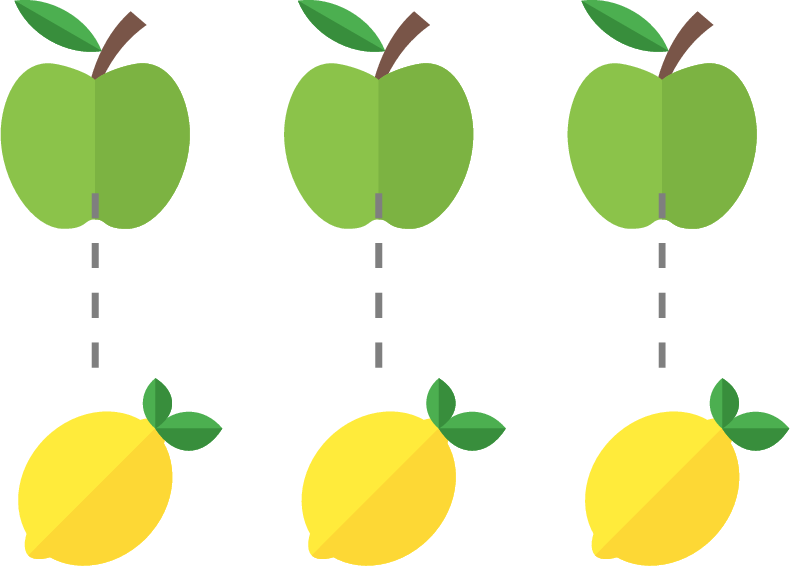
No fruit is left without a partner. Tom has as many fruits as Léa: neither has more than the other.
Definition — Comparison Symbols
We use special symbols to write down our comparisons: | Symbol | Meaning | Example |
| \(=\) | is equal to |  |
| \(>\) | is greater than |  |
| \(<\) | is less than | 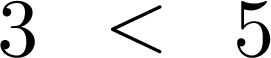 |
The Alligator Mouth
The symbols \(>\) and \(<\) can be pictured as the open mouth of a hungry alligator: the alligator eats the greater number. 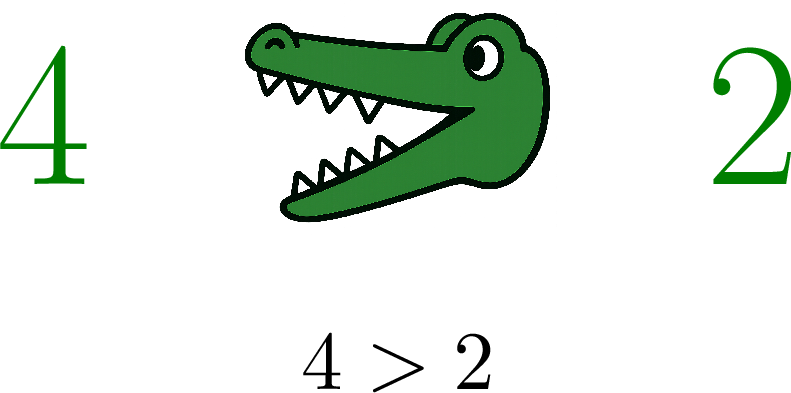 \(\quad\)
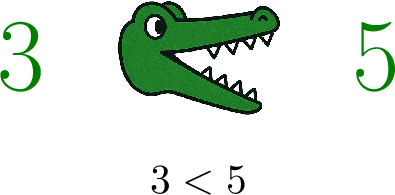
The open mouth always faces the greater number.
The symbols \(>\) and \(<\) can be pictured as the open mouth of a hungry alligator: the alligator eats the greater number.
\(\quad\) Example
Here are two groups of apples. Which group has more? How do we write it with a symbol? 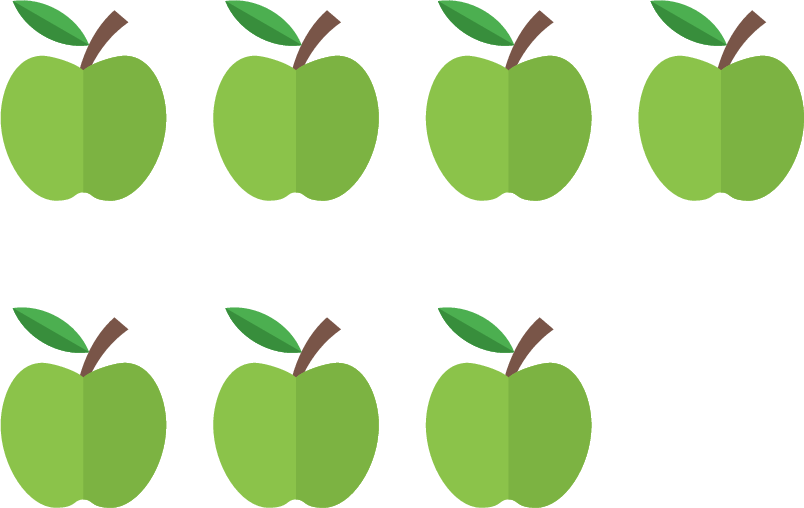
We match the apples one-to-one: the top group has one apple left without a partner. 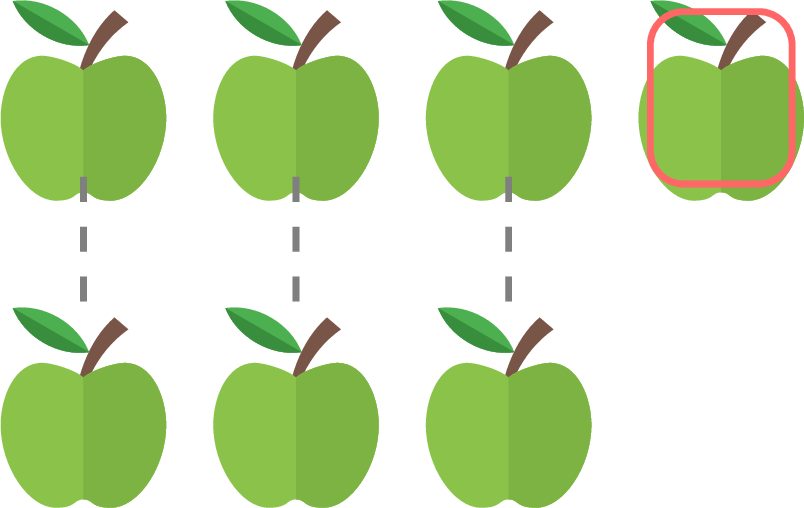
The top group has more: 4 is greater than 3. With the symbol, we write \(4 > 3\) — the open mouth faces 4, the greater number.
Skills to practice
- Finding the Group with More, Fewer or As Many
- Comparing Numbers of Cubes
- Comparing Numbers of Fruits
- Comparing Ten-Frames
- Comparing Written Numbers
II
Going further
Skills to practice
- Completing Comparisons with Pictures
- Quiz
Jump to section