International Baccalaureate · PYP 0
Sorting, Picture Graphs and Chance
I
Sorting Objects
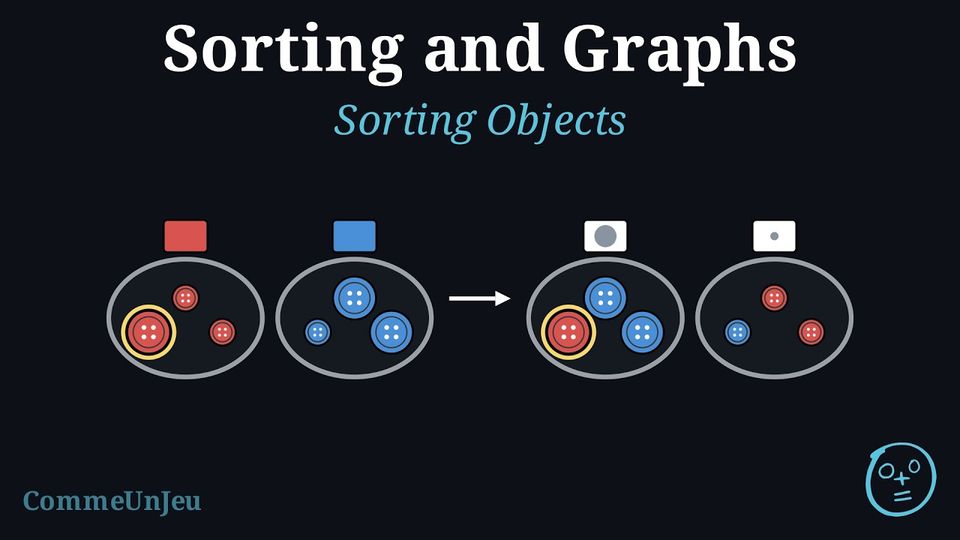
Zoe empties her box of buttons onto the table. 
How can Zoe put her buttons into groups?
There is more than one way. Zoe can put together the buttons of the same colour: 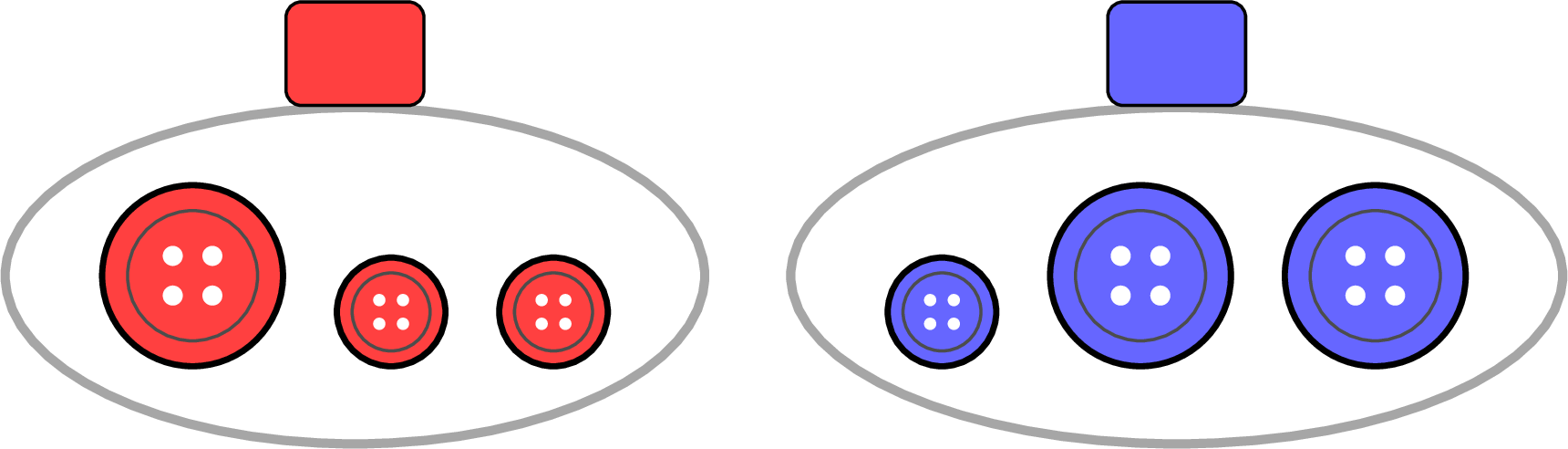
Or she can put together the buttons of the same size: 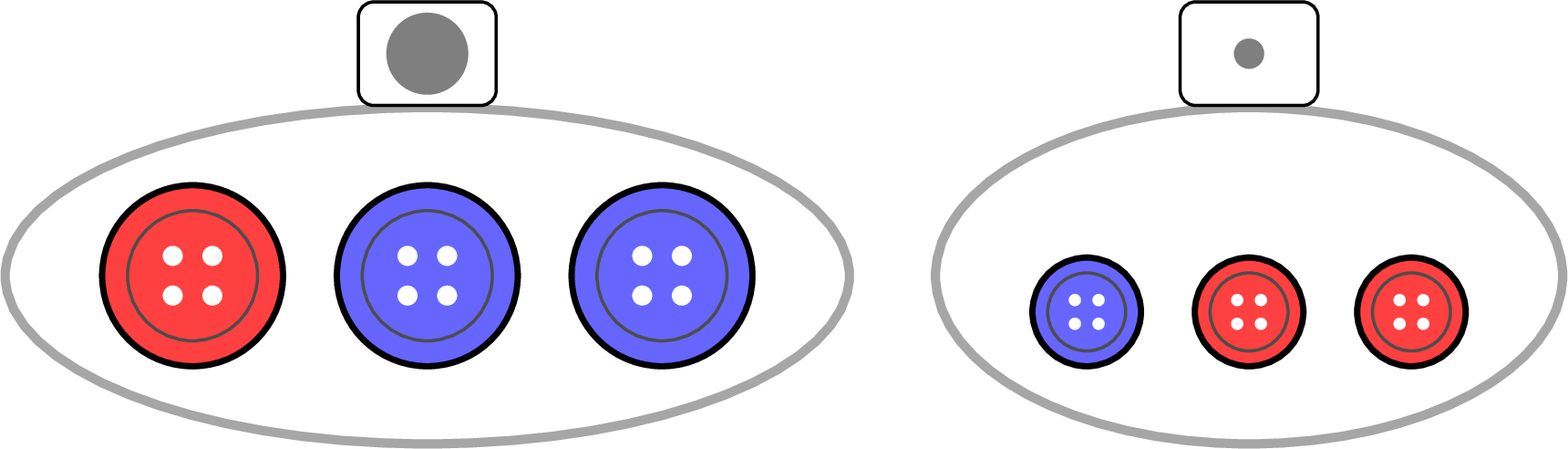
Definition — Sorting
To sort objects is to put together the objects that are alike in one way: the same colour, the same size or the same shape. The way we choose is the rule of the sort. Each group gets a label: a small card that shows what its objects share. 
Example
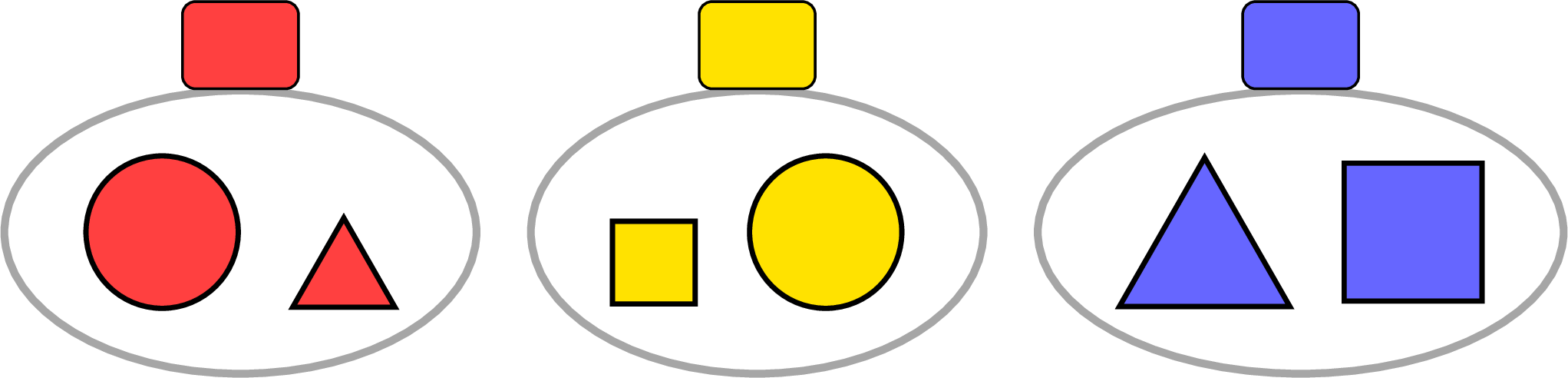
Sort these shapes by colour. 
Method — Finding the Odd One Out
Sometimes one object of a group does not follow the rule. To find it: - we look at what the other objects share: the same colour, the same size or the same shape;
- the object that does not share it does not belong: it is the odd one out.

Skills to practice
- Following the Rule
- Finding What Does Not Belong
II
Graphs of Real Objects
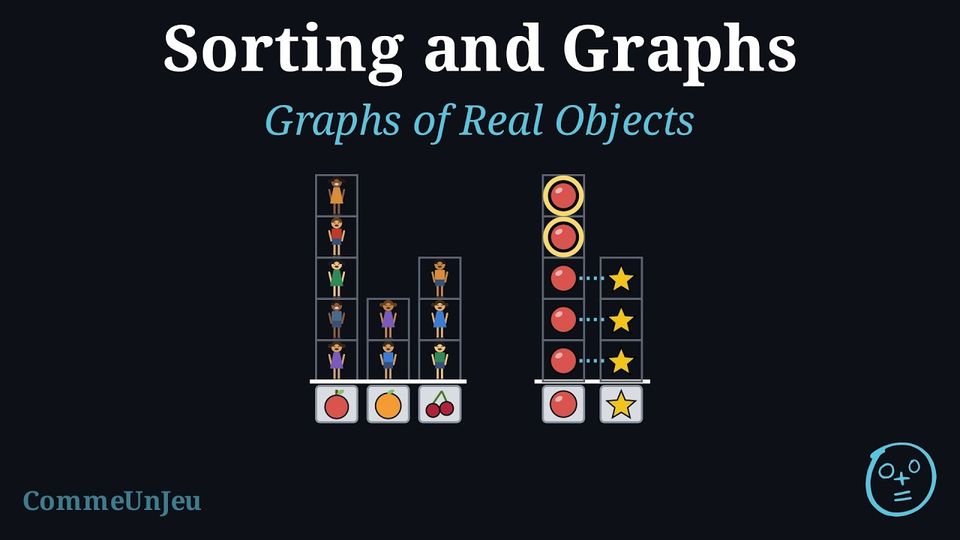
The teacher asks the class: “Which fruit do you like best?” Each child stands in the line of the fruit they like best, one behind the other; the card under each line shows its fruit. 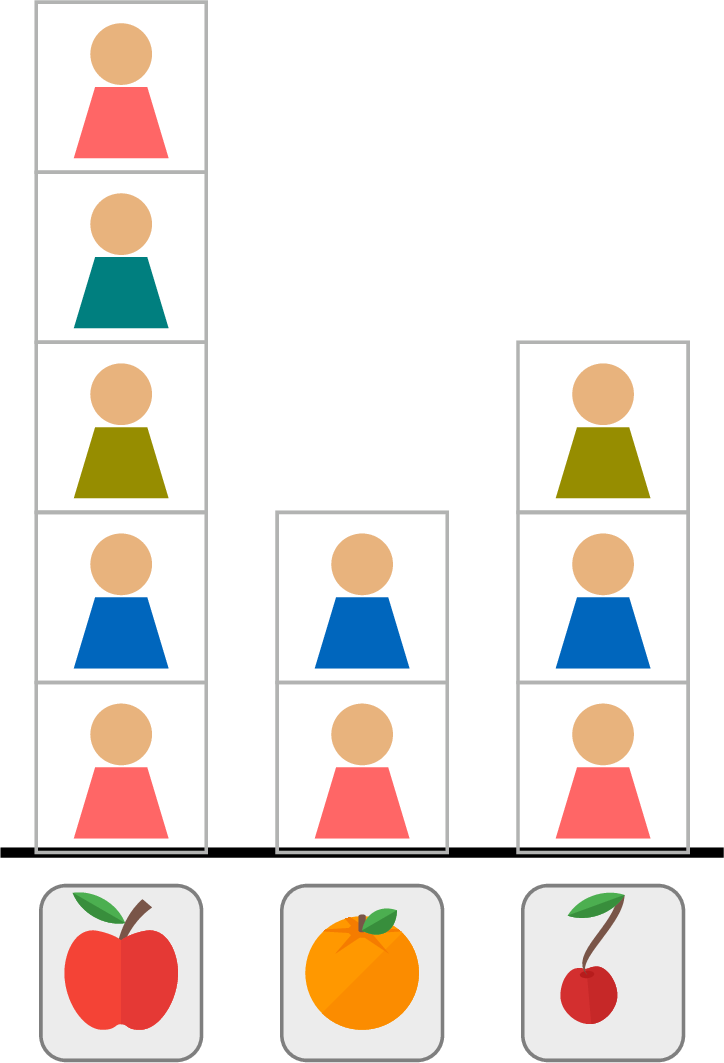
Which fruit do the most children like best?
The apple line is the longest: it has the most children. We count: 5 children like the apple best. The apple is the favourite fruit of the class. The children themselves make the picture: it is a living graph.
Definition — Graph
In a graph, each group has its own column, with its label card under the line. We put one object, one cube or one picture for each thing we count, one above the other in equal boxes, and all the columns start on the same line. The label cards are not counted. Then we see at a glance: the tallest column has the most, the shortest column has the fewest. 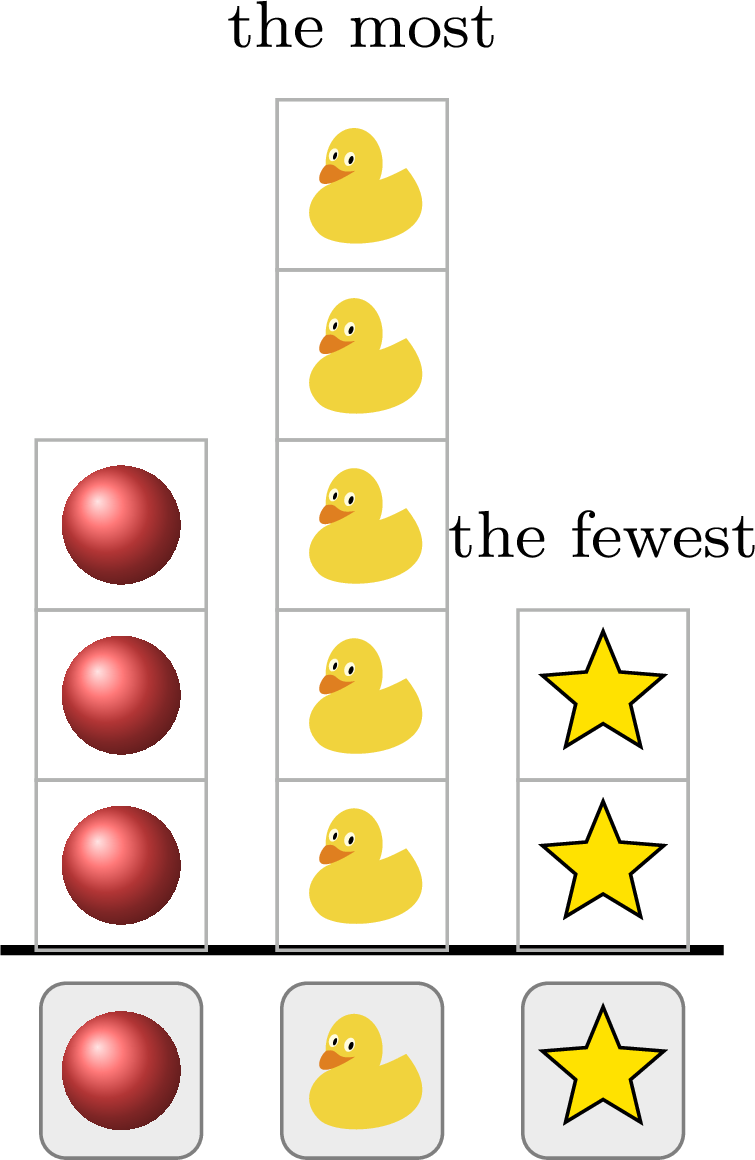
Method — Comparing Two Columns
- We count the objects in each column.
- The taller column has more.
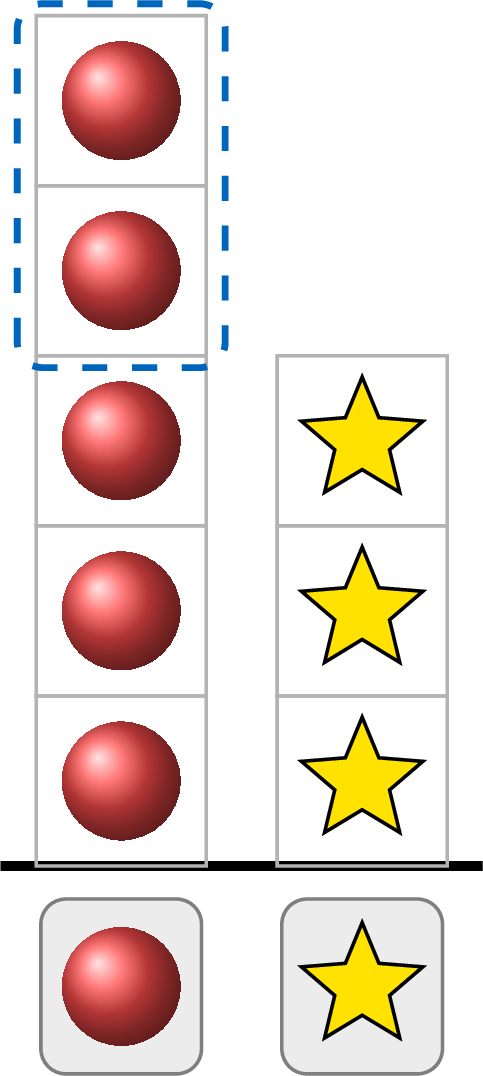
- In the taller column, the objects with no partner beside them show how many more.
Example
Leo puts his toys in a graph. 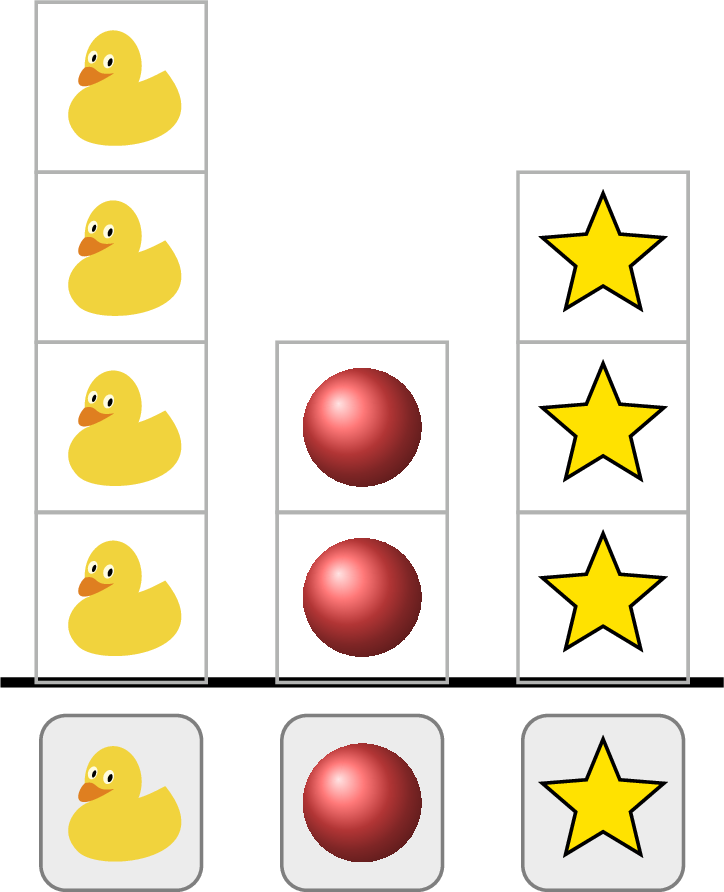
We count: 4 ducks and 2 balls. Two ducks have no ball beside them: Leo has 2 more ducks than balls.
Skills to practice
- Finding the Most or the Fewest
- Counting in a Graph
III
Picking without Looking
Method — Looking into the Bag
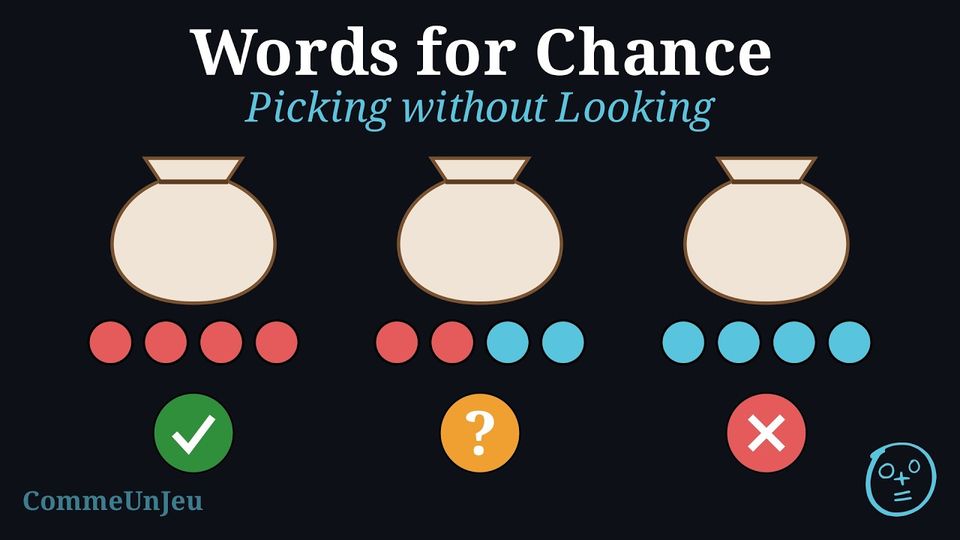
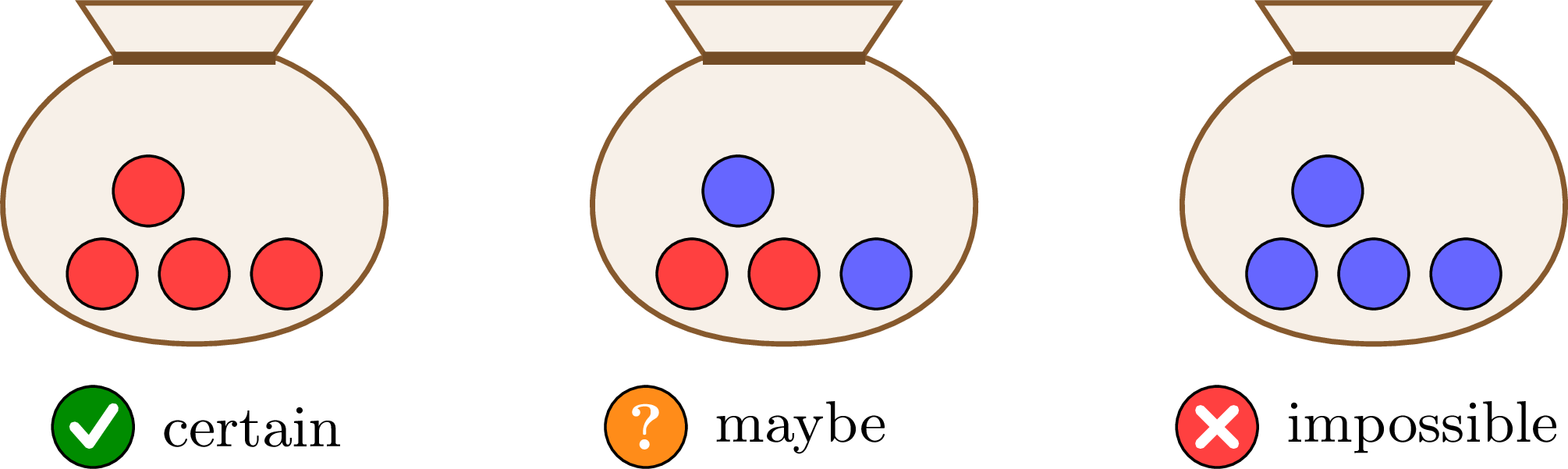
We pick one counter from the bag without looking. Before picking, we look at all the counters in the bag: - if all the counters are red, picking a red counter is certain;
- if some counters are red and some are not, picking a red counter: maybe;
- if no counter is red, picking a red counter is impossible.
Example — Putting the Red Counters in the Hoop
Here are the counters in the bag: 3 red counters and 2 blue counters. We pick one counter without looking. 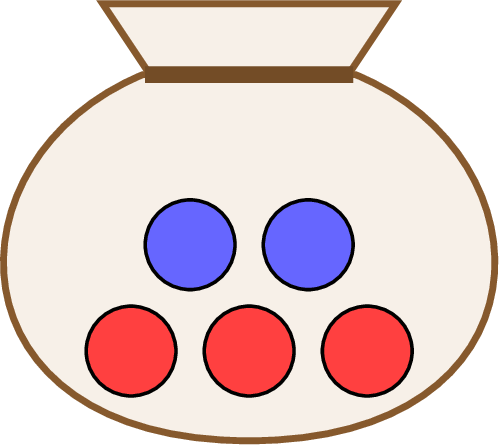
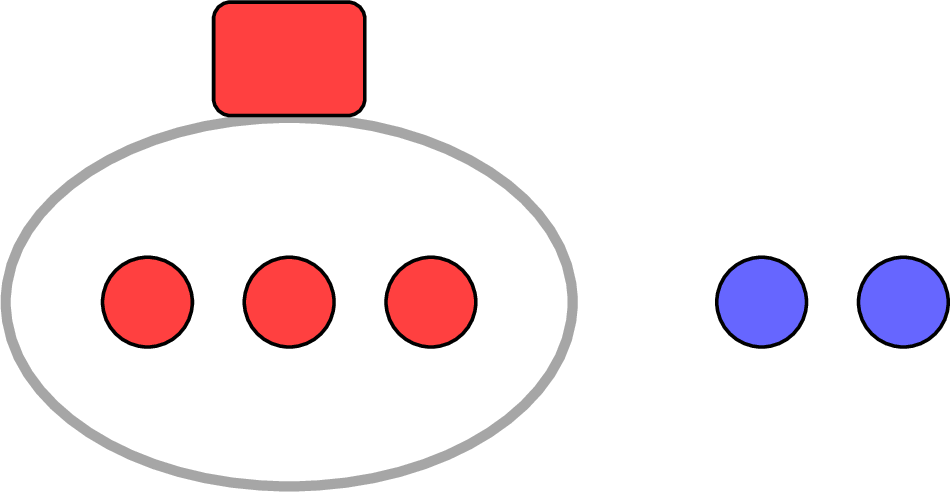
Every counter in the hoop: certain. An empty hoop: impossible.
Example
Here are the counters in the bag: 2 blue counters and 1 yellow counter. We pick one counter without looking. 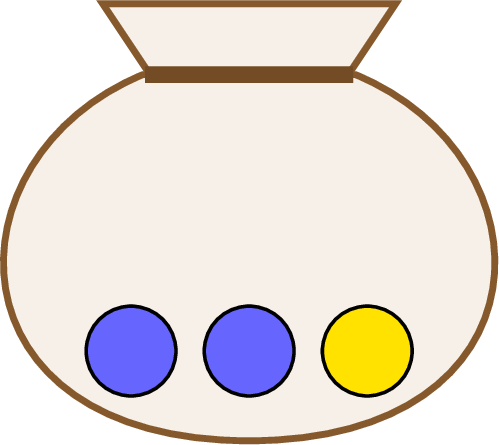
One counter is yellow and two are blue: we can pick the yellow one, and we can also pick a blue one. Picking a yellow counter: maybe. And picking a red counter is impossible: there is no red counter in the bag.
Skills to practice
- Filling the Hoop
- Picking a Counter
IV
Certain, Maybe or Impossible?
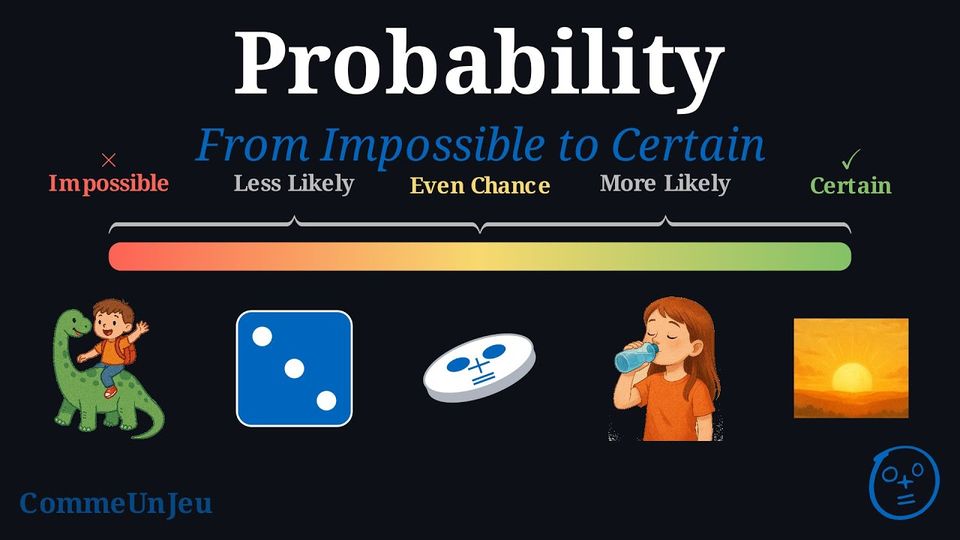
Look at these three pictures. 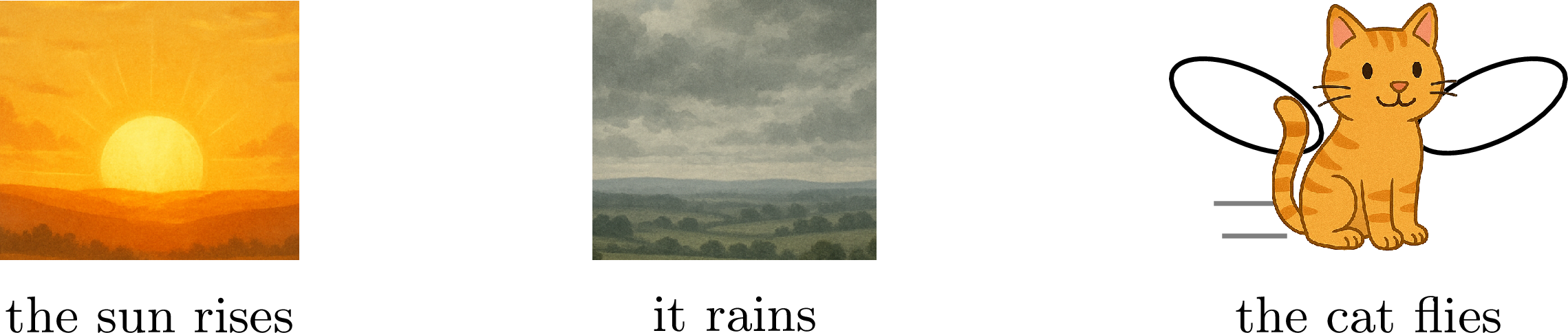
Tomorrow, will each of these things happen?
- The sun rises every morning: tomorrow, it is certain.
- Rain tomorrow can happen, and it can also not happen: the answer is maybe.
- A cat has no wings: a cat that flies can never happen, it is impossible.
Definition — The Three Chance Words
When we ask “Will it happen?”, there are three answers. -
 Certain: it will happen for sure.
-
 Maybe: it can happen, and it can also not happen. We also say that it is possible, but not certain.
-
 Impossible: it can never happen.
Example
Which one is impossible? 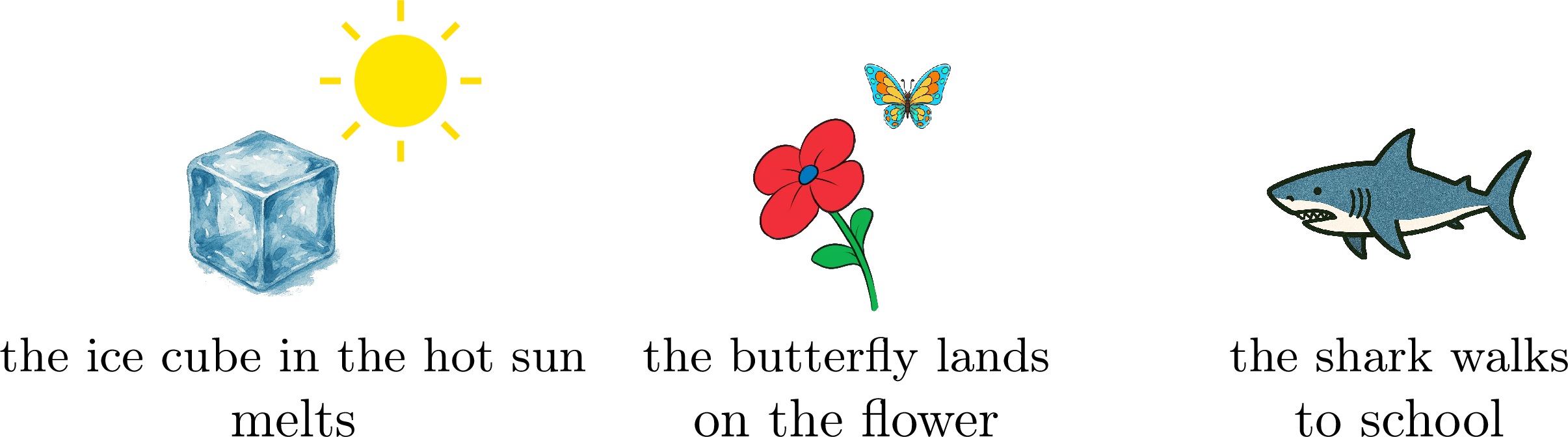
- An ice cube left in the hot sun always melts: certain.
- The butterfly can land on the flower, or fly away: maybe.
- A shark lives in the water and has no legs: a shark that walks to school is impossible.
Skills to practice
- Judging Everyday Events
V
Review & Quizz
Skills to practice
- Quiz
Jump to section