International Baccalaureate · PYP 0
Order and Position
I
The Number Line
Definition — Number Line
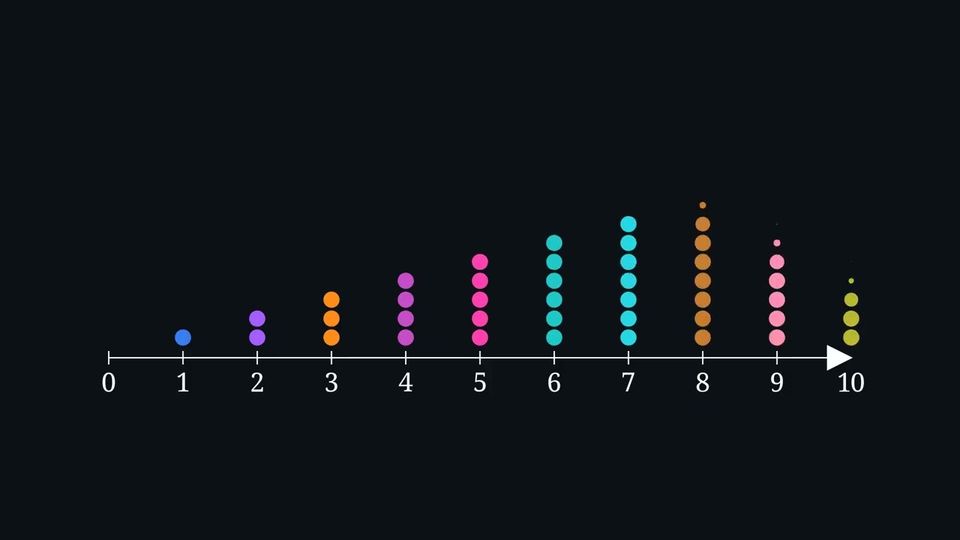
A number line is a straight line with the numbers placed along it in order, one step apart. It helps us see the order of the numbers. 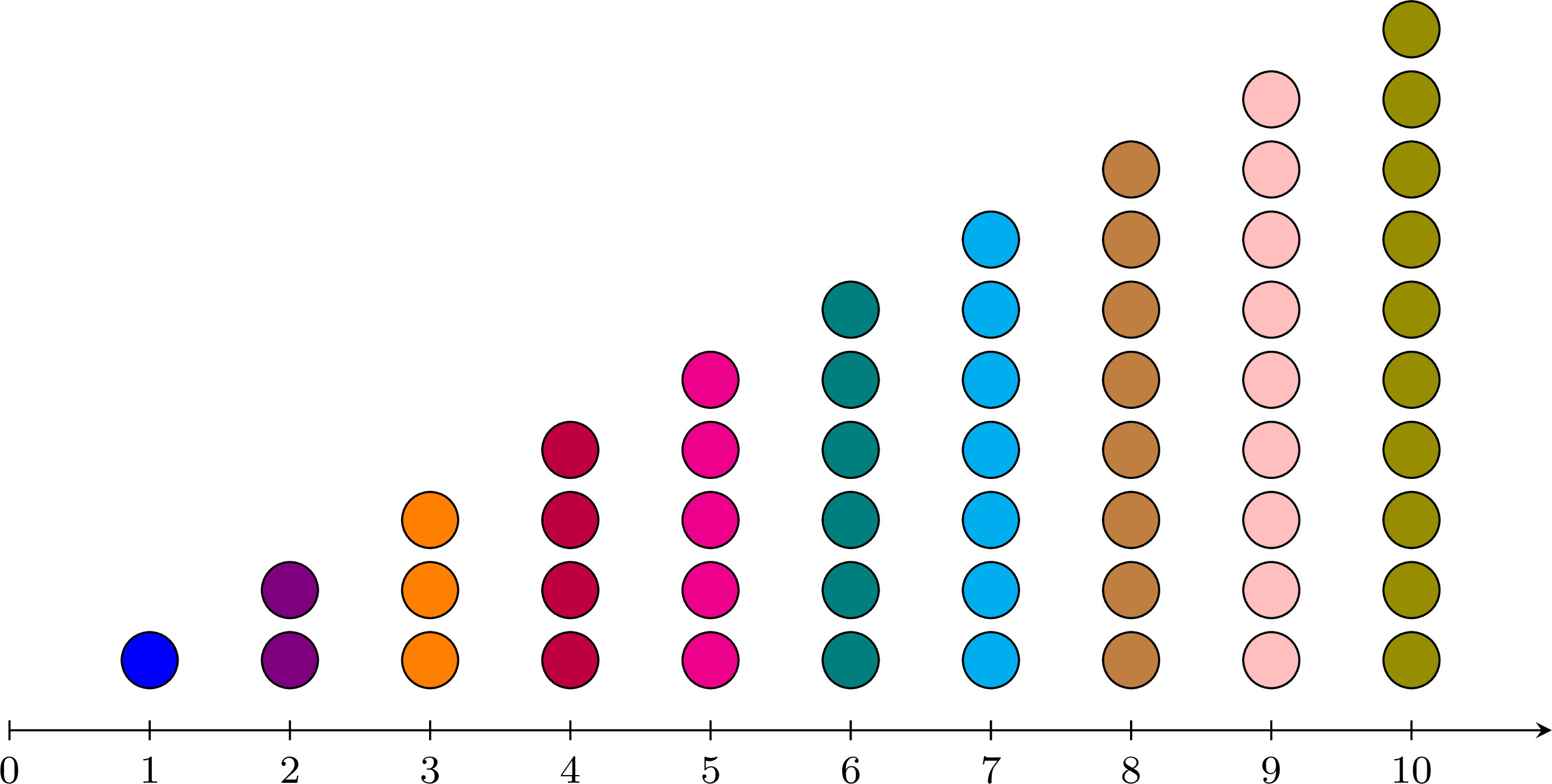
Example — Finding a Hidden Number
One number is hidden on the number line. Which one is it? 
We say the numbers in order while pointing at each mark: five, six... The number that comes just after 6 is 7. The hidden number is 7. 
Example — Which Is Bigger?
The numbers \(3\) and \(8\) are marked on the number line. Which one is bigger? 
On the number line, the numbers get bigger as we move to the right. \(8\) is further to the right than \(3\), so \(8\) is bigger than \(3\): we write \(8 > 3\) (read: \(8\) is greater than \(3\)), or \(3 < 8\) (read: \(3\) is less than \(8\)). 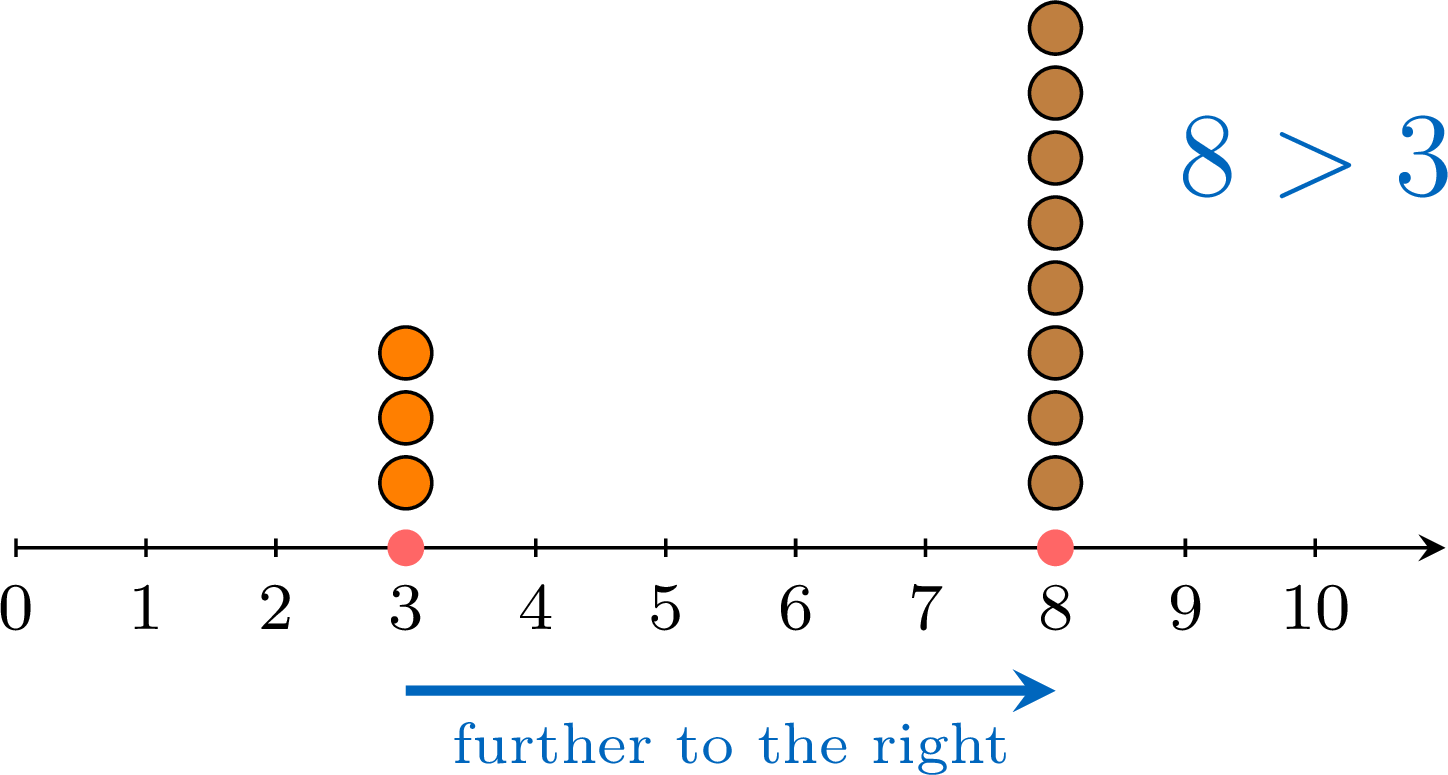
When we count forward (one, two, three…), we also say \(3\) before \(8\): the number we say later is the bigger one.
Method — The Sequence of Numbers up to Thirty
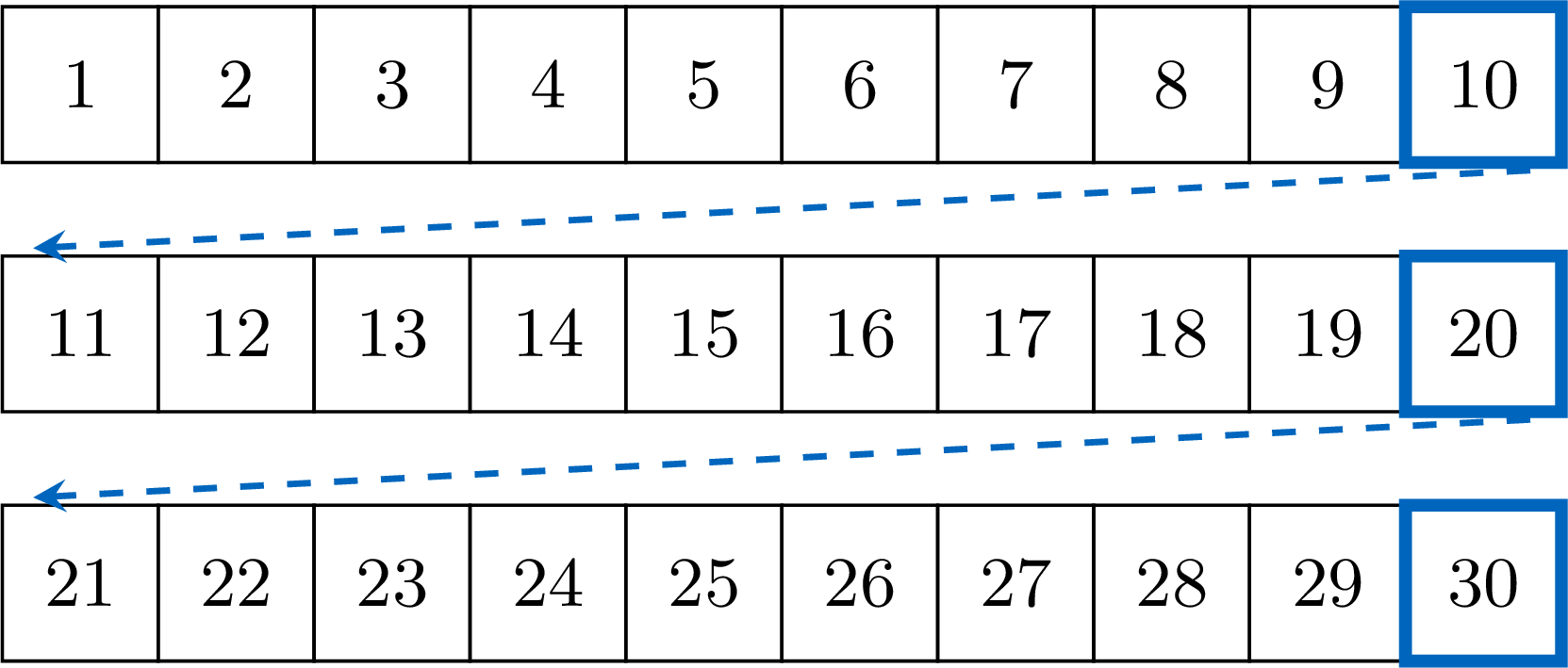
To say the numbers in order after ten: - we go on one by one: each number is one more than the number just before it;
- after ten come eleven, twelve, thirteen, fourteen, fifteen, sixteen, seventeen, eighteen, nineteen;
- after 19 comes 20, after 29 comes 30 — just as after 9 comes 10: …, seventeen, eighteen, nineteen, twenty, twenty-one, twenty-two, …, twenty-seven, twenty-eight, twenty-nine, thirty.

Skills to practice
- Finding Numbers with Dots
- Finding Numbers without Dots
- Comparing with the Number Line
- Continuing the Sequence up to Thirty
- Counting Backward
II
Position in a Line
Five children are waiting in a line for the slide. The dot and the arrow show where the line starts. 
Who is first? Who is last?
We count the children from the starting dot: one, two, three, four, five. 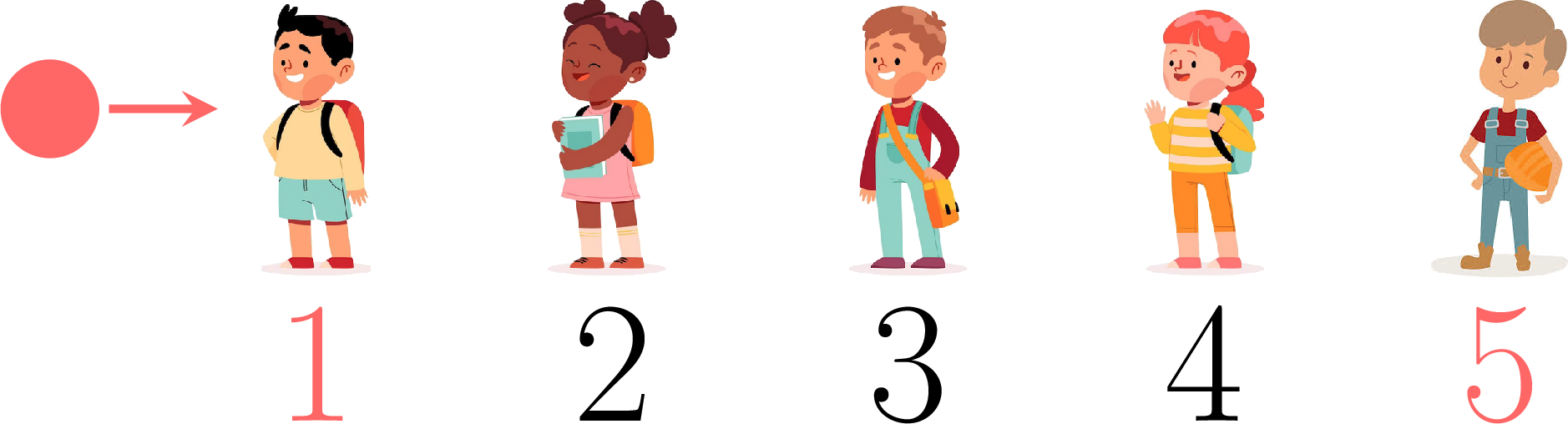
The child we count first is the first one: nobody is in front. The child we count last is the last one: nobody is behind.
Definition — The Position of an Object
In a line, the position of an object is its place when we count from the start. The dot shows where we start, and the arrow shows which way we go. 
Method — Finding the Position
To find the position of an object in a line: - look for the dot: it shows where we start;
- count the objects one by one, following the arrow;
- stop on the object we are asked about: the last number we said is its position.
The Position Depends on the Start and the Direction
The same object is not always in the same position: it depends on where the line starts and which way we go. 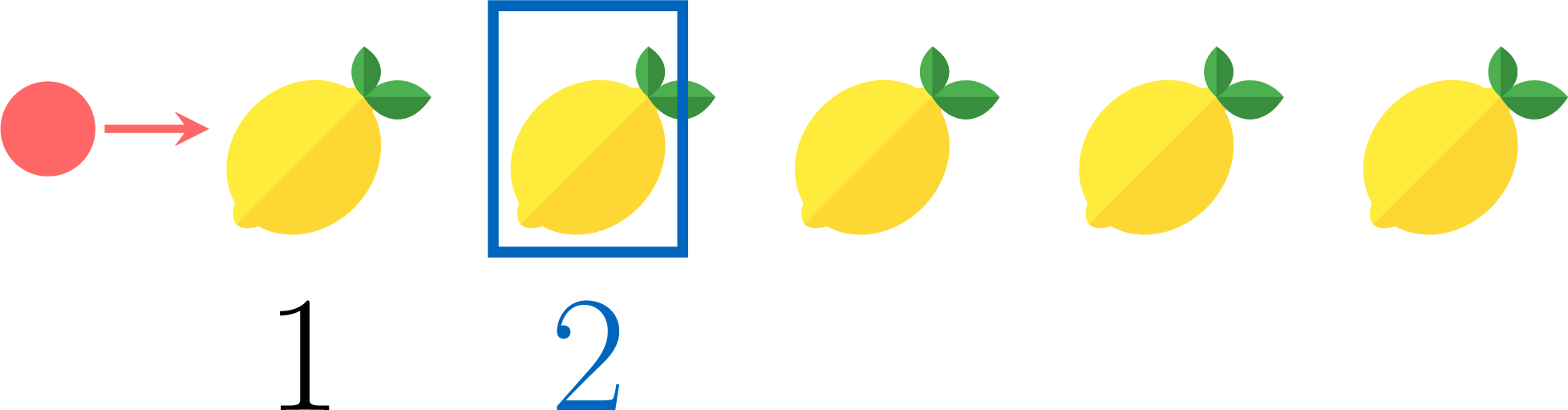
Counting from the dot on the left, the framed lemon is in position 2: it is the second. 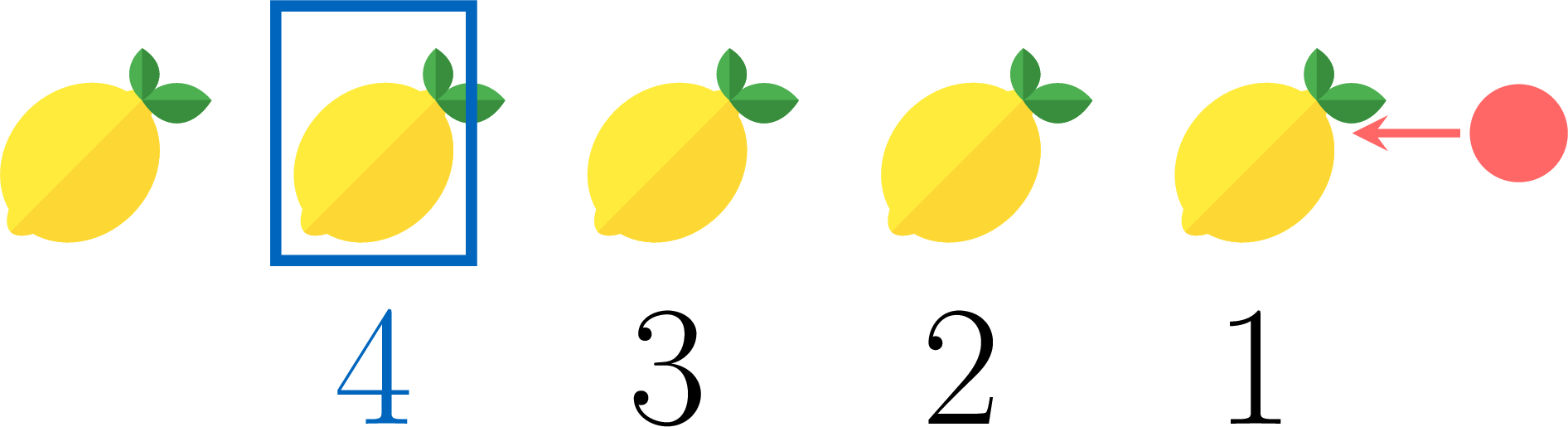
Counting from the dot on the right — we start at the other end, so we also go the other way — the same lemon is in position 4: it is the fourth. Before saying a position, we always look at where we start and which way we go.
Skills to practice
- Finding the Position
- Finding the Position from the Other End
III
Going further
Skills to practice
- Finding Positions in Pictures
- Quiz
Jump to section