International Baccalaureate · PYP 0
Numbers to 5
I
What is Counting?
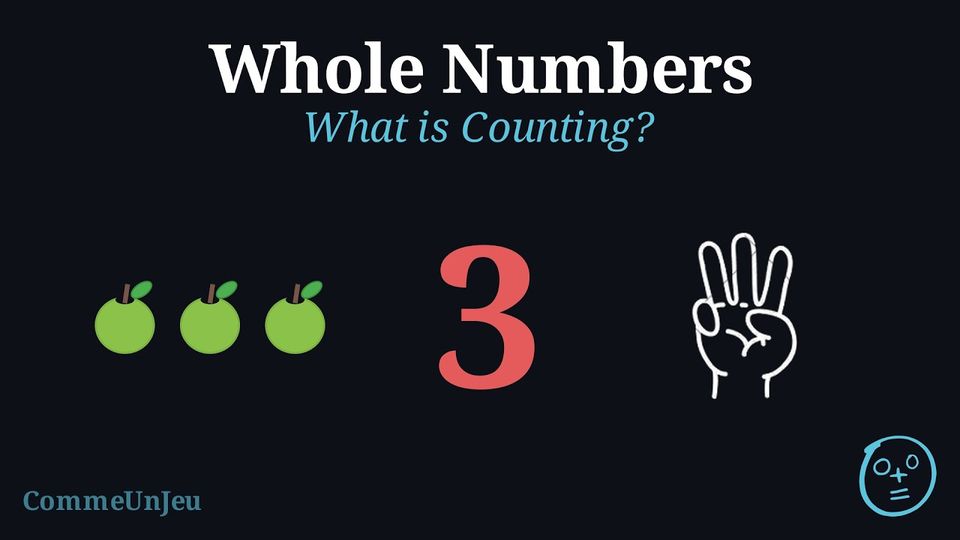
We learn to count with our fingers. We use our fingers to wave, play, and hold things. Here, we use them to count. 
How many fingers are up?
- First, ONE. Hold up one finger. This is what the number 1, called one, looks like. It means you have just one of something, like one cube.
 \(\quad\)

- Then, TWO. Hold up one more finger. Now you have two fingers up. This is what the number 2, called two, looks like. It means you have two things, like two cubes.
 \(\quad\)

- We can keep going all the way to five fingers on one hand.
Definition — Counting
Counting is finding out how many of something you have. Definition — Numbers 1 to 5
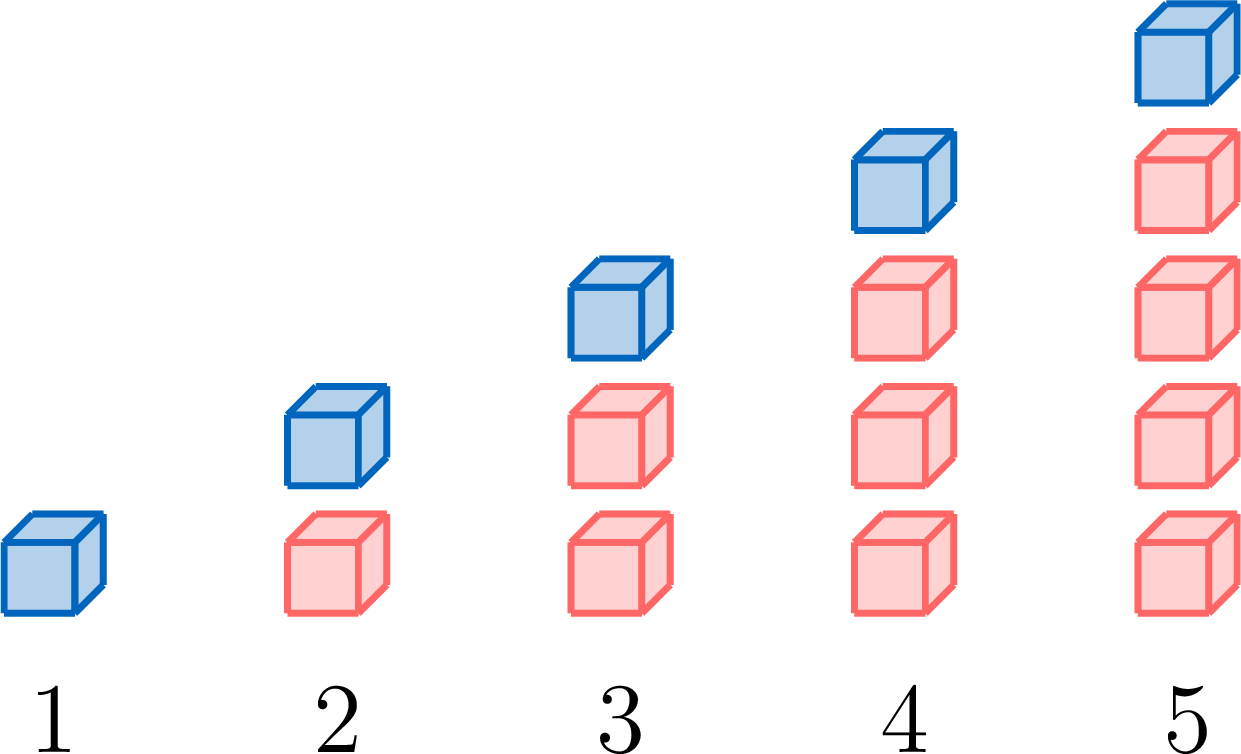
Here are ways to show the numbers from 1 to 5. | Word | Number | Fingers | Cubes | Ten-Frame |
| one | 1 |  |  |  |
| two | 2 |  |  |  |
| three | 3 |  |  |  |
| four | 4 |  |  |  |
| five | 5 |  |  |  |
Proposition — One More Is the Next Number
When we add one more object to a group, we do not need to count everything again: the number of objects becomes the next number, the number we say just after when we count. 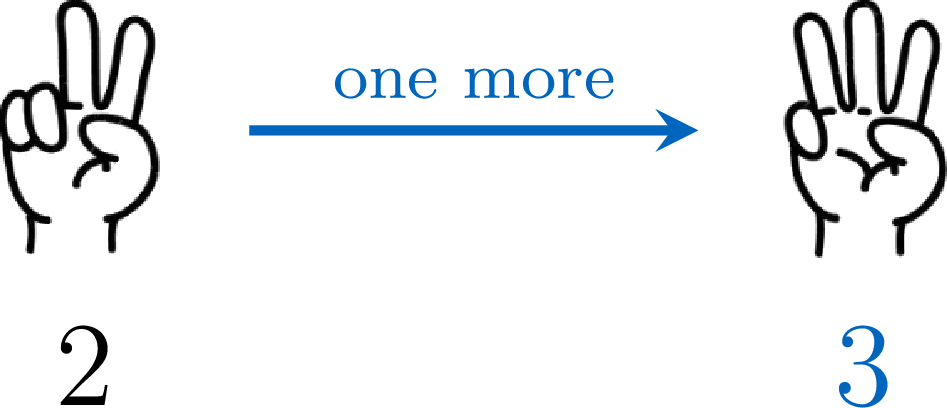
Skills to practice
- Counting the Fingers
- Counting the Cubes
- Counting in the Ten-Frame
- Adding One More
II
How to Count Objects
Method — The Steps for Counting
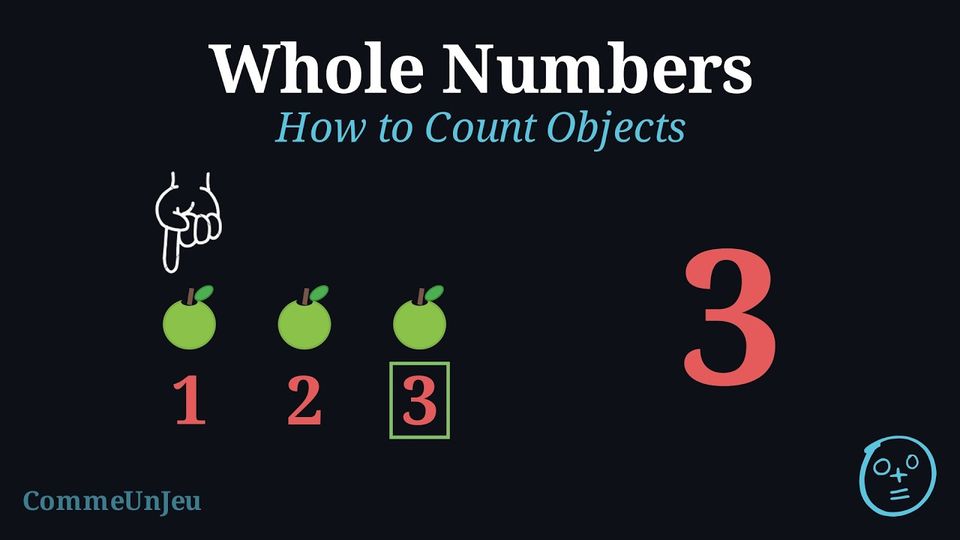
To count a group of objects correctly, follow these steps: - Line up the objects or touch each one as you count.
- Say one number for each object.
- Say the numbers in the right order (1, 2, 3...).
- The last number you say is the total number of objects.
Example
Count the number of apples: 
Let's point to each apple and say the numbers in order.
- Touch the first apple and say "1".

- Touch the second apple and say "2".

- Touch the third apple and say "3".

The Number Does Not Change
The number of objects in a group does not depend on what the objects are, on how big they are, or on where they are placed. 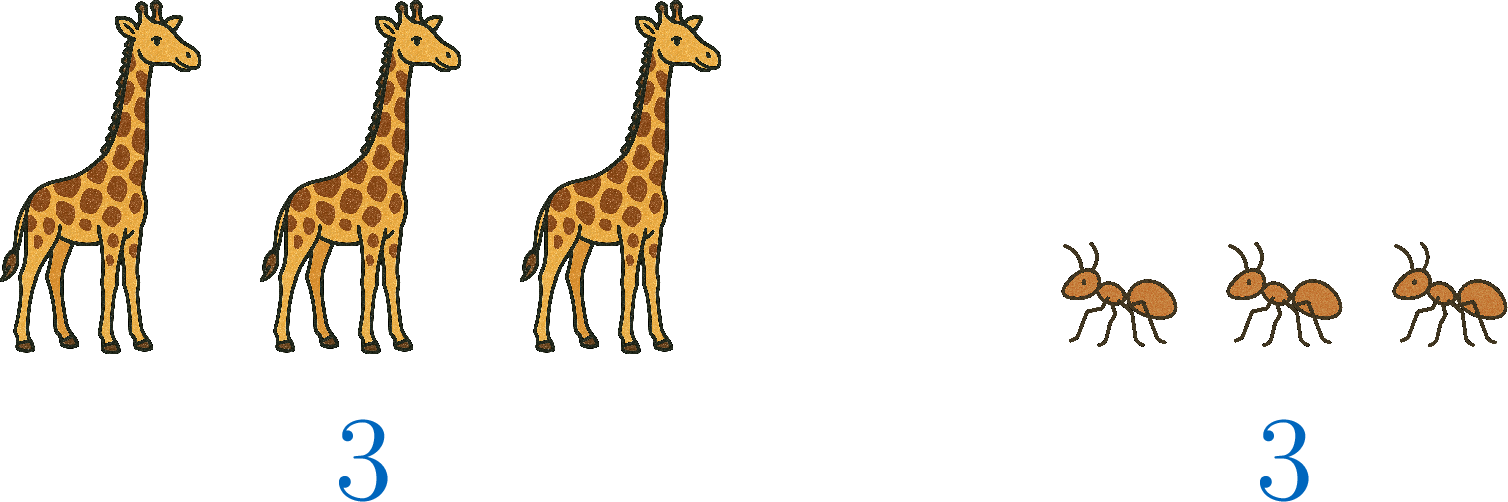
Three giraffes and three ants: the animals are different, some are very big and some are very small, yet there are 3 in each group. 
Three marbles close together, then the same marbles spread apart: none has been added and none has been taken away, so there are still 3 marbles. Moving the objects does not change their number; to check, we count them again, one by one.
Method — Building a Collection
To build a group that has a given number of objects, we start with no object: - we say the numbers in order, starting from one;
- each time we say a number, we put down one object — or we draw one dot, or we colour one box;
- we stop when we say the number we were asked for.
Example — Putting Four Cubes in the Box
Here are some cubes. Put \(4\) cubes in the box. 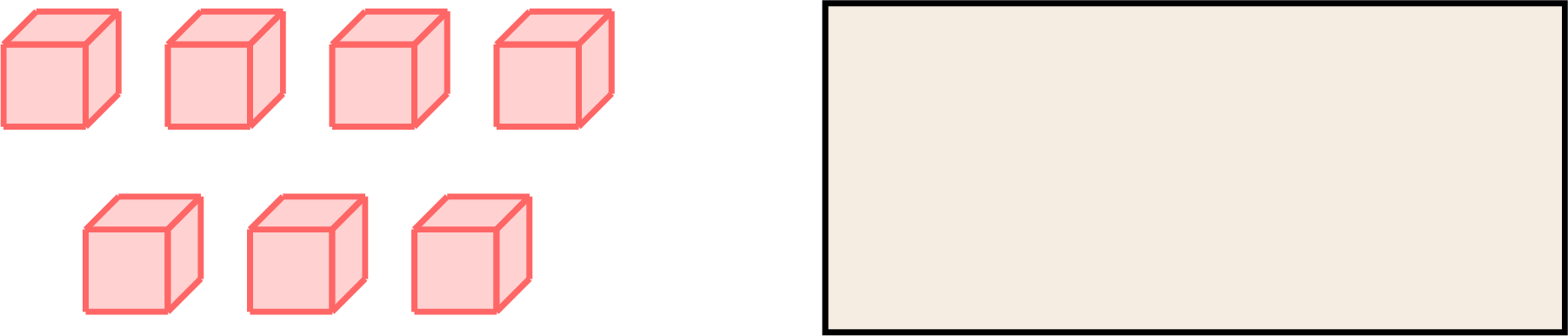
We take the cubes one by one and say the numbers in order. 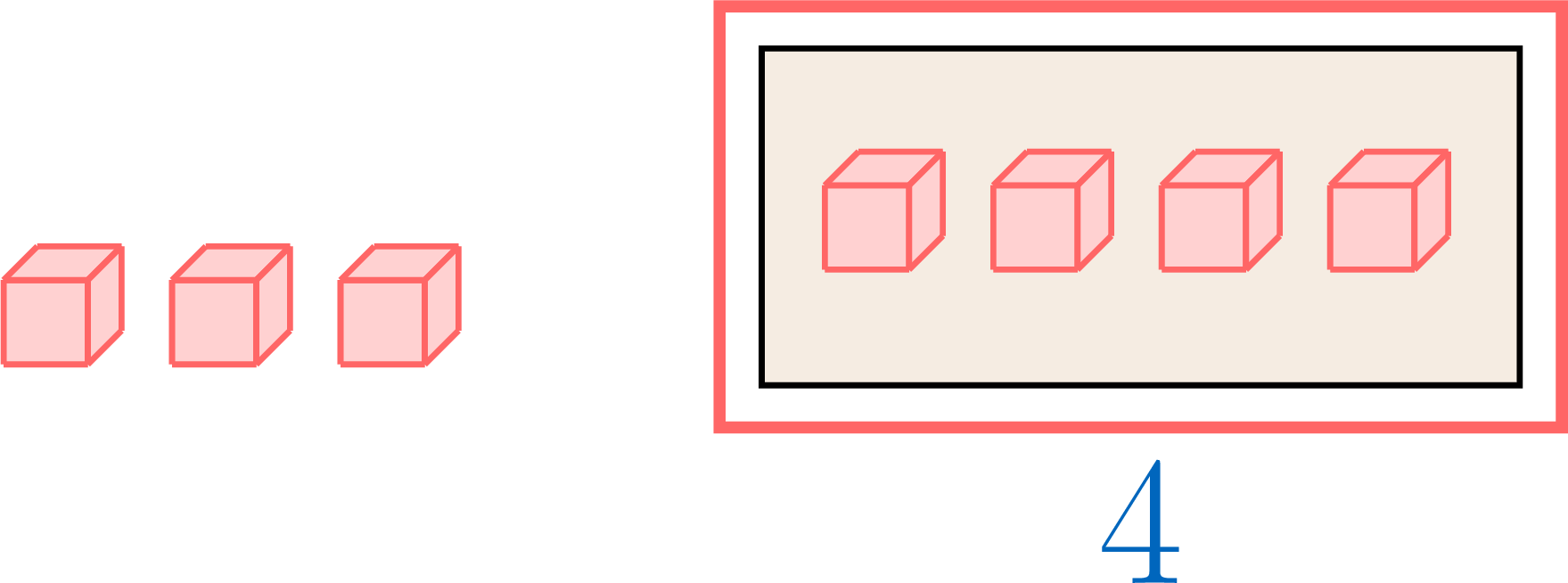
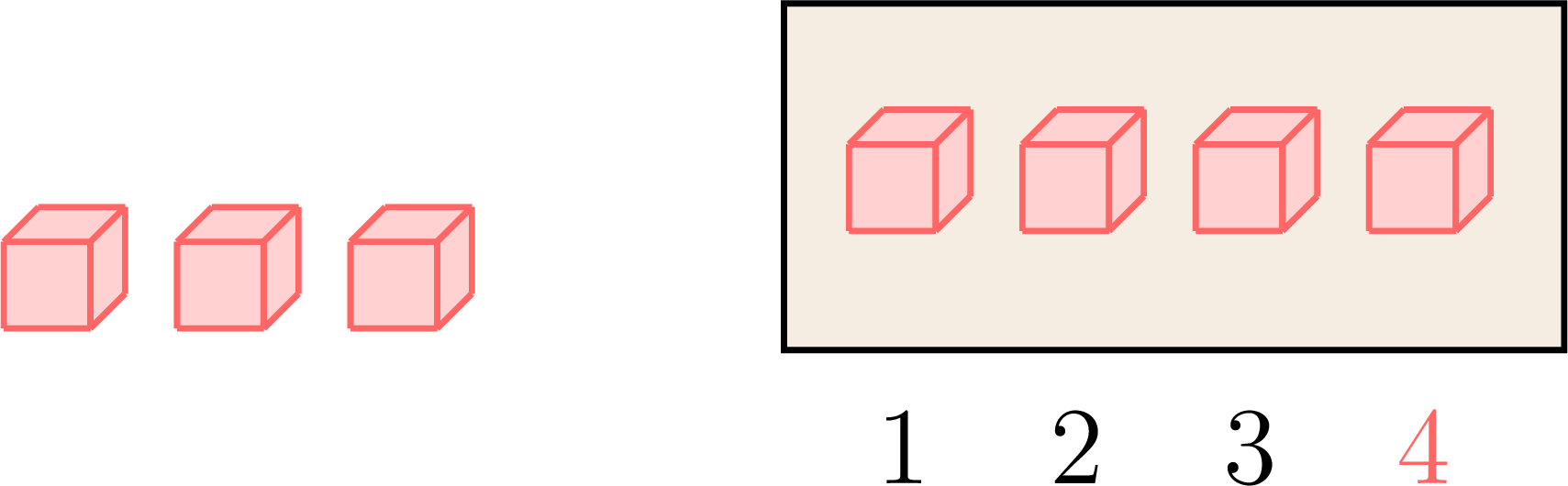
There are 4 cubes in the box. To check, we count the cubes in the box: one, two, three, four. The last number we say is \(4\), the number we were asked for.
- We put a cube in the box and say "1".
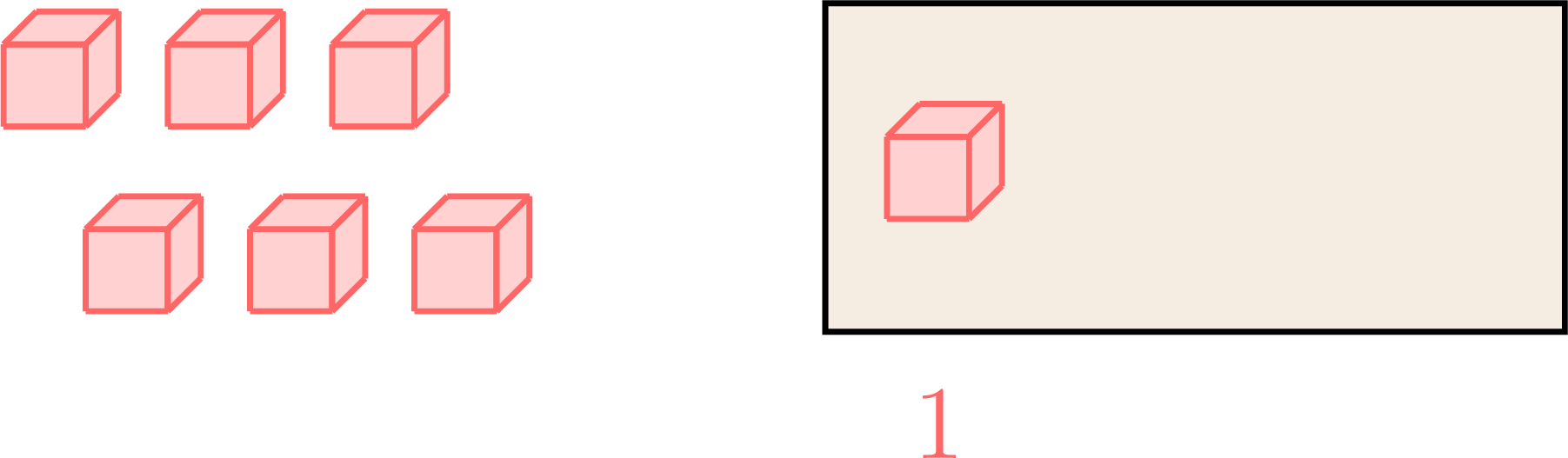
- We put another cube in the box and say "2".
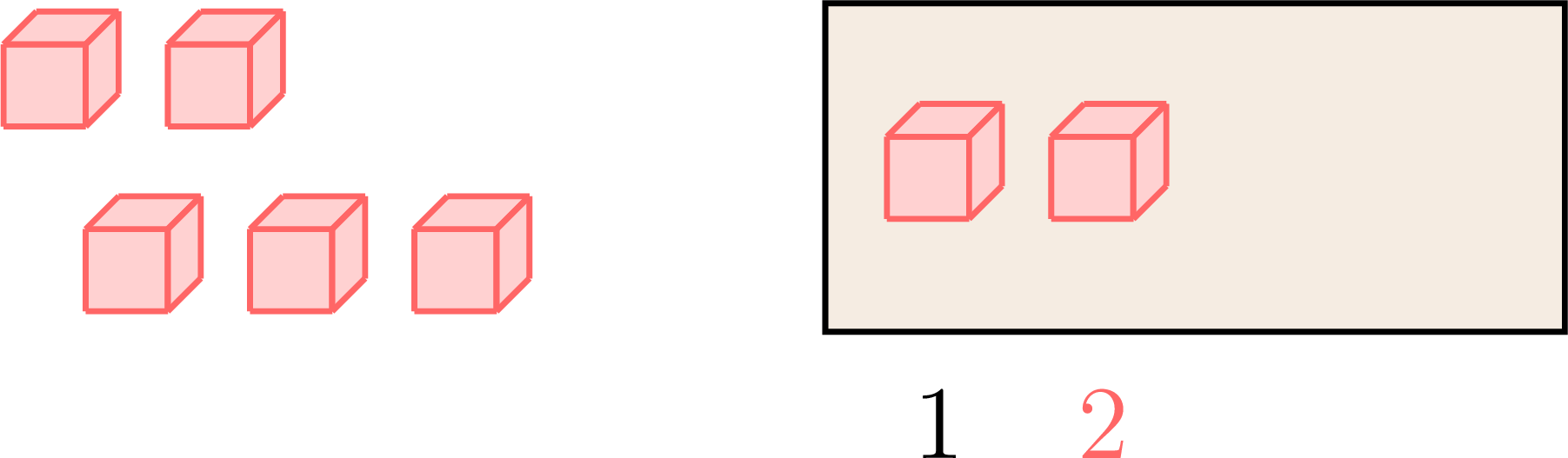
- We put another cube in the box and say "3".
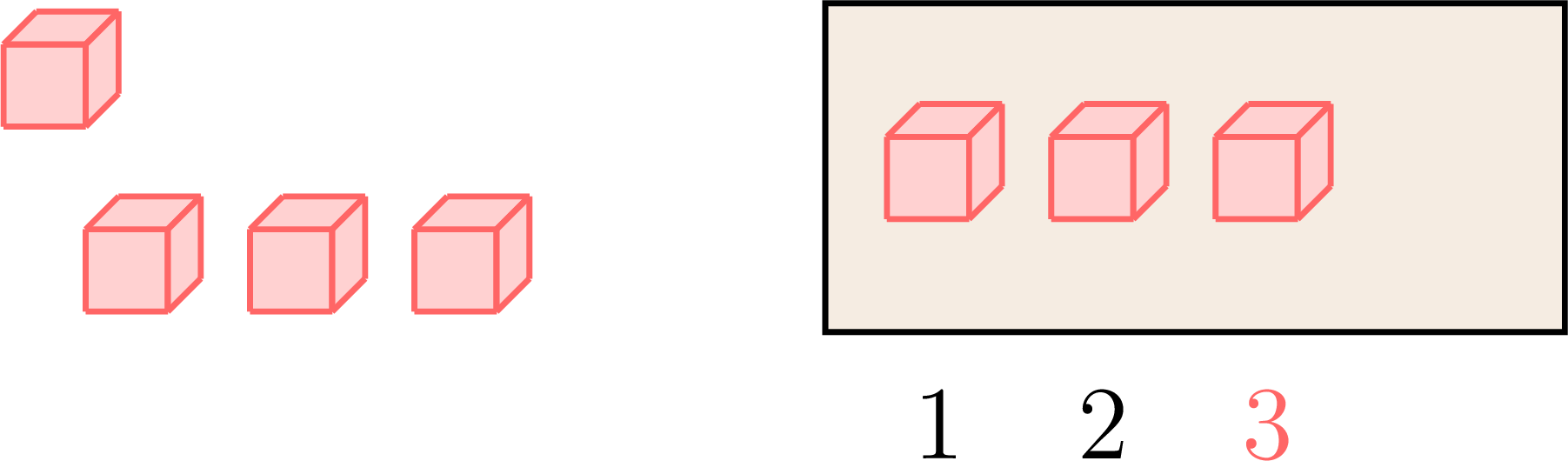
- We put another cube in the box and say "4". We stop: 4 is the number we were asked for.
Skills to practice
- Counting the Fruits
- Counting the Kids
- Counting Scattered Objects
- Building a Collection
III
Seeing How Many at a Glance
Definition — Seeing How Many at a Glance
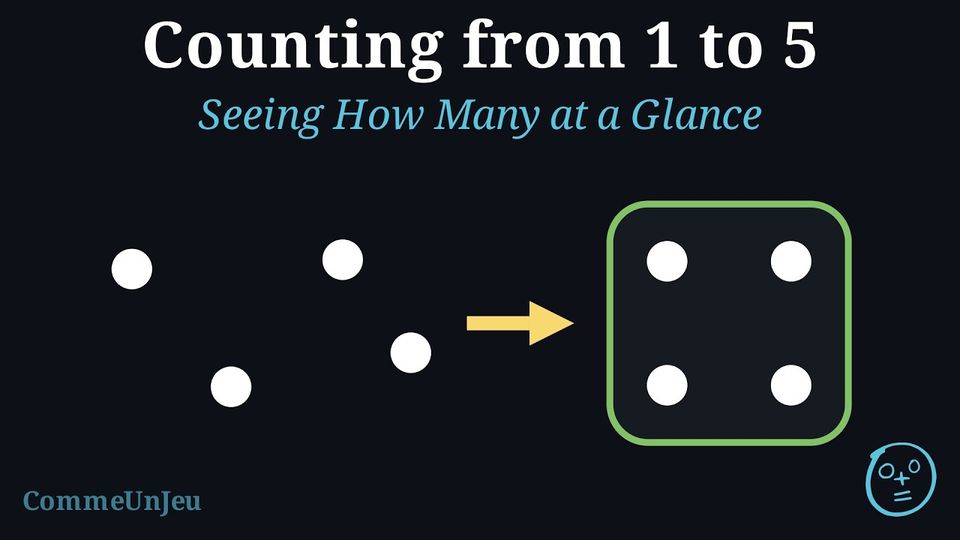
When there are only a few objects, up to four, we can often see how many there are at a glance, without counting them one by one, above all when they make a shape we know, like the faces of a die: 
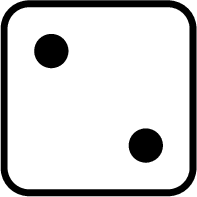
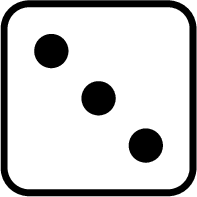
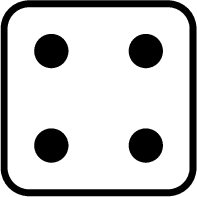
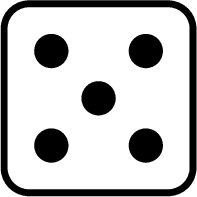
Method — Recognising a Small Quantity
To say at a glance how many objects there are: - look at the whole group, without pointing at each object;
- recognise a shape you know: a face of the die, a hand, a row of five boxes — full, it is five; with one empty box, it is one less than five, four;
- if the objects are mixed up, see small groups: two and two make four, three and two make five;
- if you are not sure, count one by one to check.
Example — How Many Dots, Without Counting?
How many dots are there in each picture? Find it at a glance. 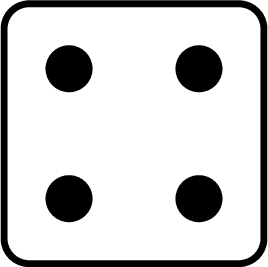


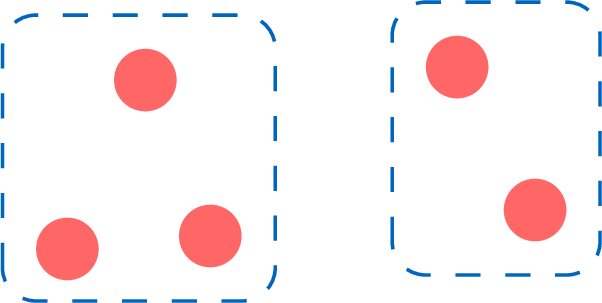
- The die: we know this face, it is \(4\).
- The mixed-up dots: we see a group of three and a group of two. Three and two more make \(5\).
- The row of five boxes: one box is empty. One less than five is \(4\).
Skills to practice
- Recognising Dice Faces
- Recognising Fingers
- Seeing Small Groups
IV
Going further
Skills to practice
- Completing Equations with Pictures
- Quiz
Jump to section