International Baccalaureate · PYP 0
Time and Daily Routines
I
Day and Night
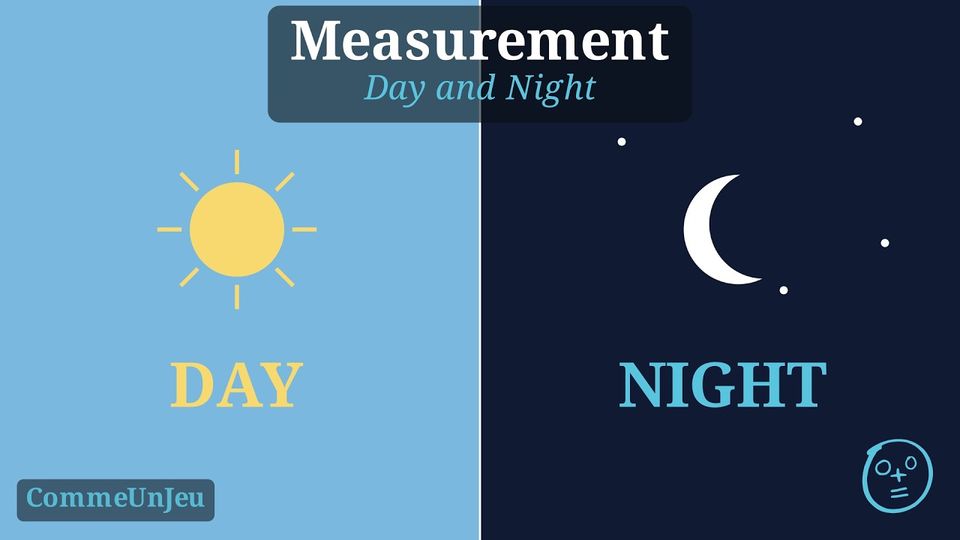
Definition — Day and Night
Every day the sky is light, then dark, then light again. So there are two parts: daytime and nighttime. - Daytime is when the Sun is in the sky and gives us light. It is usually the time for school, playing, and other activities.
- Nighttime is when it is dark, and we can often see the Moon and stars. It is usually the time for rest and sleep.

Skills to practice
- Finding Day and Night
II
Parts of the Day
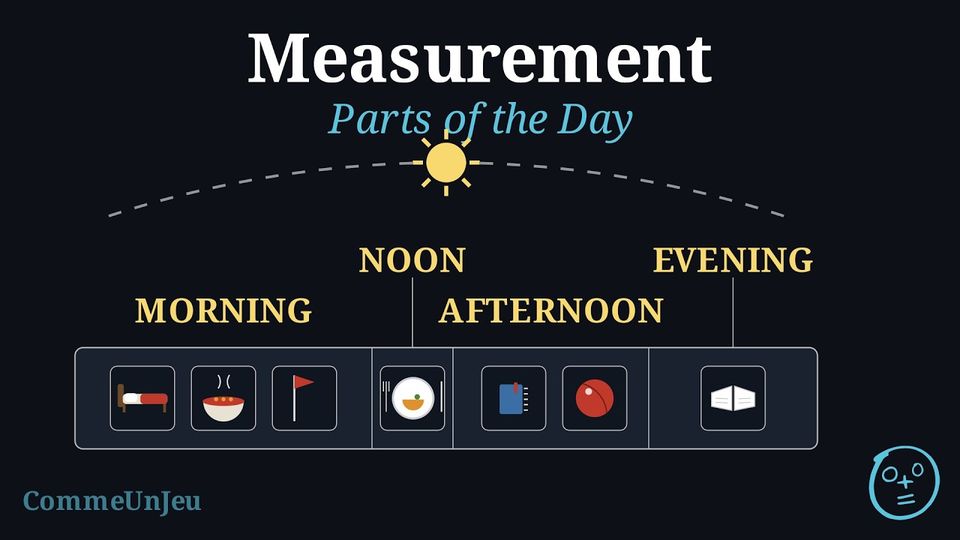
Definition — Parts of the Day
We organize our day into different parts: morning, noon, afternoon, and evening. Each part of the day has its own activities. 
Skills to practice
- Finding the Part of the Day
III
Putting Events in Order
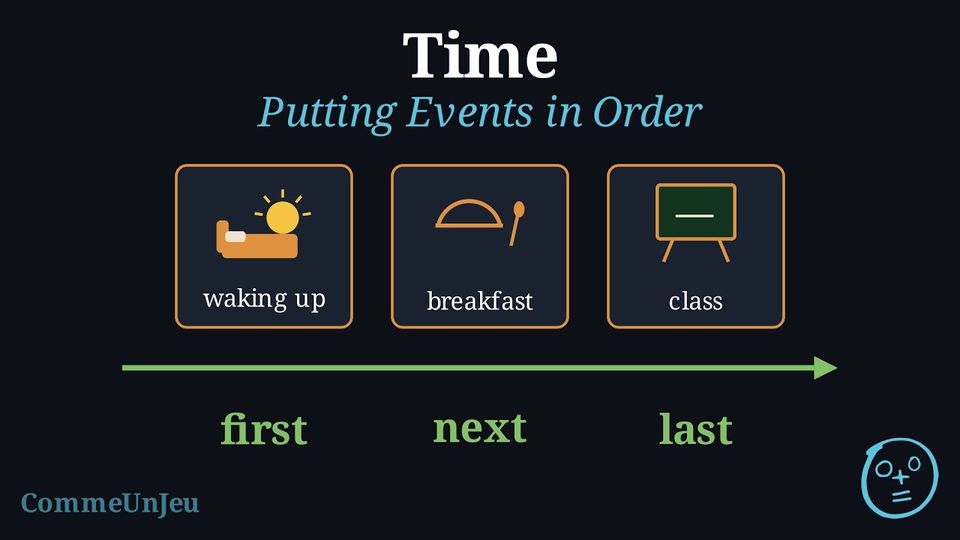
Three pictures of the morning got mixed up. 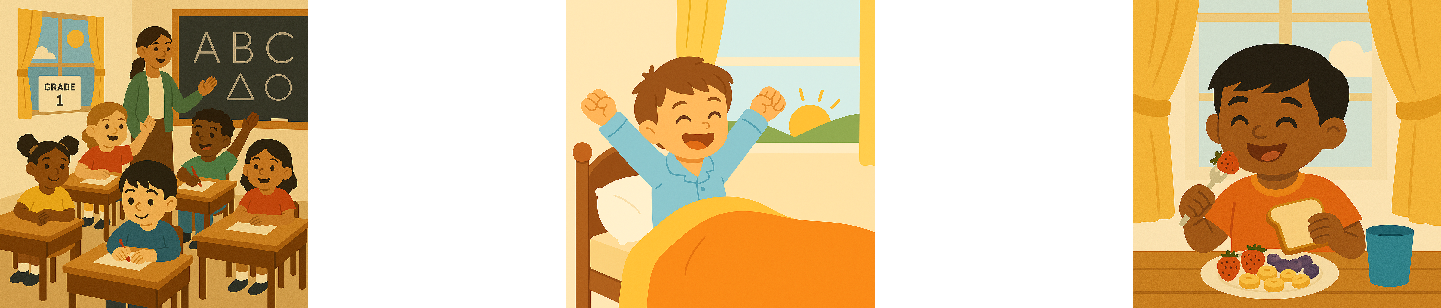
What is the right story? What happens first?
First we wake up, next we have breakfast, and last we go to class. 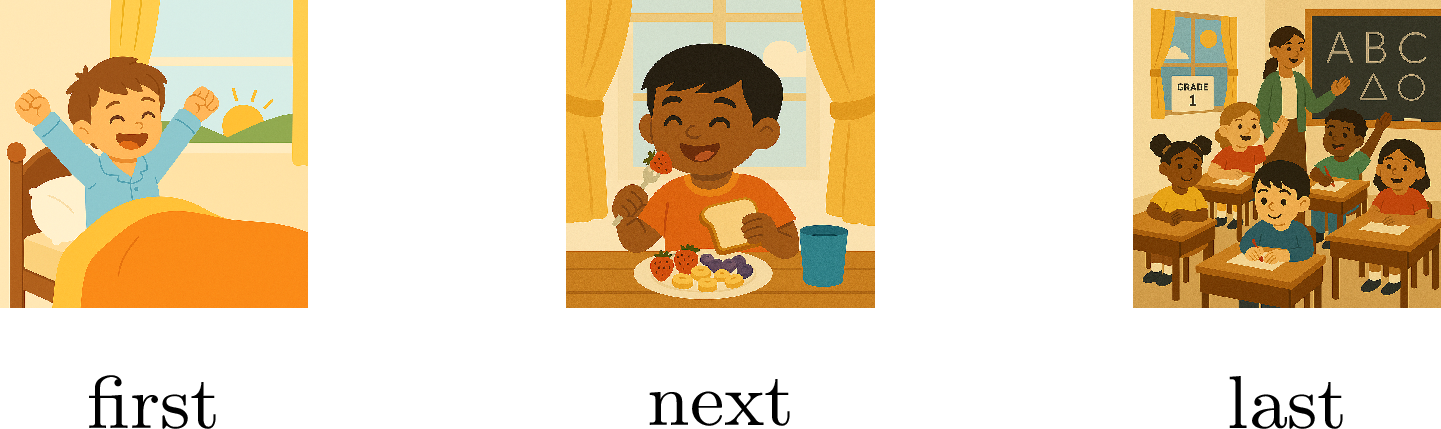
Definition — First Next Last
To tell a story in order, we use three little words: first for what happens before everything else, next for what follows, and last for the end. Example
The evening got mixed up too. What is the usual order? 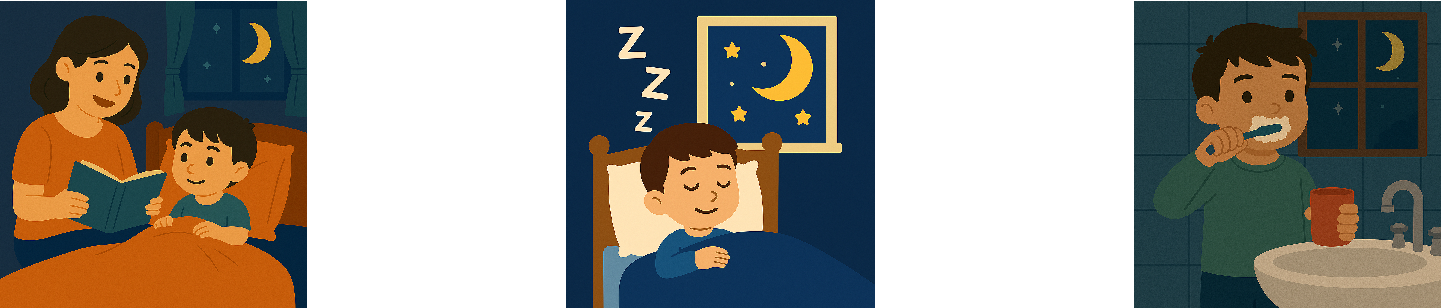
In the evening, usually: first we brush our teeth, next we listen to a bedtime story in bed, and last we sleep. 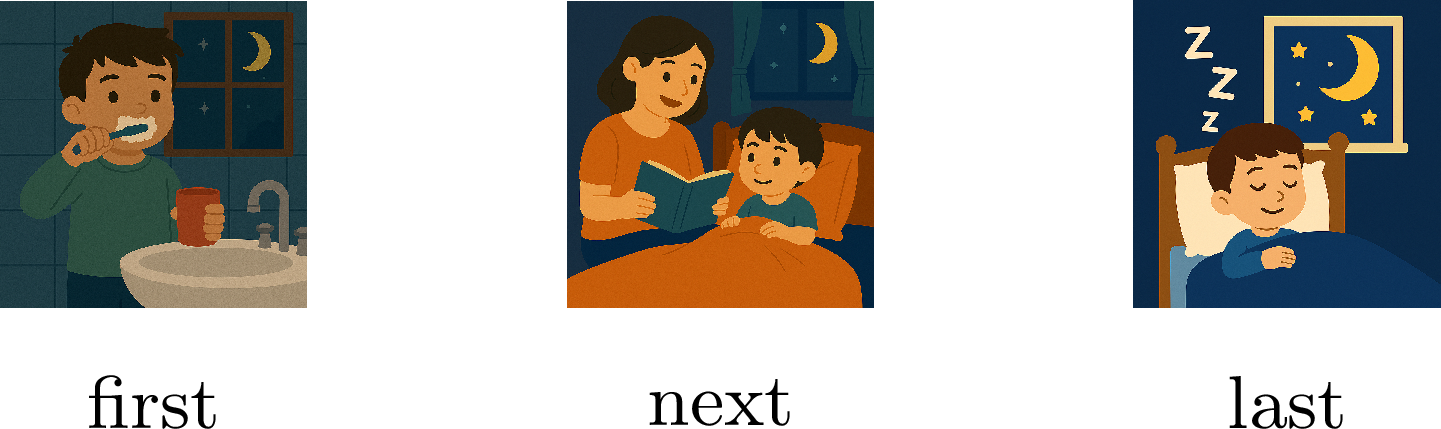
Skills to practice
- Ordering the Story
IV
Comparing Durations
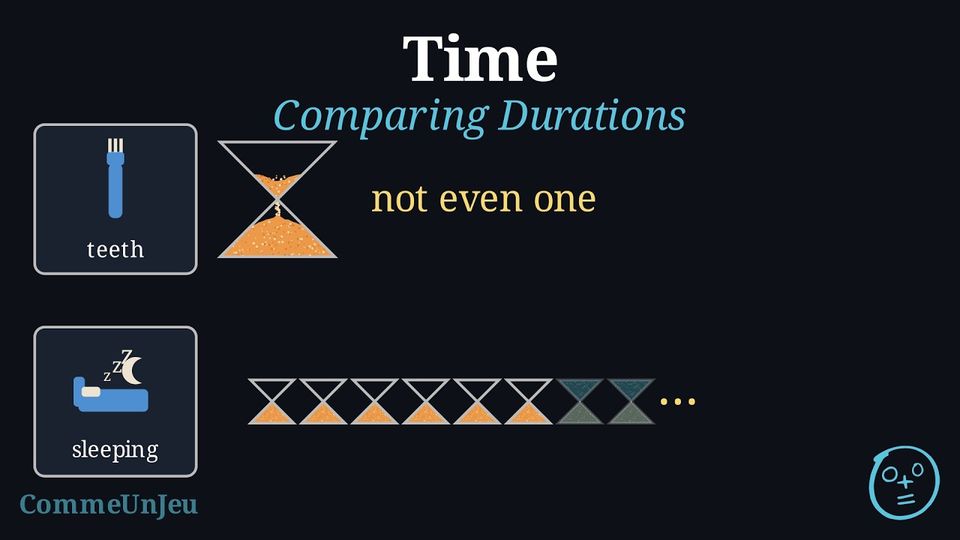
Brushing our teeth and sleeping all night: two things that take time. 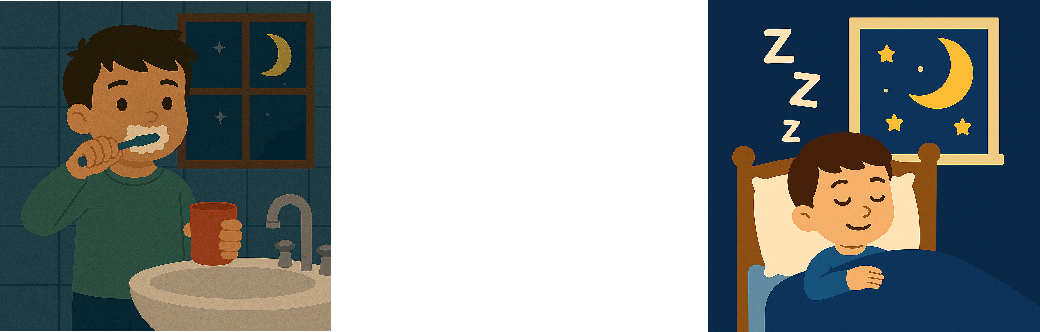
Which one lasts longer?
Brushing our teeth is over quickly. The night is long, from evening to morning: sleeping lasts longer.
Definition — Lasting More or Less
Some things are over quickly, others take a long time. We say one thing lasts longer or lasts a shorter time than another. An hourglass shows time passing: when all the sand is down, the time is up. To compare two durations, we can use the same hourglass for both: what is over before the sand runs out lasts a shorter time; what keeps us turning the hourglass again and again lasts longer. If both are over before the sand runs out, we start them at the same time: the one that finishes first has lasted a shorter time. 
Example
The morning in class, or breakfast: which one lasts longer? 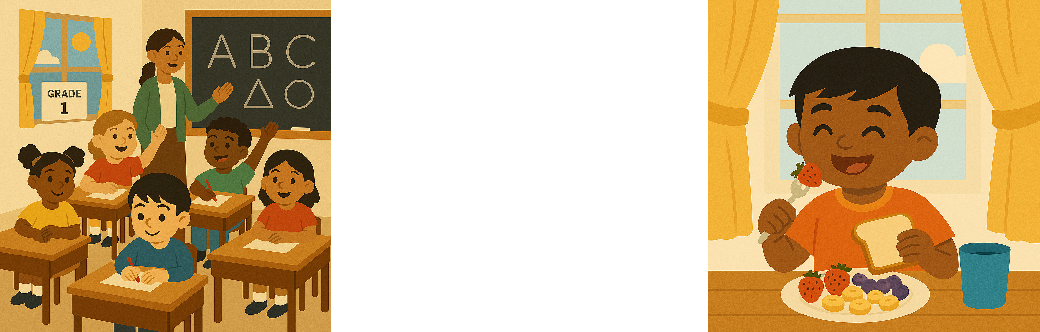
Breakfast is usually over quickly; the morning in class goes on much longer. The morning in class lasts longer.
Skills to practice
- Finding What Lasts Longer or Shorter
V
Days of the Week
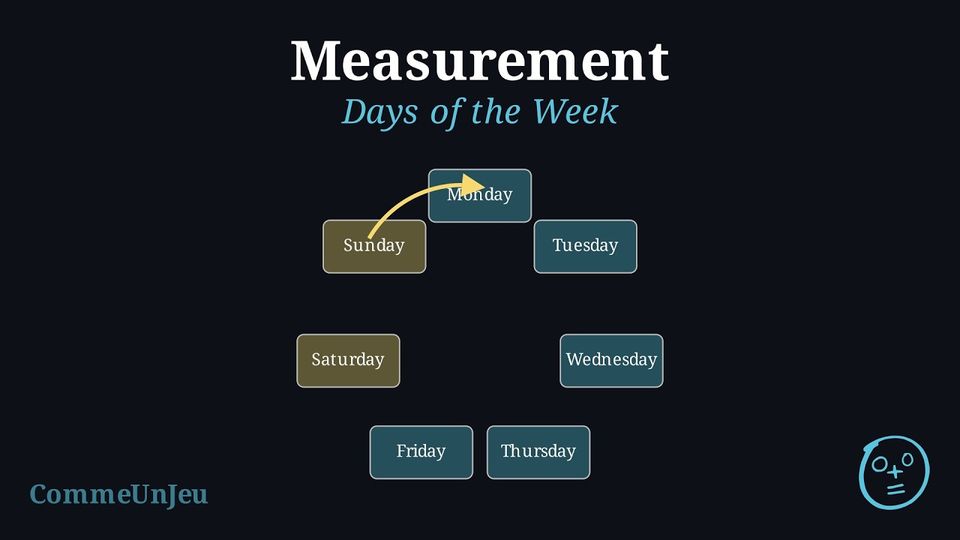
Definition — Days of the Week
A week is made up of 7 days. Each day has a special name, and the days always come in the same order. Definition — Yesterday, Today and Tomorrow
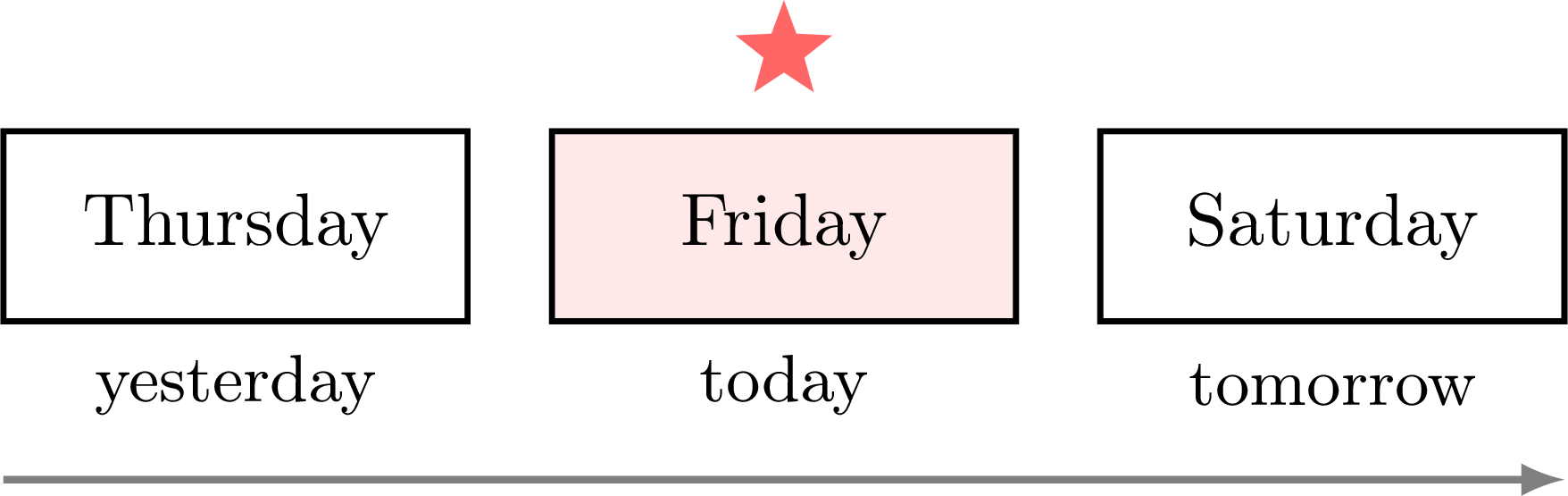
Today is the day we are living now. The day just before today was yesterday. The day just after today will be tomorrow. For example, when today is Wednesday, yesterday was Tuesday and tomorrow will be Thursday. 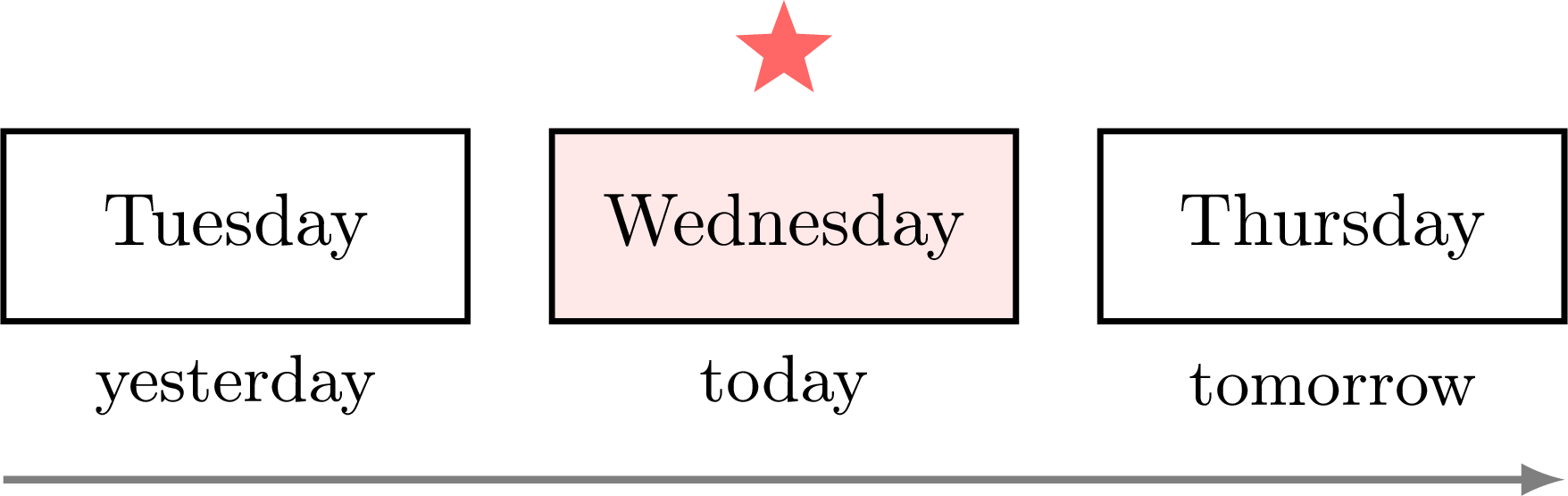
Example
Today is Friday. What day was it yesterday? What day will it be tomorrow? 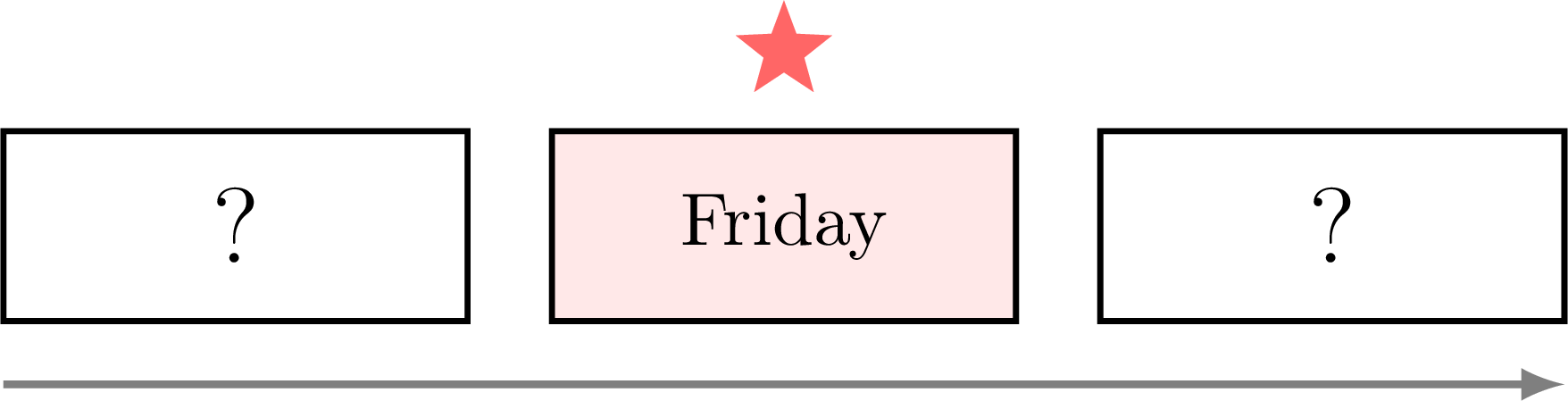
Skills to practice
- Finding the Day Before or After
- Finding Yesterday and Tomorrow
VI
The Year and the Seasons
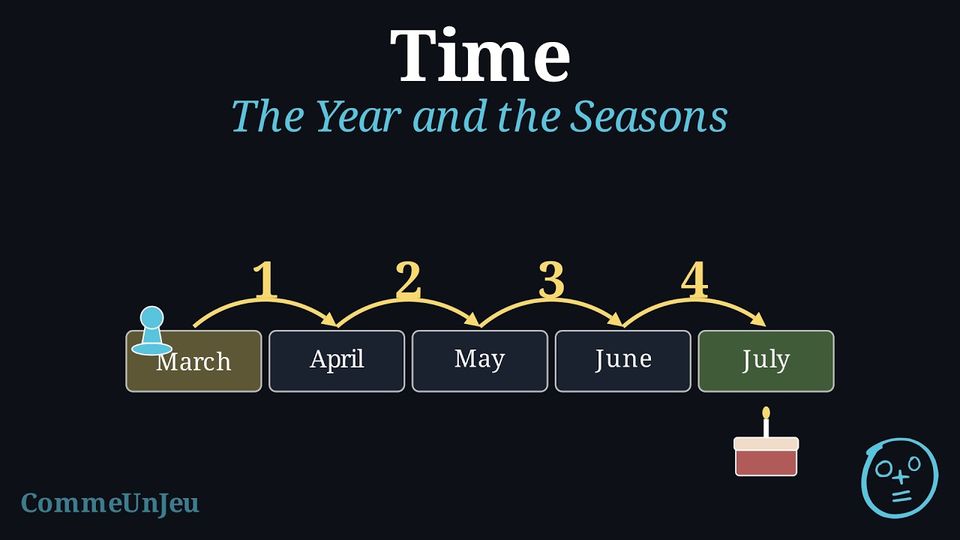
It is March. Hugo asks: “Is my birthday soon?” His birthday is in July. How can we know if it is soon?
We look at the months. They always follow one another in the same order: after March come April, May, June — and then July. His birthday is still a few months away. The year is what tells us.
Definition — The Year
A year holds twelve months that follow one another, always in the same order: January, February, March, April, May, June, July, August, September, October, November, December. When December ends, a new year begins — and the months start again. Definition — The Seasons
In many places, the year also turns through four seasons: spring, summer, autumn, winter — like a wheel that never stops. Other places have other seasons, for example a rainy season and a dry season. 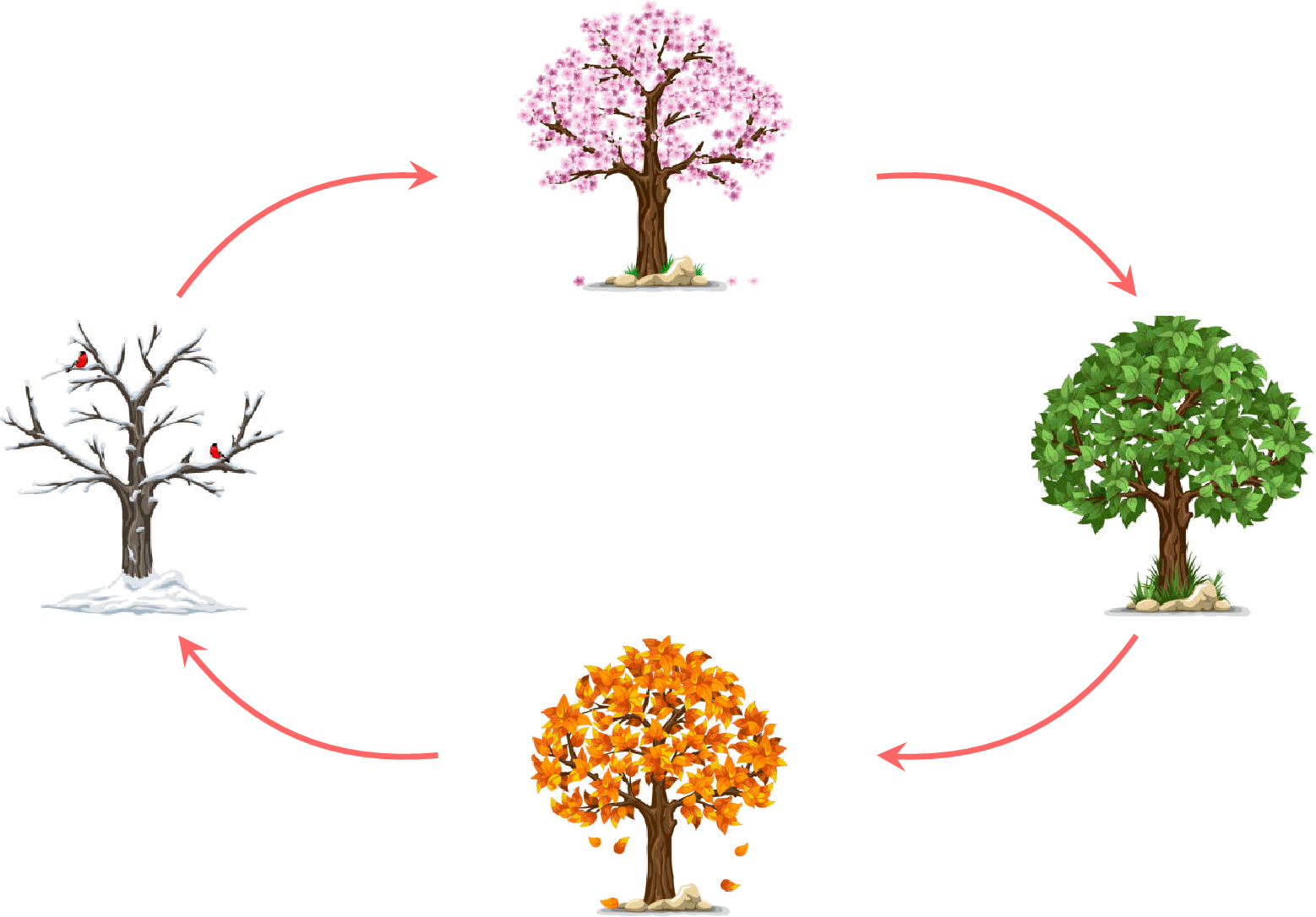
The Date
Every day has its date: the name of the day, the number of the day and the name of the month. At school, we say it every morning: “Today is Wednesday the twelfth of March.” The date tells where we are in the year.
Example
It is summer. Which season comes next? 
On the wheel, after summer comes autumn: the leaves fall, and winter is on its way. 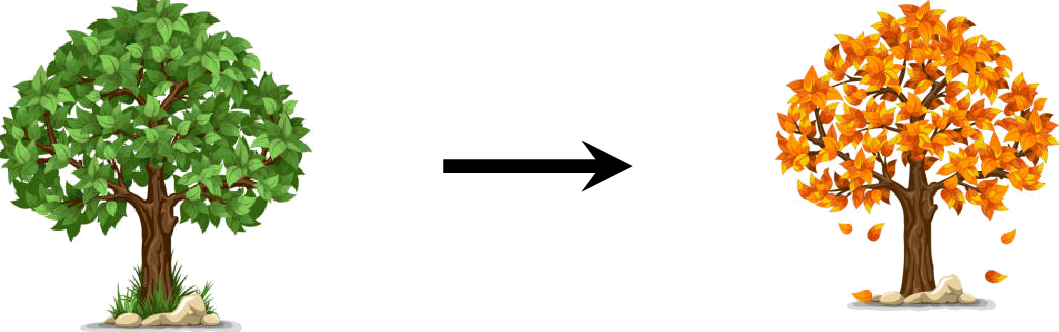
Skills to practice
- Finding the Next Season
VII
Going further
Skills to practice
- Writing the Week with Numbers
- Quiz
Jump to section