International Baccalaureate · PYP 1
Time
I
Months of the Year
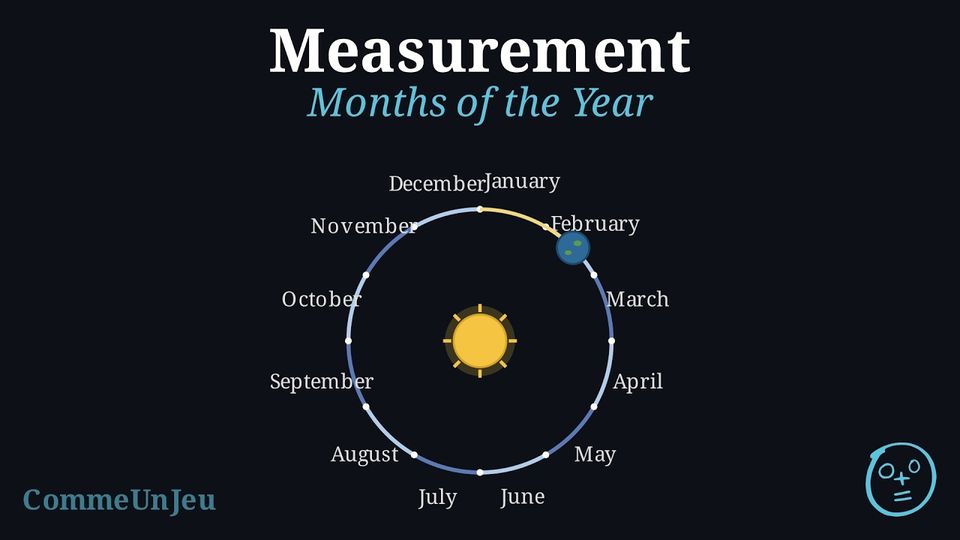
Definition — The 12 Months of the Year
A year is the time it takes for the Earth to make one complete journey, or orbit, around the Sun. This long journey is divided into 12 smaller parts called months.The 12 months always follow the same order. After December, a new year begins with January.
Definition — The Seasons
In many places, the year also turns through four seasons: spring, summer, autumn, winter — like a wheel that never stops. Other places have other seasons, for example a rainy season and a dry season. 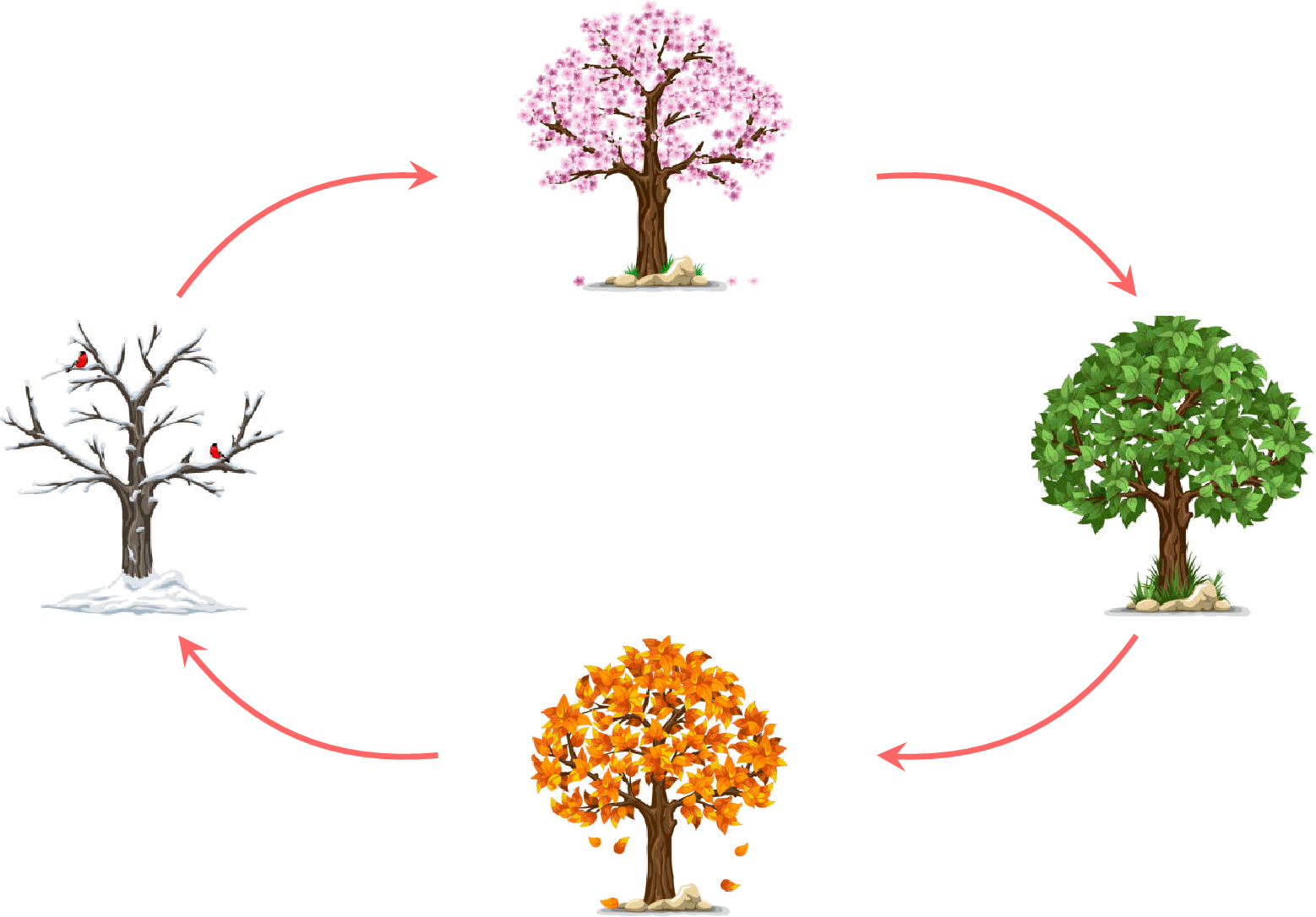
Skills to practice
- Ordering the Months
- Finding Important Months
- Calculating with Months
II
The Week and the Calendar
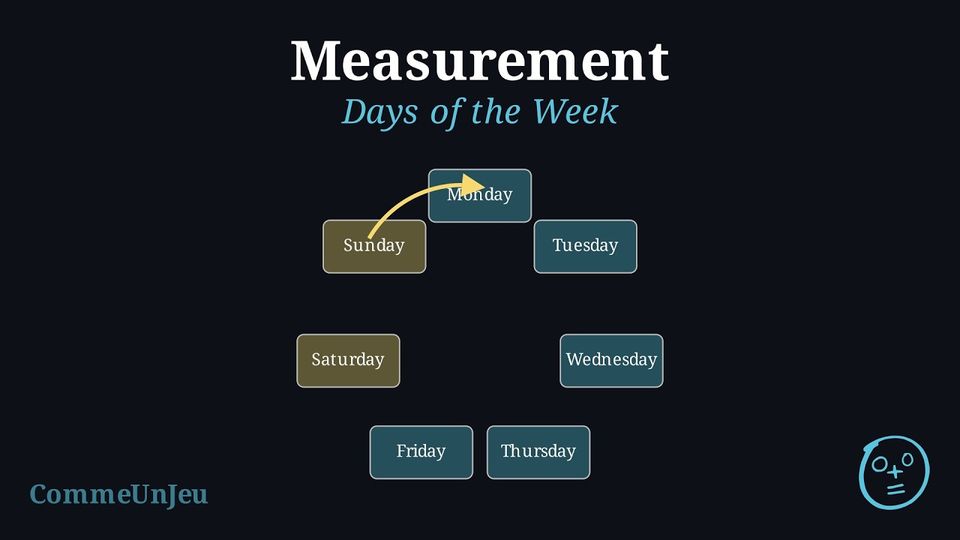
Definition — Days of the Week
A week is made up of 7 days. Each day has a special name, and the days always come in the same order. Definition — A Calendar
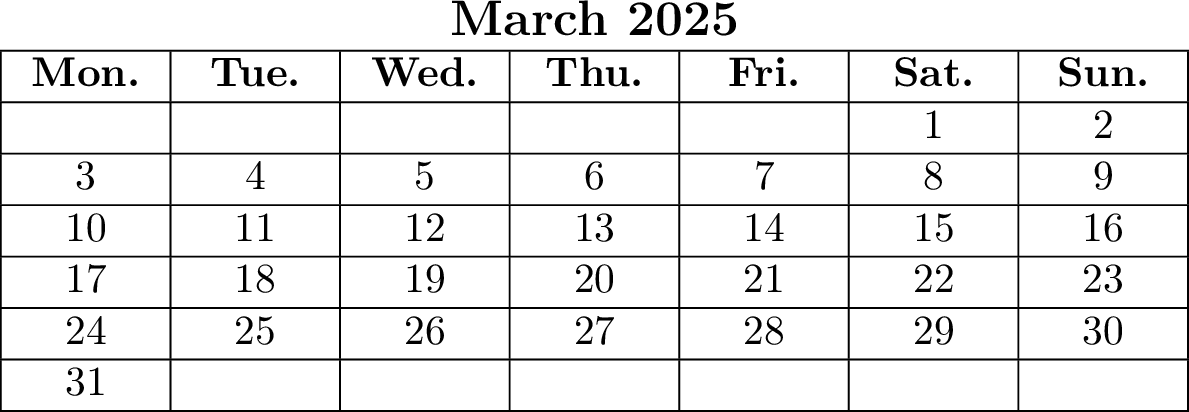
A calendar is a tool that shows all the days, weeks, and months of a year. It helps us organise our time and remember important dates.Here is an example of a calendar page for March 2025:
The Date
Every day has its date: the name of the day, the number of the day and the name of the month. At school, we say it every morning: “Today is Wednesday the twelfth of March.” The date tells where we are in the year.
Method — Reading a Calendar
To find the day of the week of a date: - Find the number of the day in the calendar page.
- Go straight up the column to the row of the days.
- Read the day of the week written there.
Skills to practice
- Reading a Calendar
III
Reading O'Clock Times on a Clock
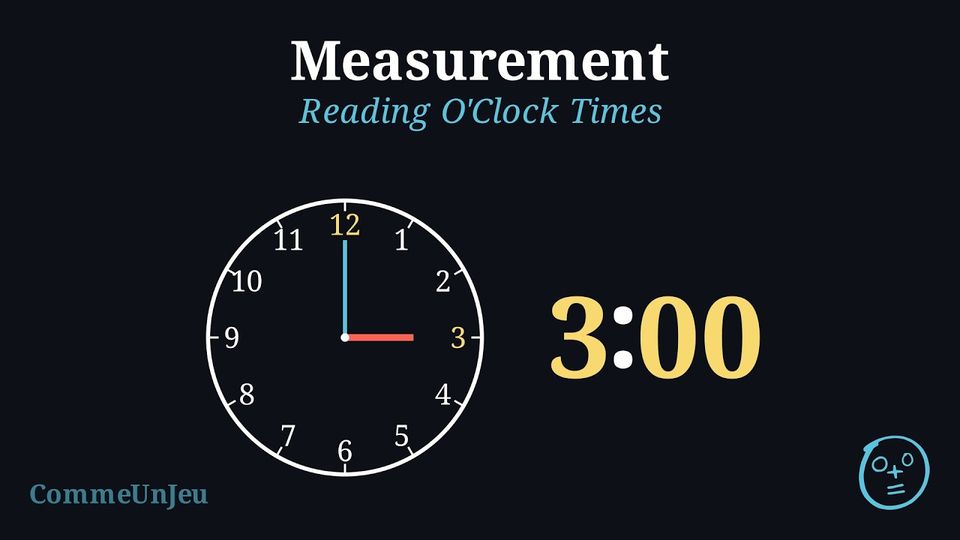
Method — How to Read 'O'clock' Times
A clock has two main hands: the long hand (the minute hand) and the short hand (the hour hand). To read an “o'clock” time, you need to look at both hands. - Look at the long hand first. When the long hand points straight up to the number 12, it means there are 0 minutes. It is an “o'clock” time.
- Then, look at the short hand. The number the short hand points to tells you the hour.
Example
Look at this clock. It is in the afternoon. What time does the clock show? 
- The long hand is pointing to the 12, so it is an “o'clock” time (0 minutes).
- The short hand is pointing to the 3.
- Therefore, the time is 3 o'clock. We write this as 3:00.
Definition — Parts of the Day
We organize our day into different parts: morning, noon, afternoon, and evening. Each part of the day has its own activities. 
Example
Here are three clocks from the same day. Read each clock, then match it with a moment of the day: we leave for school in the morning, we have lunch at noon, we have a snack in the afternoon. 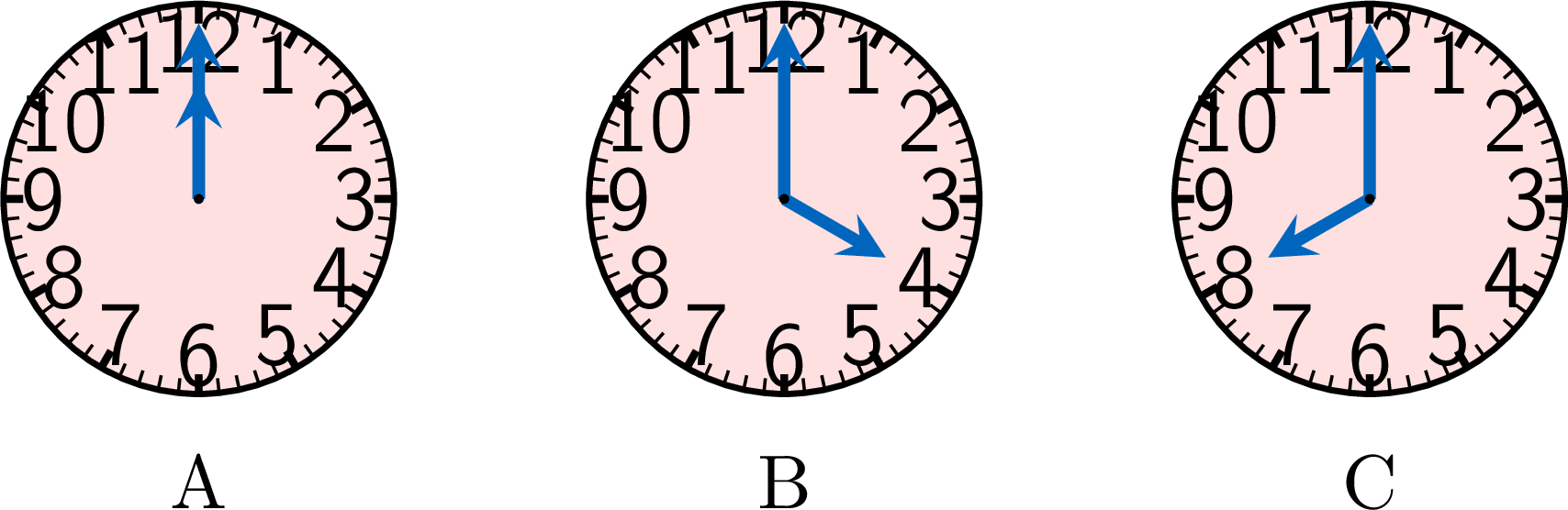
On each clock, the long hand is on the \(12\): these are o'clock times. The short hand gives the hour: A shows \(12\):00, B shows \(4\):00, C shows \(8\):00.
- C, \(8\) o'clock in the morning: we leave for school.
- A, \(12\) o'clock, noon: we have lunch.
- B, \(4\) o'clock in the afternoon: we have a snack.
Method — Placing the Hands for an O'Clock Time
To show an o'clock time on a clock: - The long hand (minutes) points straight up, at the \(12\): it is “o'clock”.
- The short hand (hours) points at the number of the hour: at the \(3\) for \(3\) o'clock.
Example
Draw the hands so that the clock shows \(8\) o'clock. 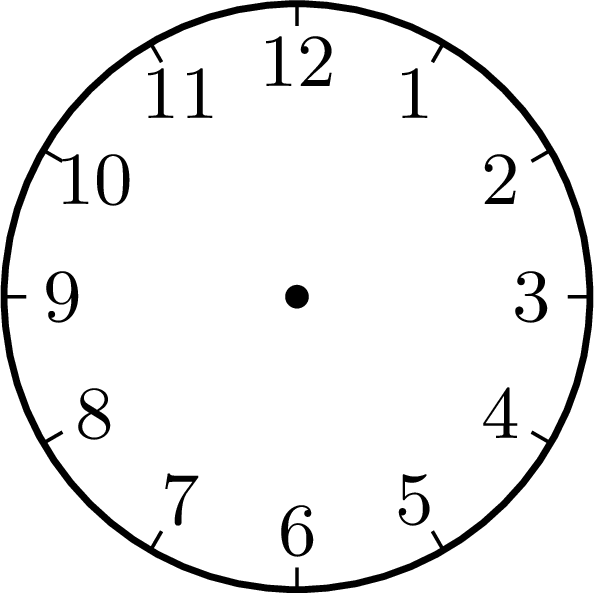
Long hand on the \(12\), short hand on the \(8\). 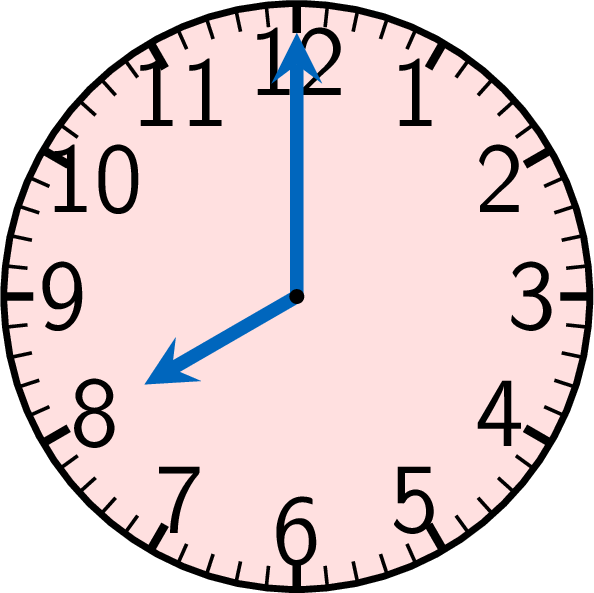
Skills to practice
- Telling Time to the Hour
- Placing the Hands
IV
Telling Time to the Half Hour
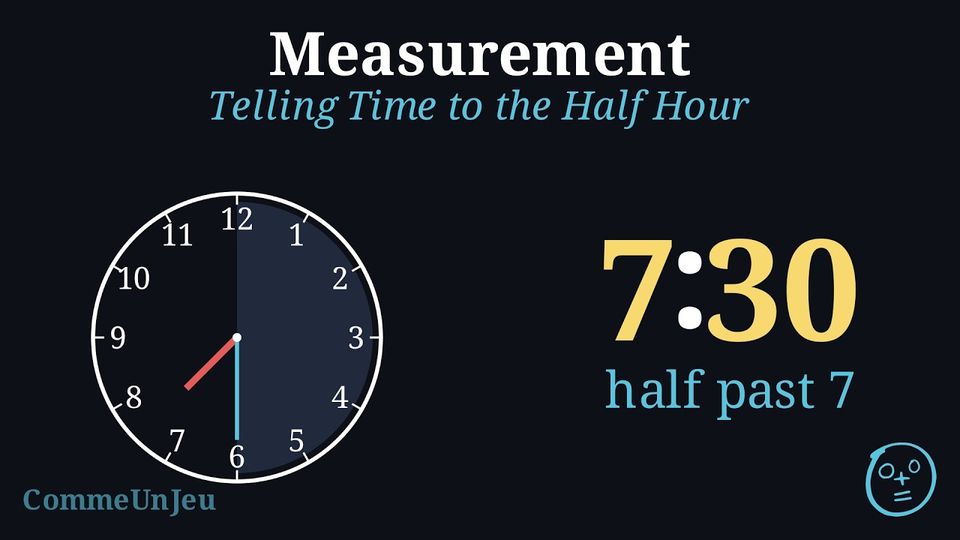
Method — How to Read Half-Hour Times
When we tell time to the half hour, we use the phrase “half past”. - Look at the long hand. When it points straight down to the 6, it has gone half way round the clock, from the 12 to the 6: it is half past.
- Look at the short hand. Because the long hand has gone half way round, the short hand is no longer pointing directly at a number. It has moved half way past the last hour and is on its way to the next one. To know the hour, we look at the number the hand has just passed.
Example
What time does this clock show? It is morning. 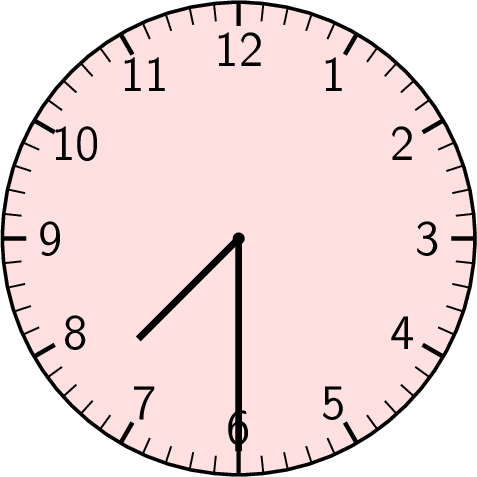
- The long minute hand is pointing to the 6, so it is 30 minutes past the hour.
- The short hour hand is between the 7 and the 8. It has passed the 7.
- The time is 7:30. We can also say half past 7.
Skills to practice
- Telling Time to the Hour and Half Hour
V
Hours, Days, Weeks or Months?
How Long Does It Last?
Some things last a few hours, others last days, weeks or even months. To say how long something lasts, we choose the unit that fits: 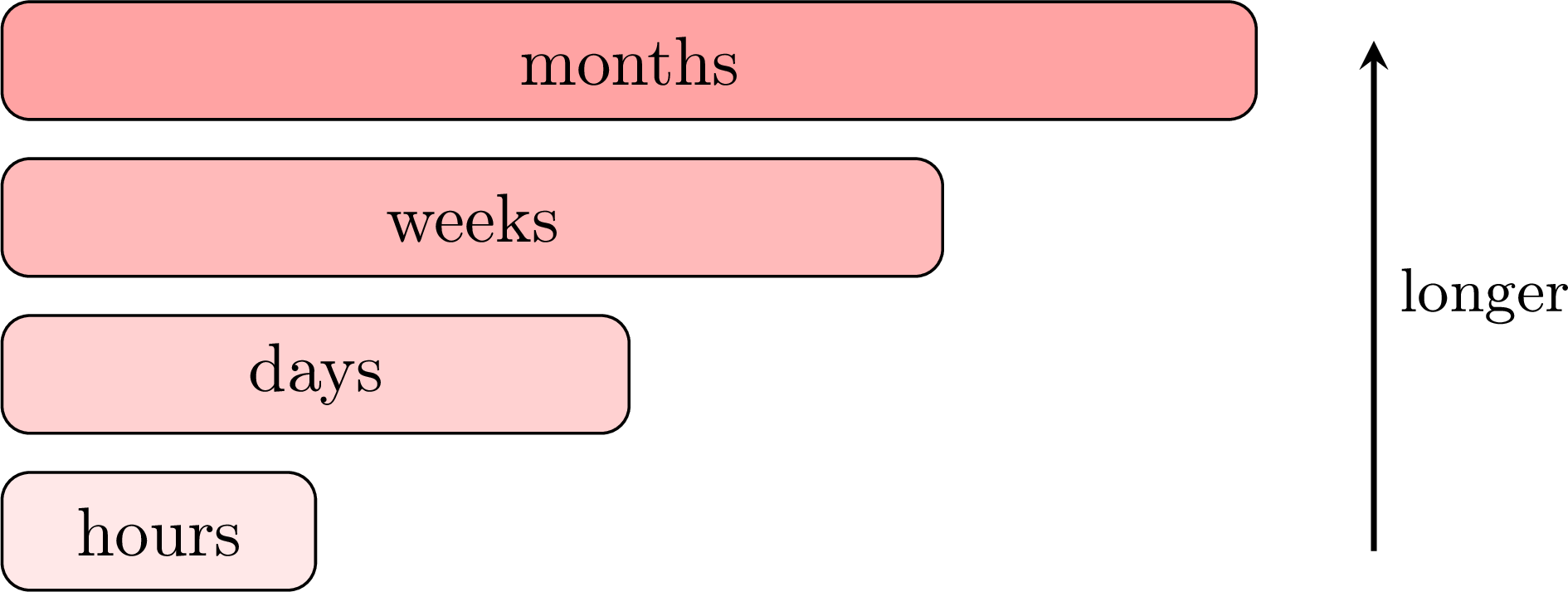
- a film at the cinema lasts about 2 hours;
- Saturday and Sunday together last 2 days;
- a holiday can last 2 weeks;
- baby Leo is 3 months old: he was born 3 months ago.
Example
Choose the word that fits: hours, days, weeks or months. - Lina sleeps 10 … every night.
- Tom is ill on Monday and Tuesday. He stays at home for 2 …
- The tomato seeds are planted in April. The tomatoes are red in July, about 3 … later.
- The school holiday lasts 14 days: that is 2 …
- Ten hours is a sensible length for one night; ten days or ten weeks would be far too long.
- Monday is one day and Tuesday is one day: Tom stays at home for 2 days.
- April \(\to\) May \(\to\) June \(\to\) July: 3 steps, so about 3 months; 3 days or 3 weeks would be far too short for a seed to become a red tomato.
- One week is 7 days, so 14 days is \(7+7\): 2 weeks.
Skills to practice
- Choosing the Unit
VI
Going further
Skills to practice
- Reading and Completing Clocks
- Solving Time Problems
- Quiz
Jump to section