DP 2: Applications and Interpretation SL mathematics
13 chapters, in the order of the programme: lessons, videos and worked exercises, free to start.






The programme
- Bivariate Statistics — Explore the relationship between two quantitative variables. This module covers scatter plots, correlation (direction, strength, form), and causation. Learn to model data with regression lines, calculate coefficients (r, r²), and perform interpolation and extrapolation.
- Quadratic Functions — A comprehensive guide to quadratic functions (f(x)=ax^2+bx+c). Covers parabola features (vertex, axis of symmetry, intercepts), concavity, and the discriminant. Includes exercises on algebraic solving, graphical reading, and modeling real-world projectile motion and profits.
- Direct and Inverse Variation — Master the mathematical modeling cycle using diverse functional models: linear, quadratic, cubic, exponential, variation, sinusoidal, logarithmic, and logistic. Learn to determine parameters from data, interpret intercepts and asymptotes, and evaluate model validity in real-world contexts.
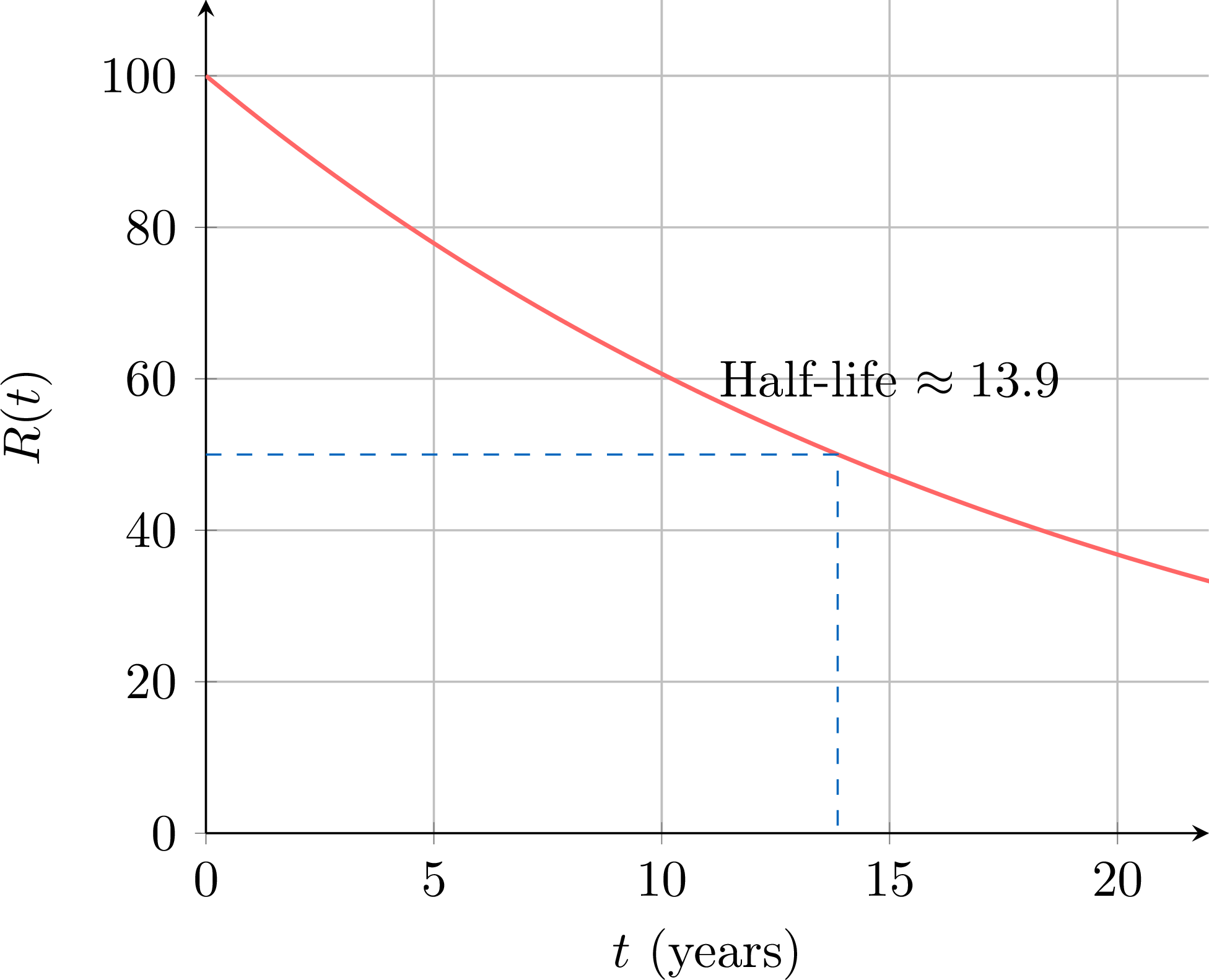
- Exponentials and Logarithms — Master exponential functions through growth and decay models. This module covers graphical features, horizontal asymptotes, and domain/range. Learn to distinguish linear and exponential relationships using constant differences and common ratios with real-world applications.
- Trigonometric Functions — Explore trigonometric functions (sine, cosine, tangent) and their reciprocal/inverse forms. This module covers properties like period, amplitude, and principal axis. Learn to solve complex equations and model periodic data like temperatures or tidal movements using transformations.
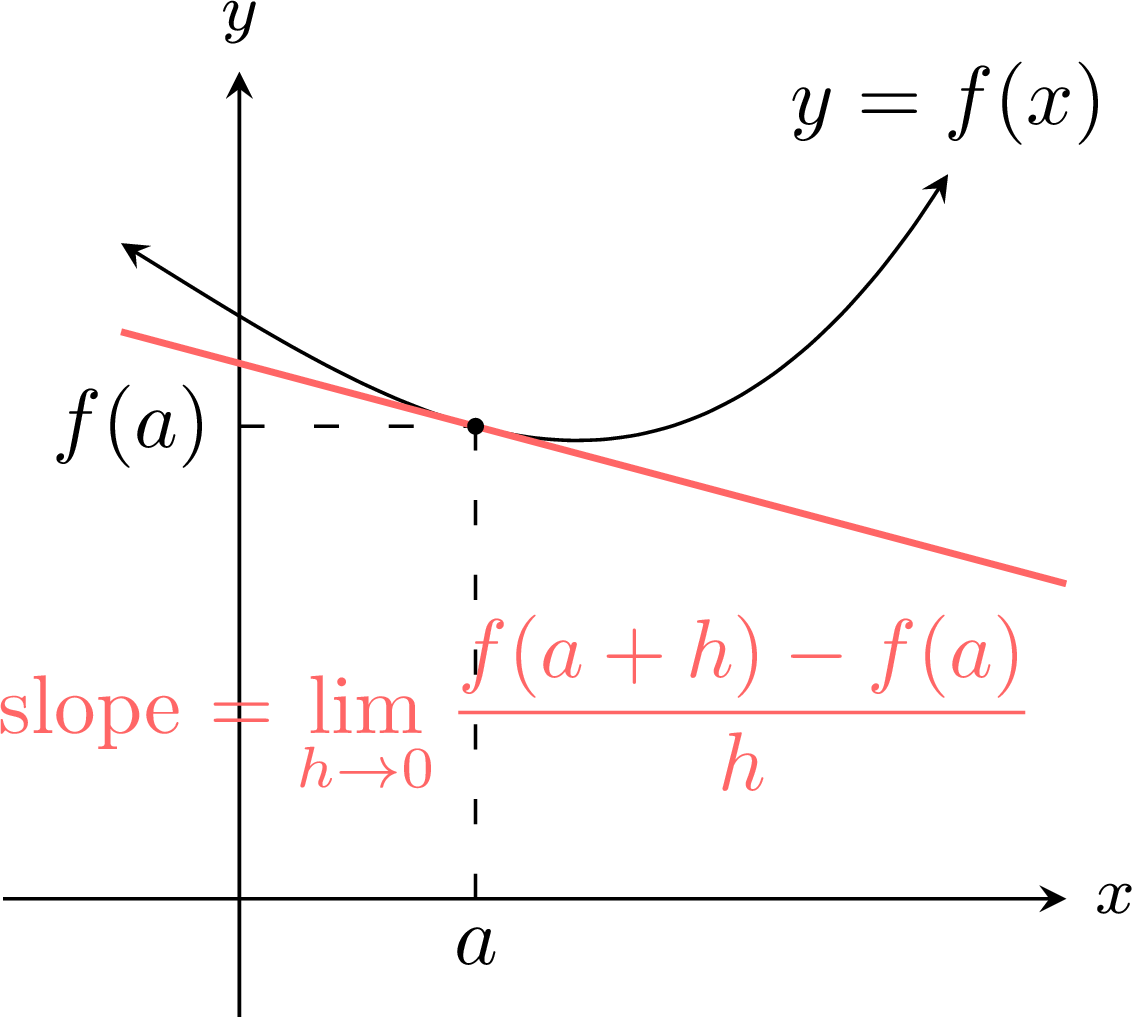
- Differentiation — A comprehensive module on Differential Calculus. Covers the definition of the derivative via limits and rates of change, differentiation rules (Power, Sum, Chain, Product, Quotient), and finding derivatives from first principles.
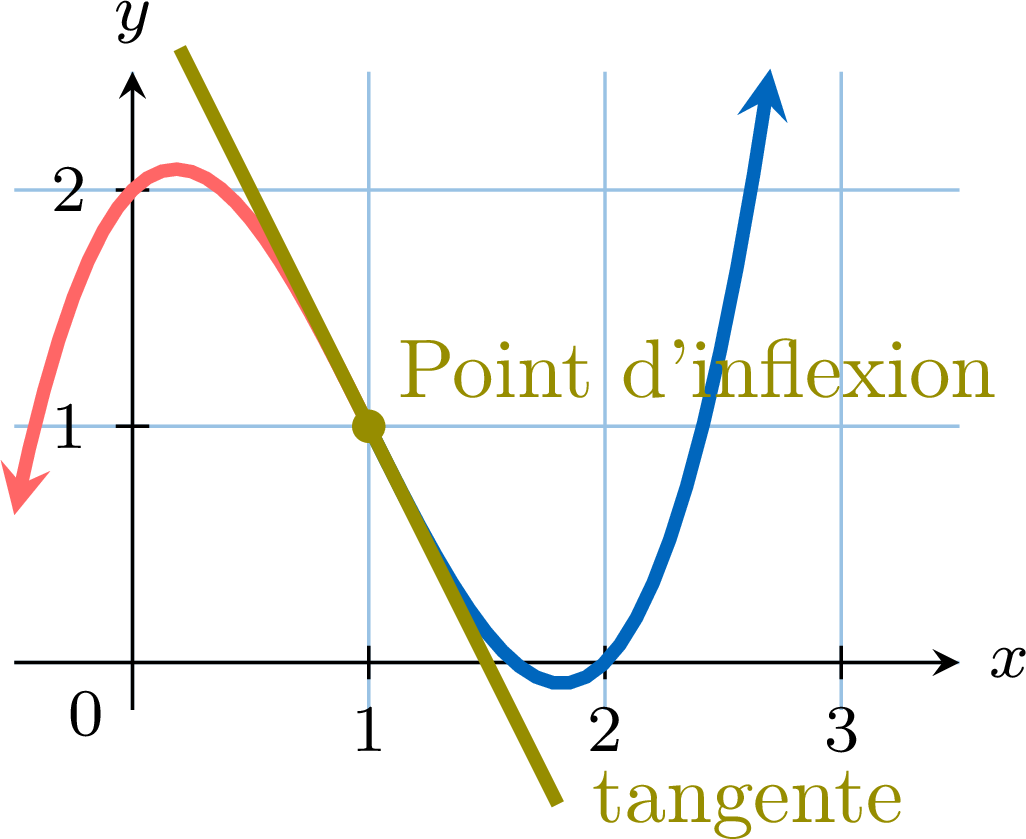
- Properties of Curves — Master the geometric applications of derivatives. This module covers finding tangent equations, analyzing function variations with tables, and identifying local and global extrema using stationary points and the first derivative test. Includes exercises with algebraic and graphical analysis.
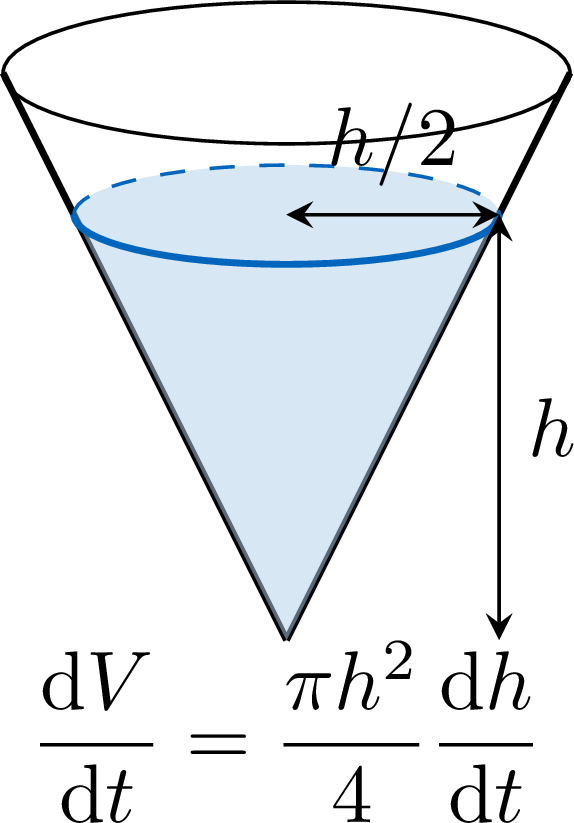
- Applications of Differentiation — Apply differential calculus to solve optimization and related rates problems. Learn to model and maximize geometric quantities, interpret stationary points, and calculate instantaneous rates of change in physical contexts like thermodynamics and fluid dynamics.
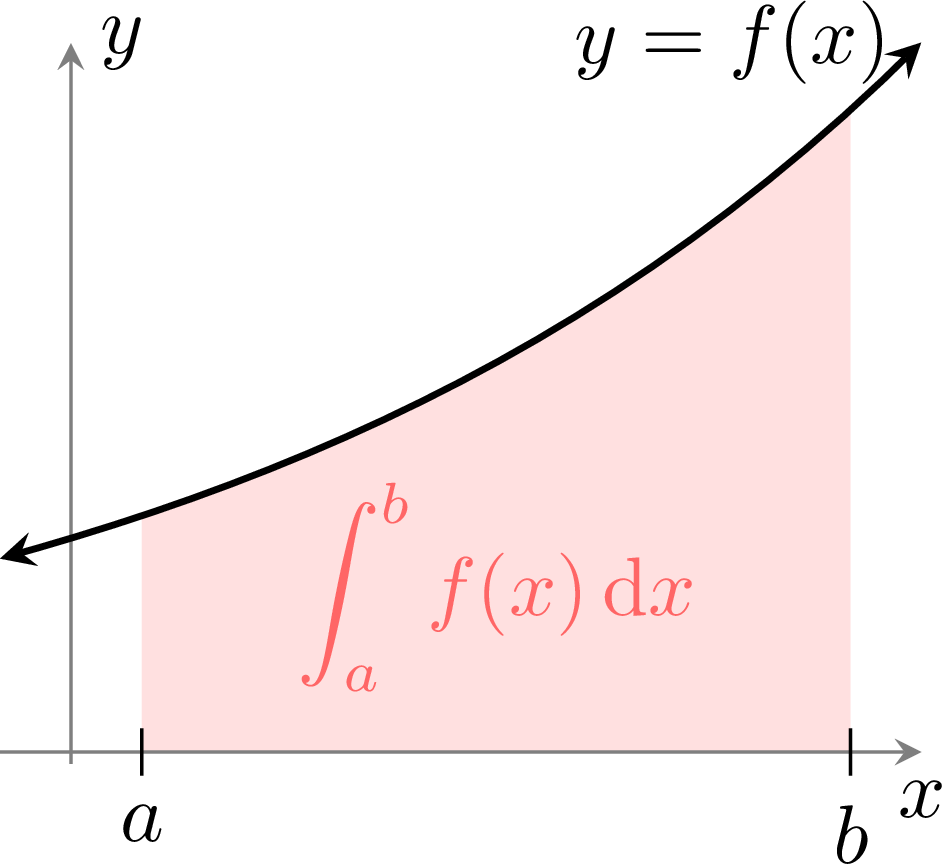
- Integration — A comprehensive study of Integrals: from Riemann sums and area approximations to the Fundamental Theorem of Calculus. Covers signed area, properties like Chasles's relation, and key techniques including integration by substitution and by parts, with geometric and algebraic applications.
- Discrete Random Variables — Comprehensive guide to discrete random variables, probability distributions, and statistical measures (expectation, variance, SD). Explores uniform, Bernoulli, and binomial models with real-world applications in risk management and decision-making through tables and graphs.
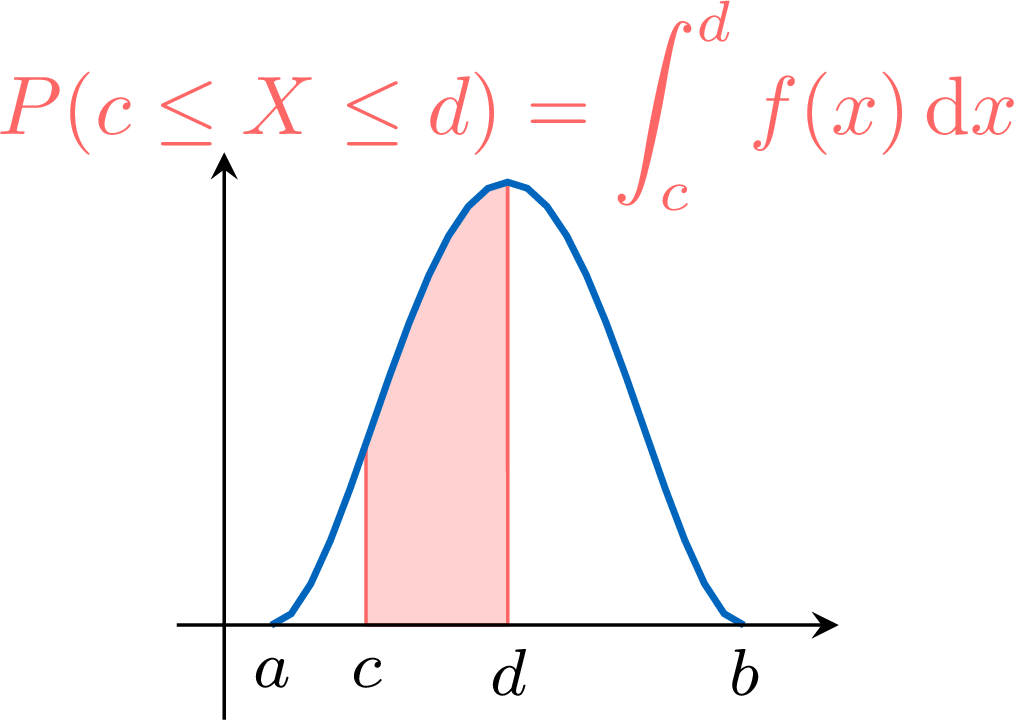
- The Normal Distribution — Introduction to continuous random variables and probability density functions. Covers uniform and normal distributions, including the empirical rule and quantiles. Teaches integration for expectation/variance and uses real-world examples like medical testing and task completion times.
- Hypothesis Testing — A comprehensive module on hypothesis testing. Covers null and alternative hypotheses, p-values, and Type I/II errors. Includes step-by-step procedures for one-sample, two-sample, and paired t-tests, alongside Chi-squared tests for independence and goodness of fit.
- Voronoi Diagrams — Explore Voronoi diagrams: sites, regions, and vertices. Learn construction using perpendicular bisectors and the incremental algorithm. Covers applications like nearest neighbor interpolation and the Toxic Dump Problem to find the center of the largest empty circle.