International Baccalaureate · PYP 1
Chance
I
What Can Come Out?
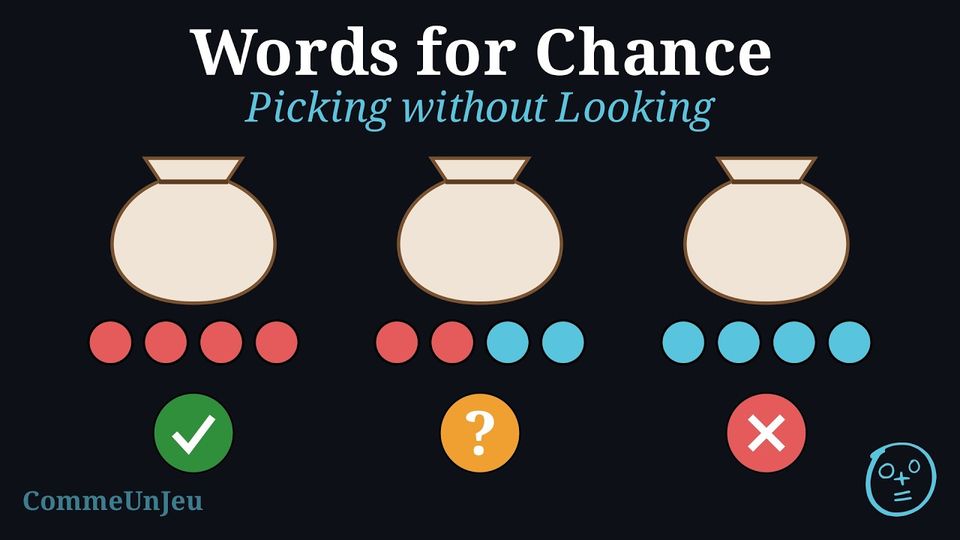
Method — Everything That Can Come Out, and the Hoop
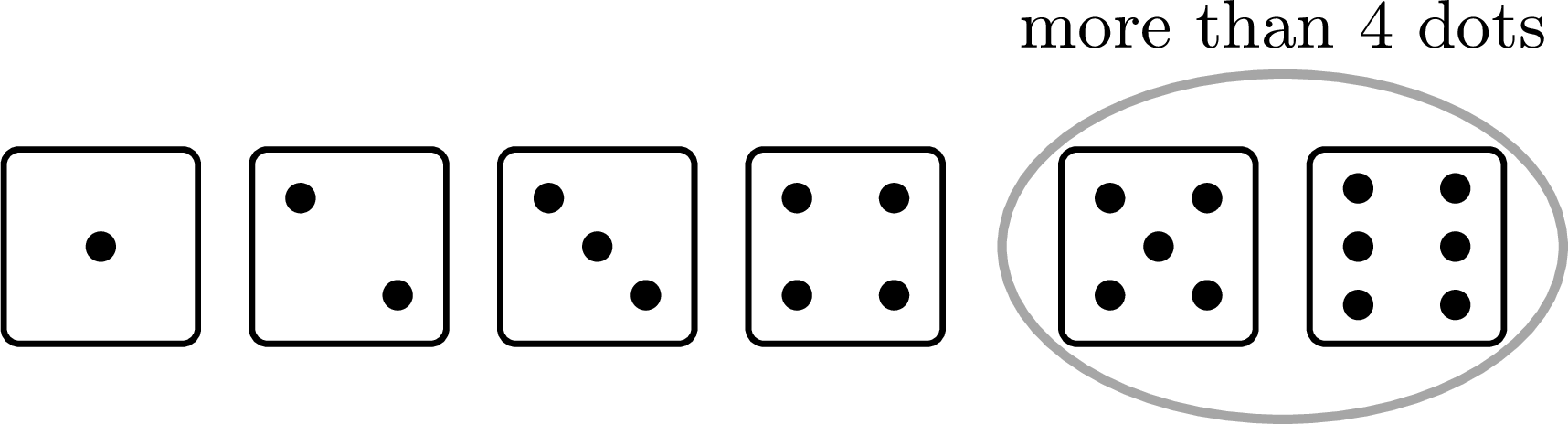
Before we pick, roll or spin, we look at everything that can come out: all the counters in the bag, all the faces of the die, all the parts of the spinner.For a sentence about the result, such as “the die shows more than 4 dots”:
- put in a hoop everything that makes the sentence true;
- compare the hoop with everything that can come out: if everything is in the hoop, it is certain; if only some of it is in the hoop, it is possible; if nothing is in the hoop, it is impossible.
Example
This spinner has 4 equal parts: 2 red parts, 1 blue part and 1 yellow part. We spin it once. 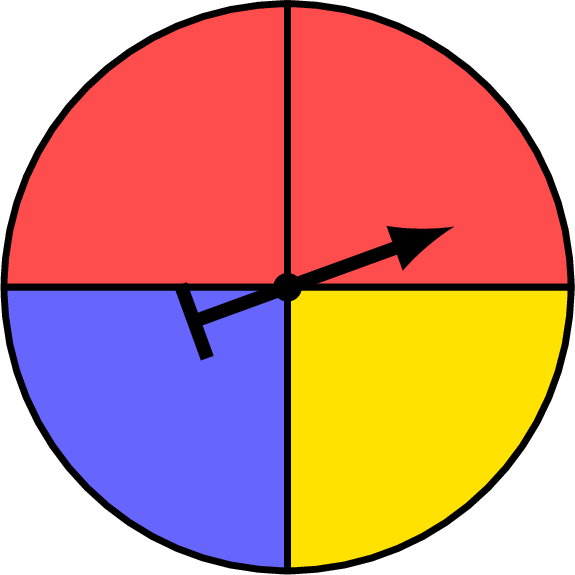
Everything that can come out: the 4 parts of the spinner. 
The hoop for red holds the 2 red parts: some of the 4 parts, not all. The pointer stopping on red is possible.
The hoop for green stays empty: no part is green. The pointer stopping on green is impossible.
The hoop for green stays empty: no part is green. The pointer stopping on green is impossible.
Skills to practice
- Showing Everything That Can Come Out
- Filling the Hoop
II
Certain, Possible or Impossible?
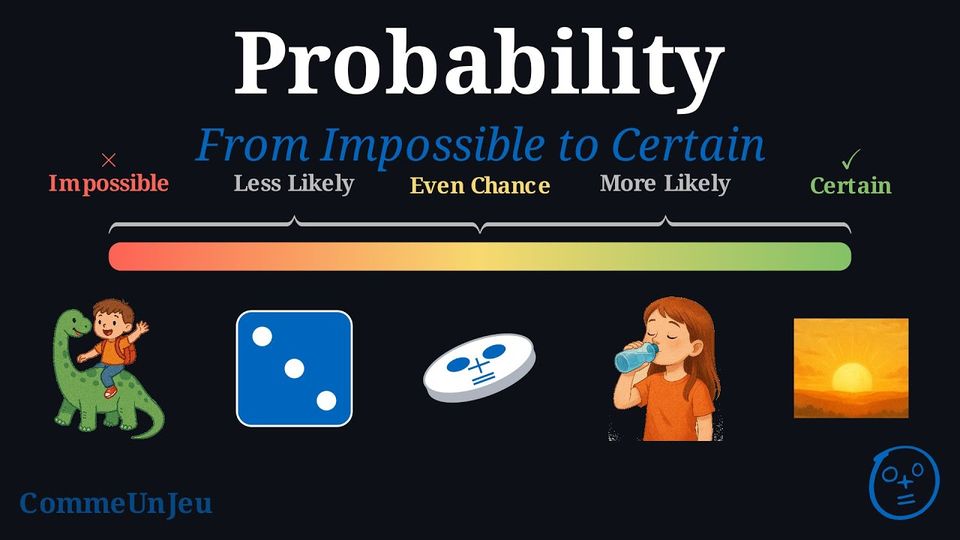
Definition — Chance
Some things we do, like flipping a coin or rolling a die, can end in more than one way, and we cannot know which one before. We call this a random experiment.The chance of something tells us if it is sure to happen, might happen or might not, or can never happen. We use special words to describe this chance.
- Impossible means something can never happen.
Example: We roll a die whose faces show 1 to 6 dots. Getting 7 dots is impossible. - Possible (or “maybe”) means something might happen or might not.
Example: We pick a counter from a bag of red and blue counters. Getting a red counter is possible. - Certain means something will always happen.
Example: We pick a counter from a bag of red counters only. Getting a red counter is certain.
Skills to practice
- Judging Everyday Events
- Picking at Random
- Building the Bag
III
Going further
Skills to practice
- Writing Chances with Numbers
- Quiz
Jump to section