MYP 5 mathematics
16 chapters, in the order of the programme: lessons, videos and worked exercises, free to start.
Expansion and Factorisation

Linear Equations, Inequalities and Formulae
Coordinate Geometry
Quadratic Equations
Right-Angled Trigonometry and Bearings

Statistics

Probability

Conditional Probability

Functions
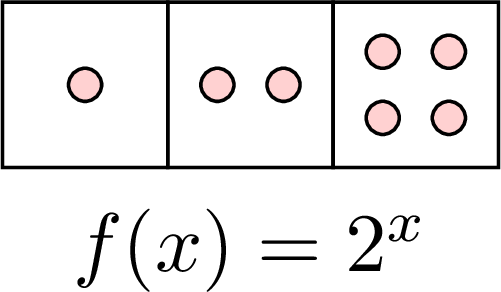
Exponential Functions and Equations
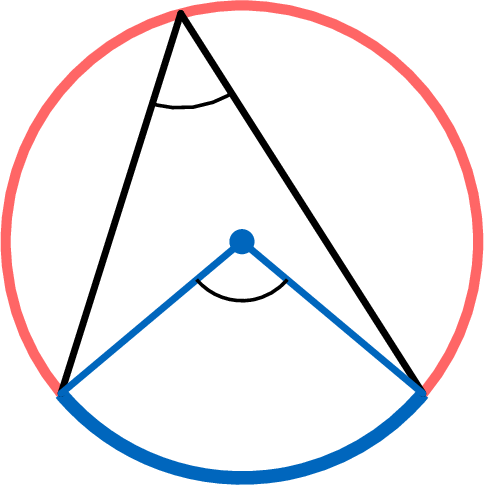
Circle Theorems and Geometric Proof

Quadratic Functions
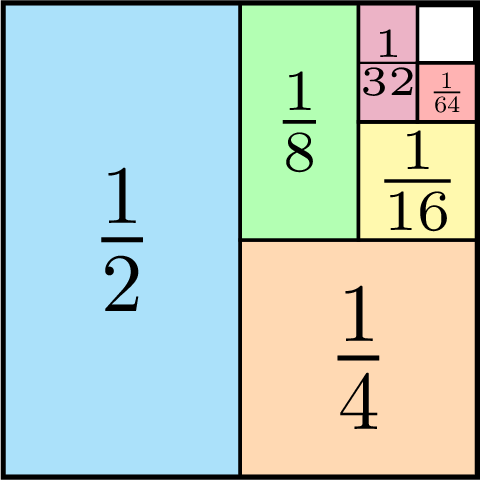
Number Sequences and Finance

Bivariate Statistics
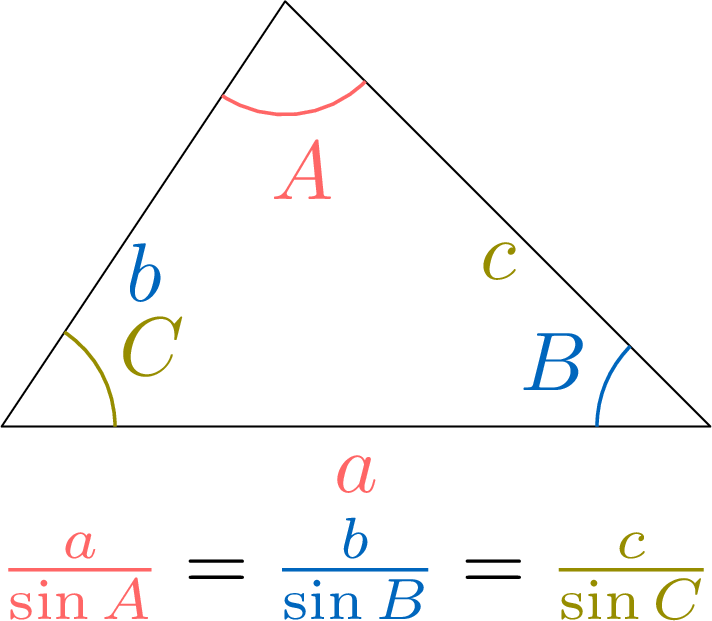
Non-Right-Angled Trigonometry
Measurement Accuracy and Error
The programme
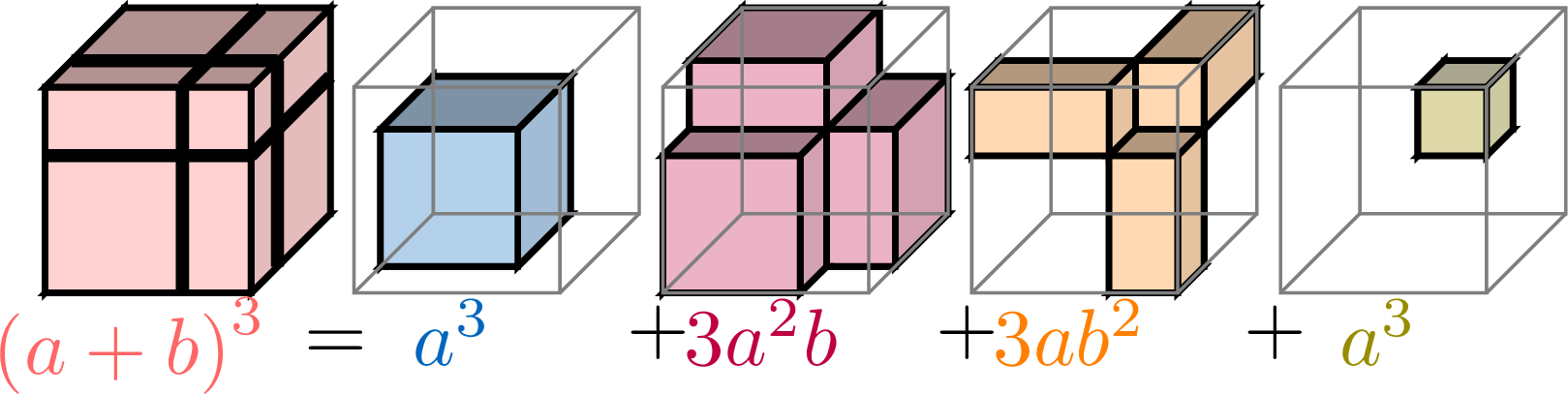
- Expansion and Factorisation — Master the expansion of algebraic expressions from single distribution to perfect cubes. Learn to transform factored forms into expanded sums using the distributive laws, the difference of two squares, and binomial identities. Includes visual area models and progressive exercises.
- Linear Equations, Inequalities and Formulae — Master linear and non-linear inequalities. Learn the critical rules for reversing symbols with negative numbers and how to construct sign tables for factored expressions. Covers identifying critical values, analyzing sign patterns, and expressing solution sets using interval notation.
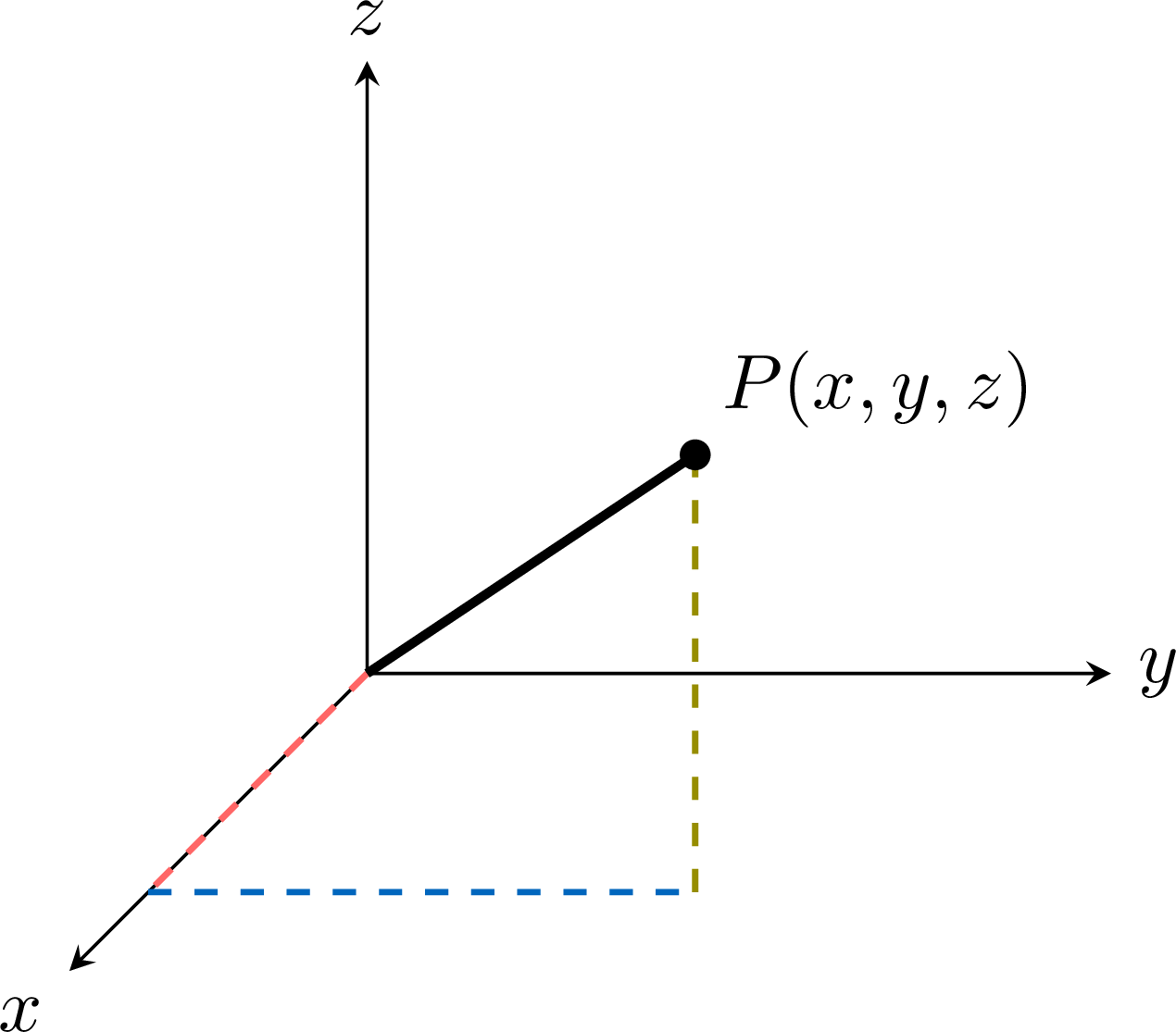
- Coordinate Geometry — Locate points in space with three coordinates in a right-handed orthonormal system: plot points in perspective and read the coordinates of the vertices of cuboids and pyramids. Proves the distance formula by applying Pythagoras' theorem twice, derives the coordinates of the midpoint of a segment, and applies both inside solids: space diagonals, the angle between two lines and the angle between a line and a plane.
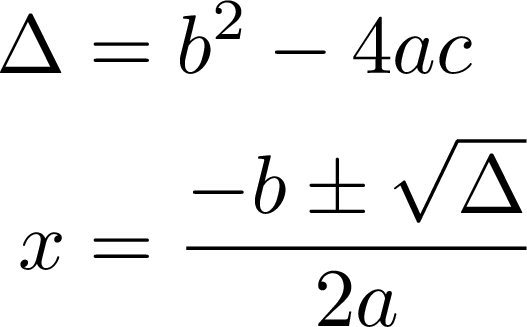
- Quadratic Equations — Master quadratic equations in standard form. This module covers coefficient identification, root verification, and solving methods: factoring, completing the square, and the quadratic formula. Learn to use the discriminant to determine the nature of roots through step-by-step exercises.
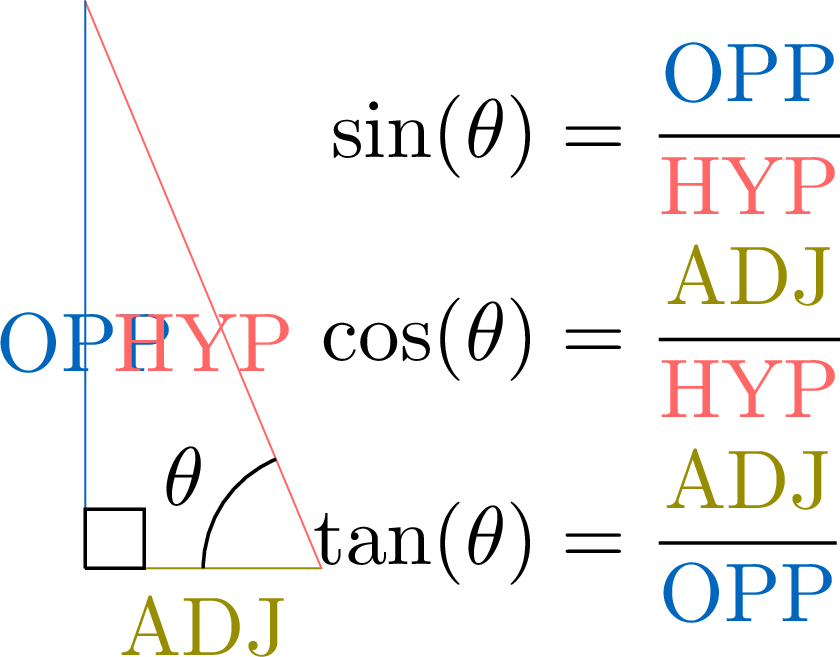
- Right-Angled Trigonometry and Bearings — Master right-triangle trigonometry using SOH-CAH-TOA. Covers side naming, sine, cosine, and tangent ratios, inverse functions, and solving 2D/3D real-world problems involving angles between lines and planes in cuboids, pyramids, and prisms.
- Statistics — Comprehensive module on the statistical investigation process. Covers variables, sampling methods (stratified, systematic), bias, and error analysis. Includes central tendency, standard deviation, and box plots with a focus on critical evaluation of claims.
- Probability — Explore basic probability: outcomes, sample spaces, and Venn diagrams. Learn core axioms, addition and complement rules, and the multiplication rule for independent events. Includes practical exercises using tree diagrams, tables, and real-world experimental probability data.
- Conditional Probability — Master probability from basic outcomes to advanced concepts. Learn sample spaces, Venn diagrams, and addition laws. Deep dive into conditional probability, the law of total probability, and Bayes' Theorem using real-world scenarios like medical testing and forensic logic.
- Functions — Explore functions through notation, graphs, and algebra. This module covers images, preimages, domain, and range. It details operations on functions, composition, and inverse functions, including the horizontal line test and graphical symmetry across y=x.
- Exponential Functions and Equations — Master exponential functions through growth and decay models. This module covers graphical features, horizontal asymptotes, and domain/range. Learn to distinguish linear and exponential relationships using constant differences and common ratios with real-world applications.
- Circle Theorems and Geometric Proof — Discover and prove the angle theorems of the circle: the angle at the centre is twice the angle at the circumference on the same arc, angles on the same arc are equal, the opposite angles of a cyclic quadrilateral are supplementary and this property recognises a cyclic quadrilateral, the angle between a tangent and a chord equals the angle in the alternate segment. Chase angles with a reason on every line, write proofs, investigate patterns in cyclic polygons and solve problems on theatres, navigation and cameras.
- Quadratic Functions — A comprehensive guide to quadratic functions (f(x)=ax^2+bx+c). Covers parabola features (vertex, axis of symmetry, intercepts), concavity, and the discriminant. Includes exercises on algebraic solving, graphical reading, and modeling real-world projectile motion and profits.
- Number Sequences and Finance — Master numerical sequences with this guide on recursive and explicit formulas. Explore arithmetic and geometric sequences, partial sums, and series summation. Includes practical exercises on real-world modeling, from population growth to financial savings.
- Bivariate Statistics — Explore the relationship between two quantitative variables. This module covers scatter plots, correlation (direction, strength, form), and causation. Learn to model data with regression lines, calculate coefficients (r, r²), and perform interpolation and extrapolation.
- Non-Right-Angled Trigonometry — Learn trigonometry for non-right-angled triangles. This module covers the triangle area formula, the Law of Sines, and the Law of Cosines. Practice calculating unknown sides and angles, and solve real-world problems involving areas, perimeters, and costs.
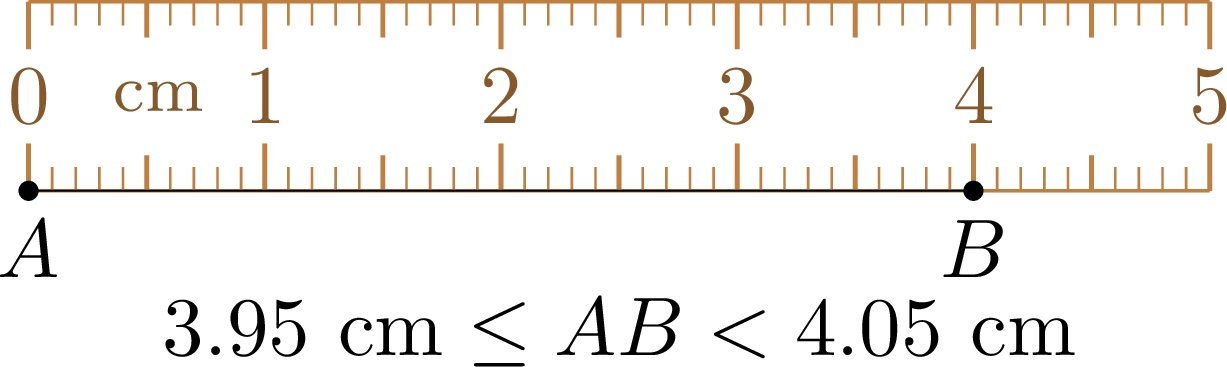
- Measurement Accuracy and Error — Master rounding (dp, sf), error formulas (absolute, relative, percentage), and measurement accuracy. Learn to estimate values and calculate upper/lower bounds for operations and geometric dimensions like area and volume. Essential for understanding precision in math and science.