Statistics
Collecting Data
Have you ever wondered which pet is the most popular in our class, or which ice cream flavor most students like best? When we ask questions like these to find out more about our world, we are doing statistics!
Statistics helps us be data detectives. We collect clues (called data) and use them to answer our big questions and understand what is happening.
Statistics helps us be data detectives. We collect clues (called data) and use them to answer our big questions and understand what is happening.
Definition Statistics
Statistics is when we ask questions, collect answers (our data, the pieces of information we get), and then organize this data to discover interesting things and tell a story about it.
Method Our Plan for Collecting Data
To be a good data detective, you need a clear plan! Here’s one way we can collect data.
- Ask a Clear Question: Start with something you want to know. For example: « What is your favorite pet? » Everyone should understand the question and be able to answer it.
- Gather Your Answers: Ask your classmates the same question, one by one, so that everyone answers once.
- Record the Data with Tally Marks: A tally mark is a quick way to write down “one”. For every answer, you draw one line. When you get to five, you draw a line across the first four. This makes it easy to count and check your total later.
| Pet | Tally Marks | Total |
| Dog |  | 5 |
| Cat |  | 4 |
| Fish |  | 2 |
Representing Data
Definition Picture Graph
A picture graph (or pictograph) is a chart that uses pictures to show how many of something there are. Each picture stands for one object (or more, if we say so). It helps us see and count easily!
Example
Let’s look at the fruits in the box and make a picture graph!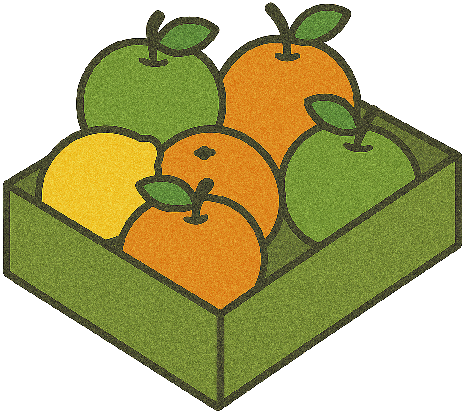
Our Fruit Picture Graph
| 3 |  | ||
| 2 | |  | |
| 1 |  | | |
| Lemon | Orange | Apple |
Our Fruit Picture Graph
- How many lemons? There is one picture. There is 1 lemon.
- How many oranges? Let’s count: one, two, three. There are 3 oranges.
- How many apples are there? Let’s count the pictures: one, two. There are 2 apples.